
There may soon be a day in which a breast cancer AI (artificial intelligence) detects a problem early or corrects a human misdiagnosis. Breast cancer is something that occurs to approximately one in eight women worldwide in their lifetime. In England alone, screening programs detect over 18,000 cases yearly. Nevertheless, some tumors go undetected while others are flagged as false positives, which leads to unnecessary invasive biopsies and anxiety.
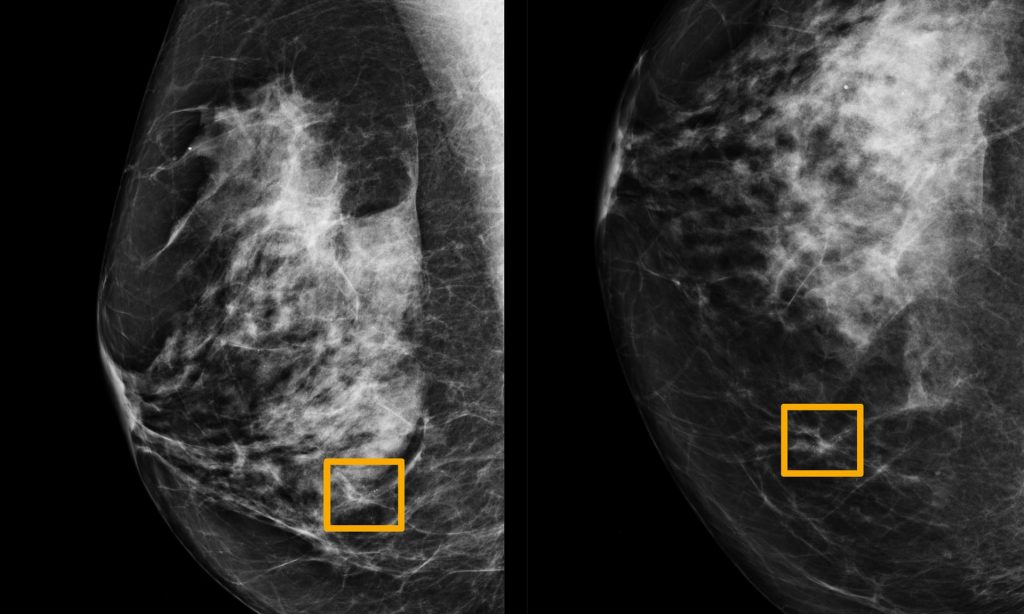
To rectify this situation, Google Health has developed an artificial intelligence program to test the mammograms of women in the UK and the US. When they tested the AI, it outperformed the specialists! It was able to detect cancers that the radiologists had missed in the images and also ignored features that the radiologists had falsely diagnosed as possible tumors.
Dominic King, the UK lead at Google Health, said:
“This is a great demonstration of how these technologies can enable and augment the human expert. The AI system is saying ‘I think there may be an issue here, do you want to check?'”
The software could eventually make breast cancer screening more effective once the program proves its worth in upcoming clinical trials. It would also ease the burden on health services where radiologists are in short supply, like the NHS.
Michelle Mitchell, Cancer Research UK’s chief executive, said:
“Screening helps diagnose breast cancer at an early stage, when treatment is more likely to be successful, ensuring more people survive the disease. But it also has harms such as diagnosing cancers that would never have gone on to cause any problems and missing some cancers. This is still early-stage research, but it shows how AI could improve breast cancer screening and ease pressure off the NHS.”
How Google Health’s AI Program Works
- It analyzes mammograms in three different ways.
- Then, it combines the results to provide an overall risk score.
- The program was trained by scientists on mammograms from over 15,000 women in the US and 76,000 women in the UK.
- To test it, they gave almost 30,000 new mammograms from US and UK women. The files were from patients that either had biopsy-confirmed cancer or no signs of disease during follow-up at least a year later.
The Results
- In the US, one radiologist examines the mammograms of a patient who goes in for a checkup yearly. The AI in such a system was able to produce 9.4% fewer false negatives and 5.7% fewer false positives. Therefore, AI could improve the quality of breast cancer screenings in the US.
- In the UK, two or three radiologists examine the mammograms of a patient who goes in for a checkup once every three years. The AI in such a system was able to produce 2.7% fewer false negatives and 1.2% fewer false positives. Therefore, AI is on par with the quality of breast cancer screenings in the UK and can be used as an assistant radiologist or replace the second/third radiologist.
Dr. Caroline Rubin, vice-president for clinical radiology at the Royal College of Radiologists, said:
“Like the rest of the health service, breast imaging, and UK radiology more widely, is understaffed and desperate for help. AI programs will not solve the human staffing crisis, as radiologists and imaging teams do far more than just look at scans, but they will undoubtedly help by acting as a second pair of eyes and a safety net.
It is a competitive market for developers and these programs will need to be rigorously tested and regulated first. The next step for promising products is for them to be used in clinical trials, evaluated in practice and used on patients screened in real-time, a process that will need to be overseen by the UK public health agencies that have overall responsibility for the breast screening programs.”
Chris Kelly, a clinician-scientist at Google Health, explains that the next phase of testing will be a trial to assess the AI in real-world conditions. They are concerned that the AI will slip up when fed images from different mammogram systems than it was trained with. It is a fair worry, and it applies well beyond radiology: when Yale researchers tested an AI that reads ECG images across eight hospital systems in five countries, a central question was whether it would hold up as machines and formats changed.


