
Past studies suggest that humans’ chronic depression is caused by an imbalance of brain chemicals such as dopamine, norepinephrine, or serotine. However, none of them unearthed why such imbalances occur. Depression has also been linked to air pollution, a global problem. So, a group of researchers from multiple Chinese institutions looked to lab mice to learn more about the roots of depression.
The team, led by Nanjing Medical University researchers, was inspired by previous studies with mice that showed the animal could pass on traits – like trauma symptoms and diet-induced disorders of metabolism – through epigenetic alterations. Epigenetic alterations are genetic changes that affect how cells express DNA through chemical conversion to RNA and then proteins but don’t alter the base sequence of the DNA.

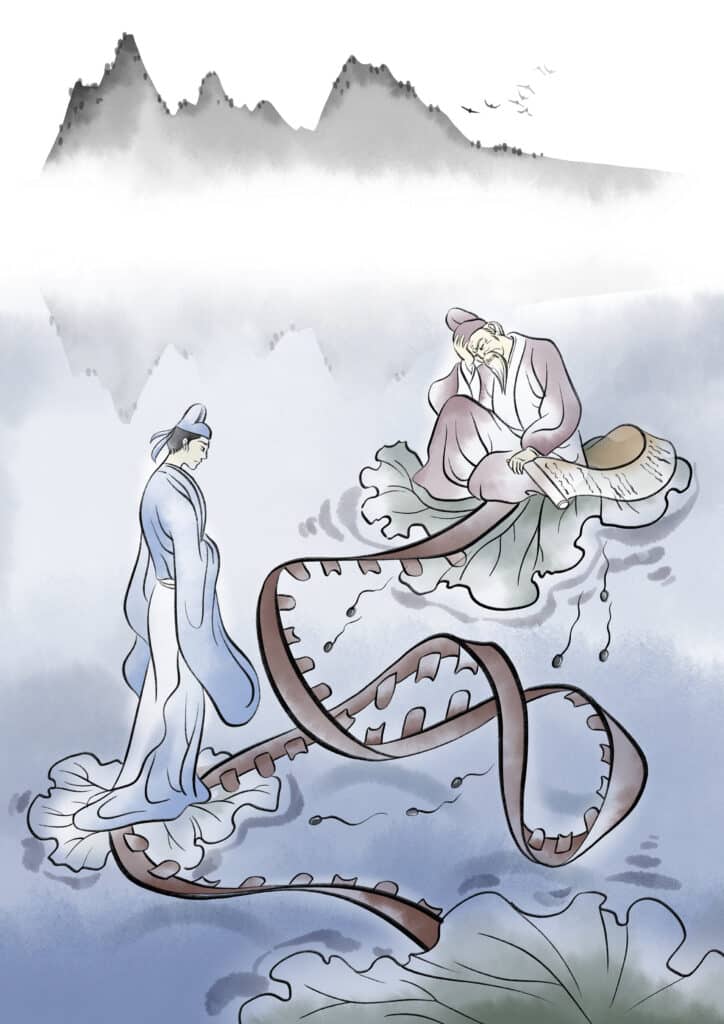
Their research found that depression in male mice is passed down to their offspring through RNA (genetic material) in sperm. It was the first study to investigate whether depression symptoms could be passed down in an epigenetic manner. The finding could help clarify how mental health disorders arise.
Study leader Xi Chen, a research director at Nanjing University, explained the team’s key findings to Technology Networks:
We show that the offspring of depressed fathers develop enhanced susceptibility to depression when exposed to slight stress and that sperm RNAs (particularly microRNAs) play a causal role in depression inheritance. Such a germline epigenetic inheritance mechanism paves a new way for filling the gap in our knowledge of the pathophysiology of depression.
The Experiments
- The researchers subjected several male mice to a battery of stressful experiences for five weeks.
- By the end of the session, the mice exhibited behavioral and physiological changes characteristic of a depressed rodent.
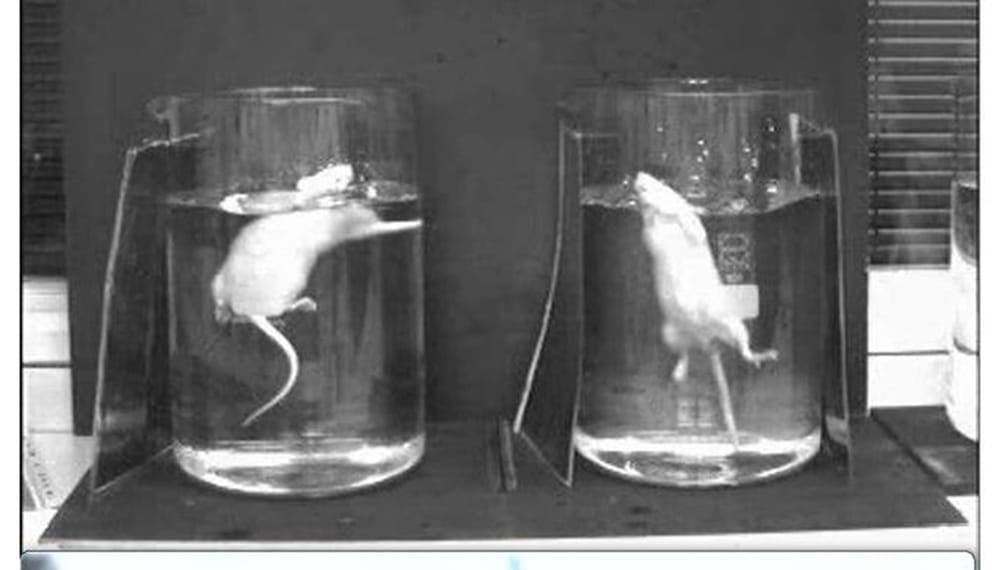
- They show less interest in food, swam less hard when immersed in water, and had increased levels of stress-related hormones.
- The team had the stressed male mice mate with unstressed female mice.
The Results
- The offspring weren’t born downbeat and didn’t how any biological differences from pups produced from unstressed fathers.
- However, when the pups from stressed fathers were exposed to a mild stressor, they became easily depressed. The offspring from non-depressed fathers didn’t.
- Interestingly, the grand-pups of the originally stressed-out subjects behaved as healthy mice did in response to mild stress, showing that the changes only lasted a single generation.
Experiments Part Two
- Next, the researchers examined the father’s sperm, which passes on parental DNA paired with a hot of RNA molecules. They found that the RNA molecules in the depressed fathers’ sperm were altered.
- The team isolated the altered RNA content and injected it into embryos of mice born to non-depressed fathers. Those offspring also developed depressive symptoms quickly when exposed to mild stressors.
- They also injected synthetic RNA designed to counteract the alterations into healthy embryos, and those offspring didn’t develop depressive symptoms. Meaning, if the stress-induced changes are blocked, the offspring won’t inherit depression from their fathers.
Conclusion
Chen is optimistic that his team’s findings could impact the development of novel antidepressant treatments in humans in the future. He concluded:
Our findings may offer a new dimension for the development of novel antidepressant treatments. For example, we showed that rescue of miRNA imbalance in zygotes could reverse the acquired depressive phenotypes in offspring born to depressed fathers. Since the sequences and biological functions of many miRNAs are conserved between humans and mice, it is intriguing to investigate if sperm miRNAs also play a role in the inheritance of human depression and can be employed as a therapeutic target.
Of course, more research needs to be done to replicate this before it can get close to human medicine. Our next step is to explore the potential roles of human sperm miRNAs in depression. We have already reached out to several hospitals and started to evaluate the scope of ethical permission for measuring sperm miRNA profiles in depression patients.
The study also lends credence to theories suggesting that corticosterone level changes in mice can induce RNA changes in mouse sperm.


