
Choosing the right door material isn’t just about aesthetics; it directly affects your home’s security, insulation, longevity, and long-term maintenance costs. Yet many homeowners select external doors based primarily on appearance or upfront price, only to discover years later that maintenance demands are exhausting or security performance is inadequate.
This guide provides an expert-level comparison of the most common external door materials: timber, uPVC, composite, aluminium, and steel. We’ll analyse each across four critical dimensions: structural strength, durability, cost (both upfront and lifecycle), and security performance. By the end, you’ll understand the real tradeoffs between materials and how to choose based on your actual priorities rather than marketing narratives.
Why Door Material Matters More Than You Think
Doors are primary entry points for your home. They’re security barriers, thermal insulators, noise blockers, and aesthetic statements. Material selection affects all these functions. Beyond security, choosing the right material is a key part of cost-effective home upgrades that lower energy bills by improving thermal retention.
Structurally, different materials behave differently under stress. A timber door experiences splitting. A uPVC door flexes. An aluminium door may bend. A steel door resists deformation. These behaviours determine forced-entry resistance, a critical security factor rarely discussed in standard door comparisons.
Material also affects lifespan. A timber door requires repainting every 5 years. A uPVC door might need replacement after 15 to 25 years. An aluminium door can function for 50+ years. Over a 30-year ownership period, these differences compound dramatically.
Importantly, material alone doesn’t determine door performance. A door’s core construction (whether hollow or solid), frame reinforcement, and installation quality are equally critical. A premium steel door installed in a weak frame is only as secure as the frame. This guide addresses material alongside these integrated systems.
Timber Doors
Timber remains popular for aesthetic reasons; it offers warmth, character, and timeless appeal that synthetic materials can’t replicate.
Strength
Solid hardwood (oak, mahogany, teak) is inherently strong, with good resistance to impact. However, timber has a critical weakness: it can split under concentrated force. Unless the door is reinforced at lock and hinge points (with internal steel plates), forced-entry attempts can cause splitting that compromises structural integrity and allows lock disengagement.
Quality timber doors typically incorporate hidden steel reinforcement at stress points, mitigating this vulnerability. Budget timber doors often lack this reinforcement, relying entirely on the wood’s structural properties.
Durability
Timber is vulnerable to moisture damage. Exposure to rain, humidity changes, and temperature fluctuations causes swelling, warping, and eventual rot if not properly sealed. A timber door in a wet climate requires diligent maintenance to prevent deterioration.
Hardwoods are more resistant to decay than softwoods, but all timber eventually succumbs without regular protection. Some hardwoods (teak, iroko) are naturally weather-resistant; others require treatment.
Cost
Timber door pricing varies dramatically. A standard pine door might cost £500-£800, while a handcrafted hardwood door can exceed £2,500. Installation adds £300-£500.
However, upfront cost is only part of the equation. Timber requires:
- Repainting: Every 4-5 years (£500-£1,000 per cycle)
- Sealing maintenance: Annually
- Occasional repairs: Due to weather damage
- Potential replacement: Due to rot or splitting
Over 30 years, cumulative maintenance costs often exceed the original purchase price.
Security
Timber doors with proper reinforcement offer good security. The inherent strength of solid wood, combined with quality locks and reinforced frames, creates reliable protection. However, reinforcement is critical; unreinforced timber doors split more easily than composite alternatives.
uPVC Doors
uPVC (unplasticised polyvinyl chloride) became popular because it’s affordable, low-maintenance, and won’t rot.
Strength
uPVC is a lightweight plastic material. While manufacturers often add internal steel reinforcement, the material itself is less rigid than wood or composite. Under impact stress, uPVC doors flex more than alternatives. This flex can cause lock misalignment or frame distortion, allowing forced entry even if the lock mechanism isn’t directly compromised.
Quality uPVC doors include steel reinforcement running the height of the door, improving rigidity. Budget uPVC doors have minimal reinforcement, relying entirely on the uPVC plastic’s structural properties, which is inadequate for security applications.
Durability
uPVC is resistant to moisture and rot, a significant advantage over timber. It won’t warp, swell, or require sealing. Sunlight can cause discolouration and brittleness over decades, and some uPVC formulations become brittle in freezing conditions. However, properly manufactured uPVC doors typically function reliably for 15 to 25 years.
Cost
uPVC doors are the most affordable option. A standard uPVC door costs £400-£700; installation adds £300-£400. Ongoing maintenance is minimal; occasional cleaning is sufficient.
Long-term costs are low because maintenance demands are negligible. However, replacement risk increases after 20 years as materials degrade.
Security
uPVC’s flexibility is a security liability. When force is applied, the door and frame flex together, potentially allowing entry even with quality locks. For this reason, uPVC is appropriate for moderate-security applications but not ideal for high-security needs.
Composite Doors
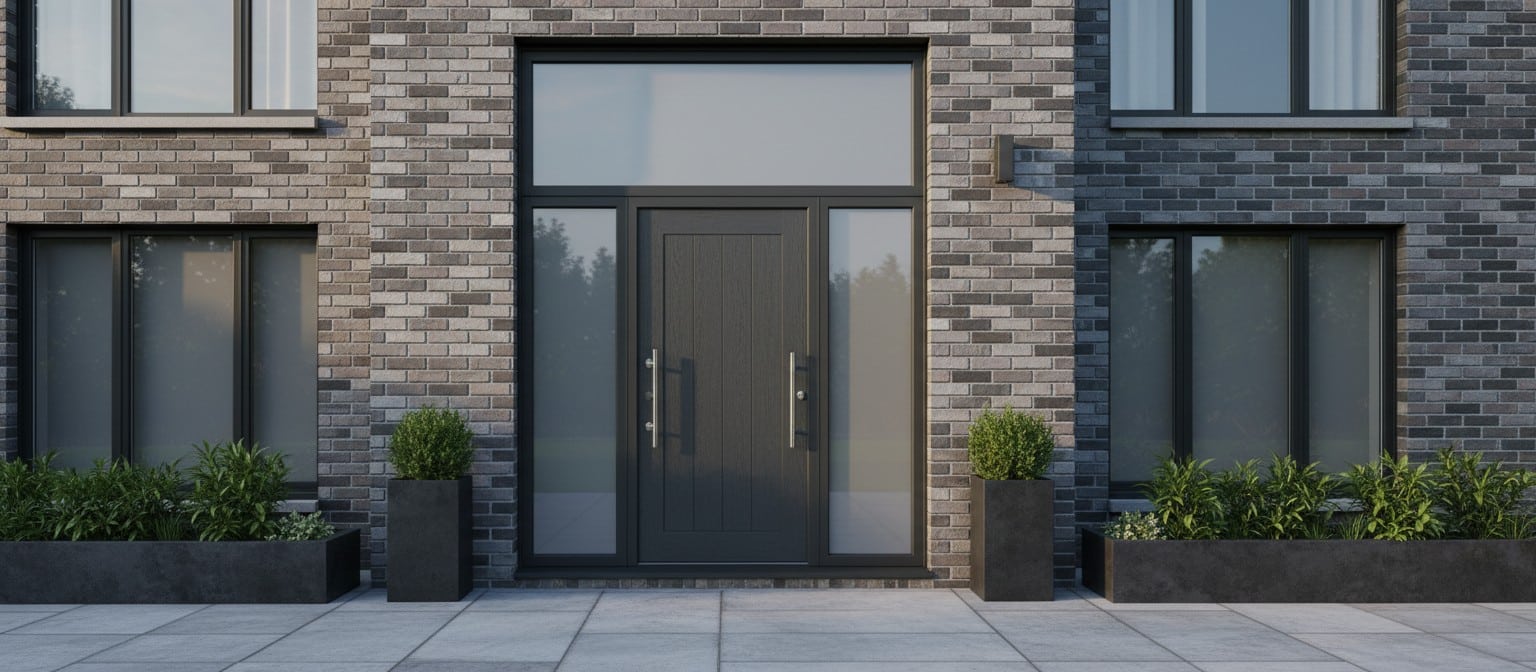
Composite doors use engineered core construction, typically combining a timber or engineered-wood frame with rigid foam insulation and protected by outer skins (usually glass-reinforced plastic or aluminium).
Strength
Composite doors offer superior structural rigidity compared to uPVC. The layered construction distributes stress across multiple materials. A composite door resists flex and deformation better than uPVC but not as completely as steel.
Internal reinforcement varies by manufacturer, but quality composite doors include steel reinforcement at critical stress points (lock locations, hinges). The result is good strength without the weight or maintenance of solid timber.
Durability
Composite doors offer excellent weather resistance. The outer skins protect internal materials from direct exposure. They don’t warp, rot, or require regular repainting. Most composite doors require only occasional cleaning and inspection. Expected lifespan is 25-35 years depending on quality and climate exposure.
Cost
Composite doors cost more than uPVC but less than timber or aluminium. Pricing ranges from £800-£2,000; installation adds £400-£600.
Maintenance costs are minimal, making total lifecycle cost competitive with other materials. A composite door installed today might require replacement in 30 years, but no significant maintenance investment occurs in between.
Security
Composite doors provide good security. The rigid construction resists flex, and quality models include multi-point locking and reinforced frames. They perform well against forced-entry attempts, particularly when properly installed.
Aluminium Doors
Aluminium is strong, lightweight, and corrosion-resistant.
Strength
Aluminium has excellent strength-to-weight ratio. It resists bending and deformation, providing good structural rigidity. However, aluminium is less impact-resistant than steel; severe impacts can cause denting (though structural integrity may remain intact).
Durability
Aluminium naturally resists corrosion through an oxide layer that forms on the surface. Unlike steel, it doesn’t rust even in coastal or wet environments. Properly maintained aluminium doors can last 40-50 years.
Cost
Aluminium doors are among the most expensive options. Pricing ranges from £1,500-£3,500; installation adds £500-£800. The higher cost reflects the material’s premium qualities and manufacturing complexity.
Security
Aluminium’s rigidity provides good security. Combined with multi-point locking and reinforced frames, aluminium doors offer reliable protection. They’re commonly used in commercial buildings where security and durability are priorities.
Steel Doors
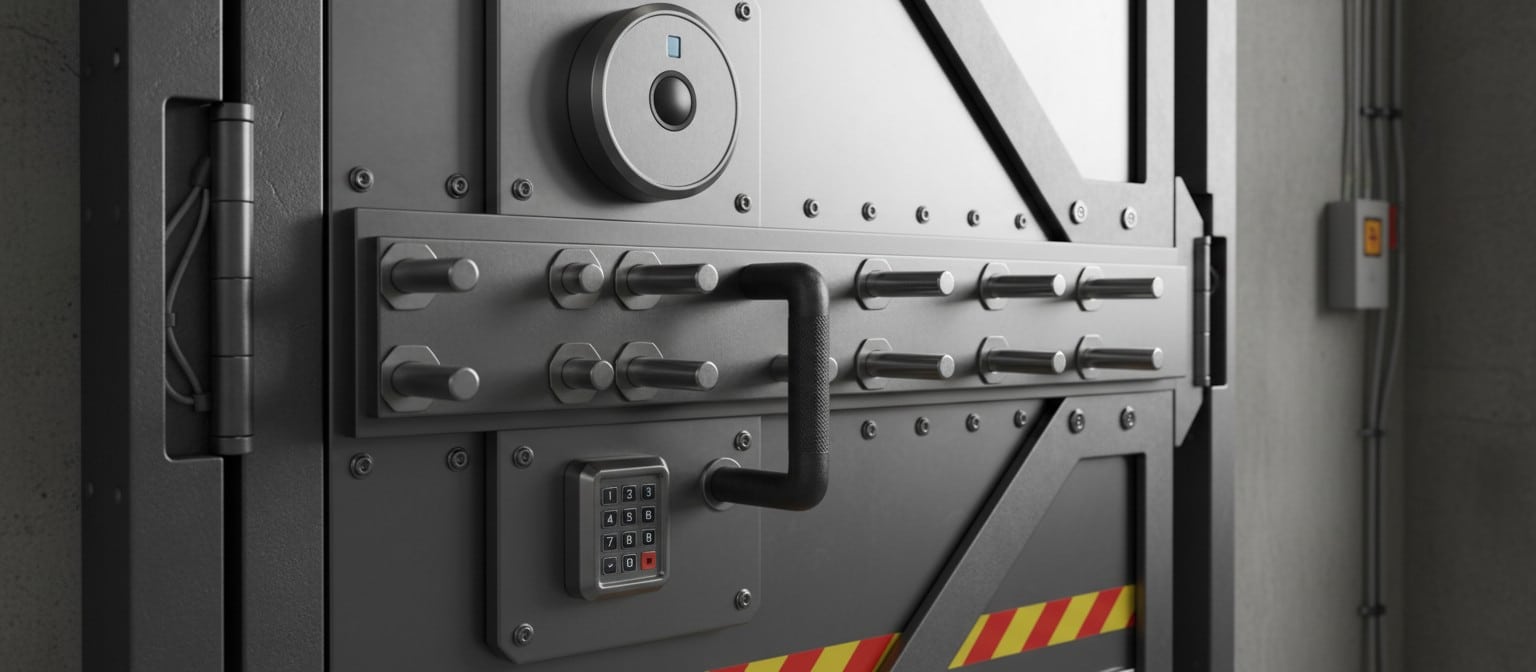
Steel provides the highest strength and impact resistance of any commonly used door material. According to the Steel Door Institute, high-gauge steel assemblies are the only material choice capable of meeting the highest levels of forced-entry resistance for high-risk facilities.
Strength
Steel is exceptionally rigid. Under impact stress, a steel door doesn’t flex, dent, or deform significantly. This rigidity is crucial for security; forced-entry attempts against steel doors require sustained, severe force that’s time-consuming and noisy. Steel doors specifically resist the kick-in failures common in other materials.
Durability
Steel is immune to weather, insects, and rot. A properly powder-coated steel door can function reliably for 40+ years with minimal maintenance. Steel is the most durable commonly available door material.
Cost
Steel doors represent the highest upfront investment, typically ranging from £1,500-£3,500; installation adds £500-£1,000. However, over a 50-year period, multiple composite door replacements eventually cost more than a single, properly maintained steel door.
Security
Steel doors are the gold standard for security. For homeowners prioritising maximum protection, Latham’s Steel Doors offer reinforced steel security doors designed to provide exceptional structural strength.
Side-by-Side Comparison
| Material | Strength | Durability | Upfront Cost | Lifecycle Cost | Security | Maintenance |
|---|---|---|---|---|---|---|
| Timber | Moderate | Moderate | £500-£1,500 | £3,000-£6,000 | Moderate-Good | High |
| uPVC | Low-Moderate | Moderate | £400-£800 | £1,500-£2,500 | Moderate | Low |
| Composite | Moderate-High | High | £800-£2,000 | £1,500-£3,000 | Good | Low |
| Aluminium | High | Very High | £1,500-£3,500 | £2,000-£4,000 | Good | Low |
| Steel | Very High | Very High | £1,500-£3,500 | £2,000-£4,000 | Excellent | Low |
Strength vs Cost: Long-Term Value Analysis
Upfront cost and lifecycle cost are different calculations. A £500 uPVC door looks budget-friendly initially. However, if it requires replacement after 20 years, you’re purchasing another door. After 40 years, you’ve replaced it twice, total cost £1,200+ plus installation fees. A £2,000 steel door may never require replacement during your ownership.
What Really Determines Door Security?
Material is foundational but not the only factor. The most secure doors combine a rigid core, reinforced frame, multi-point locking with anti-snap cylinders, and professional installation.
Choosing the Right Material for Your Needs
Different materials suit different situations:
- Choose timber if: You prioritise traditional aesthetics and character and are committed to regular maintenance.
- Choose uPVC if: Budget is the primary concern and you want minimal maintenance.
- Choose composite if: You want a balance between durability, aesthetics, and cost.
- Choose aluminium if: You need premium durability in corrosive environments like coastal areas.
- Choose steel if: Security and strength are your top priorities and you want the maximum possible lifespan.
Conclusion
The best door material depends on your specific priorities. Timber offers tradition but demands care. uPVC is affordable but lacks strength. Composite balances style and performance. Aluminium provides durability. Steel delivers unmatched security.
Your external doors are among the most important structural elements of your home. Invest accordingly.

