
A procedure developed in Japan more than a decade ago is now being offered to patients with painful knee osteoarthritis who want to avoid joint replacement surgery. It involves no incision, no implant, and general anesthesia, and most patients walk home the same day. The pitch is compelling. The evidence behind it is considerably more complicated than the marketing suggests.
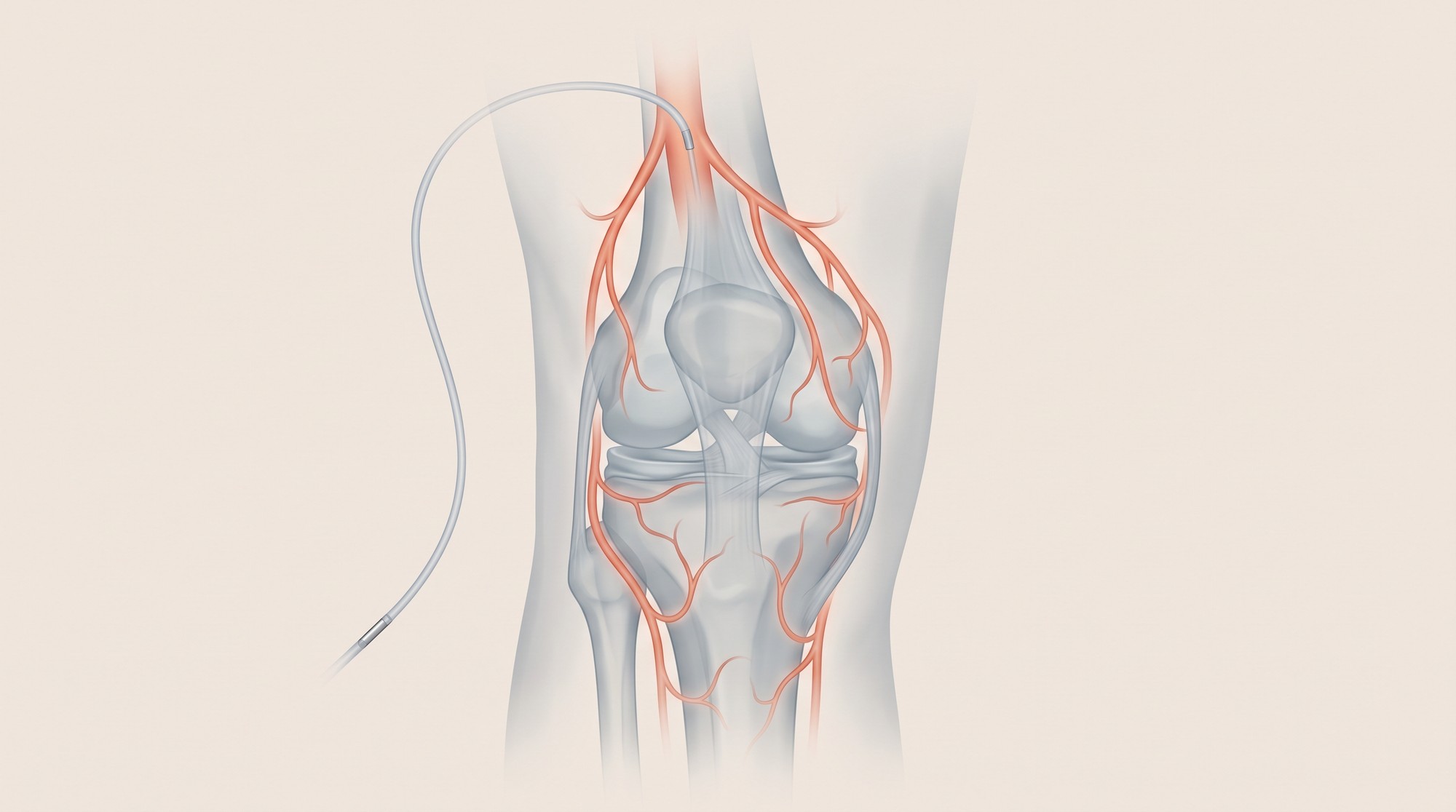
Genicular artery embolization, usually shortened to GAE, works on the assumption that much of the pain in an arthritic knee comes from inflammation and that inflammation depends on blood supply. So interventional radiologists thread a catheter from the femoral artery in the thigh, navigate it to the small vessels wrapping around the knee, and release microscopic particles to block them. No anesthetic is needed beyond conscious sedation, and there is nothing left behind in the joint.
What has happened since then is stranger than either the enthusiasts or the skeptics predicted. Patients do report genuine relief. But when researchers finally ran properly controlled trials, including ones where patients underwent a convincing fake version of the procedure, two of the three found no difference between the treatment and the placebo. The third was positive, but small, and its control group was quietly switched over to the real procedure after a month.
What genicular artery embolization actually is
GAE is a minimally invasive procedure performed by an interventional radiologist, usually as an outpatient. The patient is sedated but conscious. Through a small incision in the crease of the groin, a thin catheter is guided up from the femoral artery and steered to the genicular arteries, the small blood vessels that supply the synovium, the inflamed lining of the knee joint.
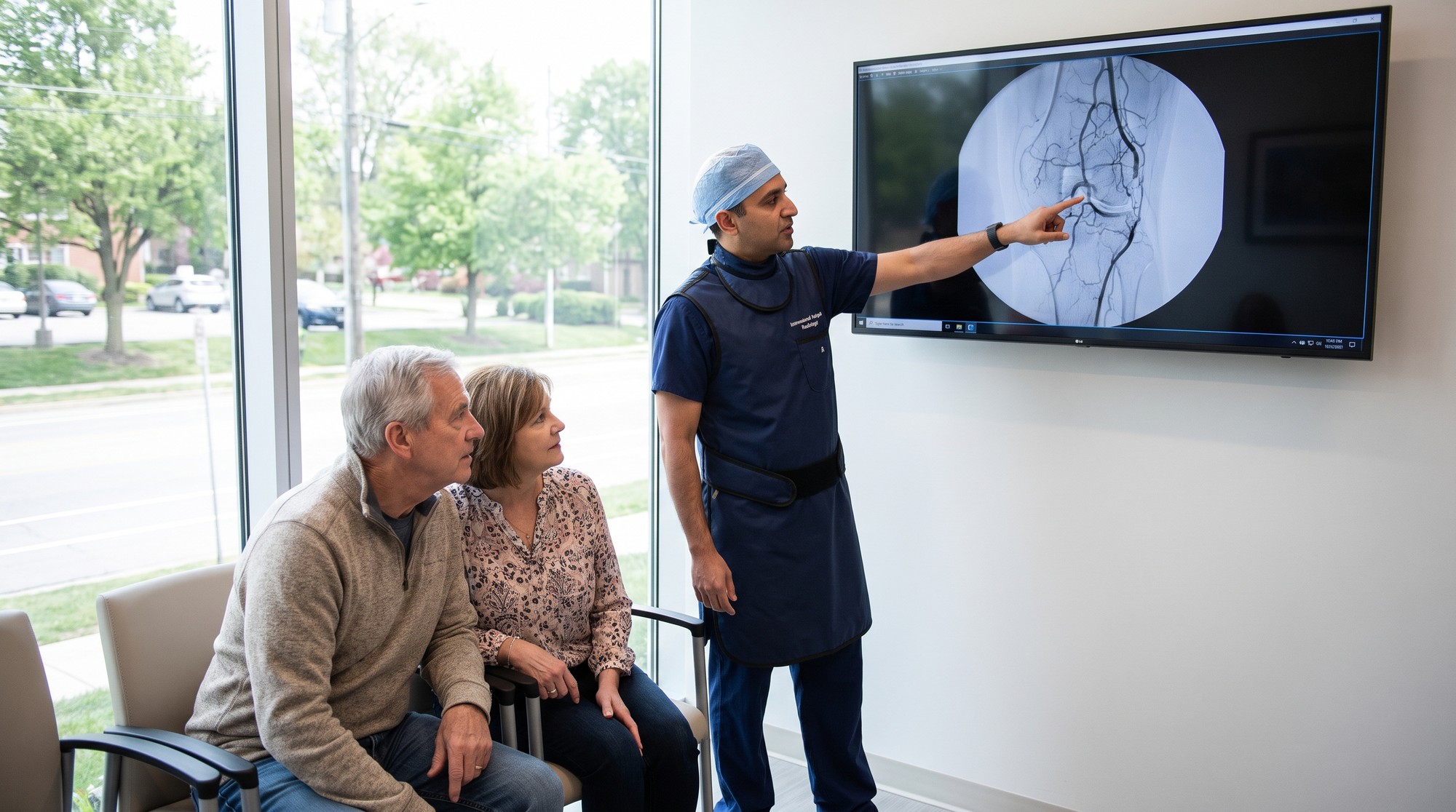
Using X-ray imaging and contrast dye, the interventional radiologist identifies the vessels feeding the painful, inflamed area, which the patient identifies by pointing to where it hurts most. Then tiny particles are released to block those vessels. The aim is to interrupt the inflammatory process feeding the pain.
Different teams use different embolic agents. Some use an antibiotic, imipenem and cilastatin, which was the original Japanese approach. Many now use permanent microspheres between 75 and 100 micrometers, which physically occlude the vessel. The technique is well established for other conditions, including uterine artery embolization and prostate artery embolization, which is why insurers recognize the billing codes even when they refuse to cover this particular use of them.
Recovery is genuinely quick. Most people go home the same day, take it easy for a few days, and notice improvement within weeks. But the regulatory position is unusually blunt. NICE reviewed the procedure in 2021 and concluded that short-term safety shows no major concerns while evidence on efficacy and long-term safety is inadequate in quality and quantity. Its recommendation is that the procedure should only be used in the context of research, carried out by interventional radiologists with specific training in the technique, and preferably studied in randomized trials against sham. GAE appears in no major osteoarthritis management guideline, including the American College of Rheumatology’s 2026 update.
Why anyone thought it might work
The theory is that the pain of knee osteoarthritis is not purely mechanical. Cartilage wears down, but the joint lining becomes inflamed, and that inflammation is sustained by blood flow. Several strands of evidence pointed toward that mechanism being real and clinically important.
In one early Japanese cohort, researchers imaged 35 knees in 29 patients before treatment and again at two years and found a statistically significant reduction in synovitis scores, dropping from 1.52 to 0.72. The same reduction in synovitis showed up in the two-year GENESIS data from the UK. That is objective evidence, measured on MRI, that blocking the arteries can reduce inflammation in the joint. It is the strongest part of the case for GAE, and notably it is also the part the controlled trials have not replicated.
Imaging also matters when choosing who to treat. Not every painful knee is an arthritic knee. Someone whose scans look normal or whose pain has no structural explanation is unlikely to benefit and may have a condition that needs different treatment entirely. That is why guidelines advise against imaging purely to diagnose osteoarthritis in the first place. Diagnosis is clinical, and imaging is generally reserved for atypical cases, red flags, or pre-surgical planning.
What the randomized trials actually found
This is where the story turns. Three sham-controlled randomized trials have now been published, and only one of them found a benefit. The other two did not, and they are the two that were designed well enough to blind the sham properly.
The American trial that found a benefit, and its problems
The first, published by Bagla and colleagues in 2022, was a US multicenter trial with 21 patients, 14 of whom received the real procedure and 7 the sham. At one month, pain scores in the treatment group had fallen by an average of 50.8 points on a visual analog scale, while the sham group had not changed significantly. The authors concluded the procedure worked better than sham.
That conclusion is contested, for reasons that are easy to read on the methods page. Nobody in the sham group had improved at one month by the authors’ own definition of a clinically important change, so all 7 of them were switched over to receive the real procedure. The comparison the trial was built to make therefore stopped existing after a month, and the sham group was no longer blinded. One treatment-group patient who reported increased pain was also removed, which would tend to raise the average improvement in the treatment arm. A 2026 meta-analysis rated this trial at high risk of bias, and with 7 patients in the control arm, it is the kind of result that does not reliably reproduce.
The Australian triple-blind trial
The second was a 2023 triple-blind single-center trial in Geelong, Australia, led by Steve Landers and colleagues, which randomized 59 people with grade 2 knee osteoarthritis to receive either the procedure or a convincing sham that replicated it, complete with a pre-recorded video of an angiogram the patient could watch. Patients did not know which they had, and neither did the assessing clinicians.
At 12 months there was no significant difference between the groups. Knee pain scores improved by 41.3% in the treatment group and 29.4% in the sham group. The single subgroup that did better was patients who happened to receive complete embolization of all the genicular arteries, 76.5% of whom reported being moderately or much better at 12 months against 37.9% in the sham group. That is a genuinely interesting signal, and it also happens to be a post-hoc subgroup from a 59-person trial, which is exactly the kind of finding that tends to shrink or vanish on replication.
The Dutch trial and its one-year follow-up
The third was a 2024 double-blinded trial from Erasmus Medical Center in the Netherlands, which randomized 58 patients to the procedure using permanent 75 to 100 micrometer microspheres, or to a sham. Again, there was no significant difference on any primary or secondary outcome, with both groups improving substantially. At four months, knee pain scores had improved by 51.8% in the treatment group and 56.5% in the sham group. The sham group did marginally better.
This team has since published a 12-month follow-up in European Radiology, and it is the most striking result in the field. Pain scores rose from a baseline of 44.4 to 65.6 in the treatment group and from 42.3 to 58.2 in the sham group. The between-group difference of 7.46 points was not statistically significant. Synovitis, measured by contrast-enhanced MRI, was essentially unchanged in both arms.
Notably, this follow-up also found that the procedure had no measurable effect on the inflammation it was designed to treat. That is a more fundamental problem than a disappointing effect size. The mechanism, at least as measured, was not demonstrably operating, and the authors concluded that their findings do not support clinical implementation of the procedure. This was the same 58 patients as the four-month result, not a separate trial, which is worth knowing because the sample size never grew.
A 2026 systematic review and meta-analysis pooled 45 studies and 2,205 patients. Its conclusion was blunt: the two adequately blinded sham-controlled randomized trials both reported negative primary outcomes, and there is no high-quality evidence demonstrating superiority over sham. It rated the certainty of evidence as very low to low. The Society of Interventional Radiology’s own clinical practice page is worth reading alongside this because it sets out the mechanism and the rationale more generously than the trial data currently supports.
So where do the dramatic success rates come from?
If you search for GAE success rates, you will find figures of 80% and higher. They are real numbers, but they come from a category of study that cannot answer the question patients are asking.
Single-arm studies follow patients before and after the procedure and count anyone who improved. That design cannot separate the treatment from the passage of time, the attention of the medical team, the expectations of someone who has just paid to have a treatment, and other effects that have nothing to do with blocked blood vessels. When patients improve because they expected to, and they expected to because they had a procedure, the study records a success.
The Japanese study that anchored the field, by Okuno and colleagues, followed 72 patients across 95 knees for up to four years and reported clinical success rates of 86.3% at six months and 79.8% at three years, with a Kaplan-Meier estimated cumulative success of 85.2% at two years for mild to moderate disease. This is the source of most of the enthusiasm. It is a well-conducted prospective cohort, but it has no control group.
It is also worth knowing what the follow-up data showed. That study reported no major adverse events, and the four patients lost to follow-up were counted as clinical failures. A second embolization was needed in 13 of the 95 knees, at a median of four months.
The strongest European data comes from the GENESIS study at the Royal Berkshire Hospital, which followed 40 patients for two years. Mean pain scores fell from 58.6 to 37.7, patients reported less reliance on painkillers, and MRI showed a significant reduction in synovitis. The authors were careful about what their results mean, noting they are promising and justify ongoing controlled trials rather than concluding the procedure is proven. They also recorded one case of deep vein thrombosis attributed to immobilization after the procedure.
Separately, an earlier and much smaller study from the Japanese group split patients into mild-to-moderate and severe subgroups. The procedure worked in the milder group, but 3 of the 12 patients in the severe group required total knee replacement by the end of that trial. This is a single-digit subgroup in an early study, so it is a signal rather than proof, but it is consistent with the pattern seen elsewhere in the field.
| Evidence type | What it can show | What it found |
|---|---|---|
| Single-arm studies | Whether patients improve after the procedure | Large improvement, often 50 to 80 percent of patients. Cannot isolate the treatment from placebo effects. |
| Sham-controlled randomized trials | Whether the treatment beats an identical fake procedure | Two of the three found no significant difference. The one positive trial was small, unblinded its control group after a month, and was rated at high risk of bias. |
| Pooled analysis of 45 studies, 2,205 patients | The overall state of the evidence | No high-quality evidence of superiority over sham. Certainty rated very low to low. |
There is a useful parallel here, because medicine has been here before. Corticosteroid injections for knee osteoarthritis show a similar pattern, where single-arm data looks excellent and controlled trials are more equivocal. The difference is that steroid injections are recommended in every major guideline, and GAE is recommended in none.
How does it compare to genicular nerve ablation?
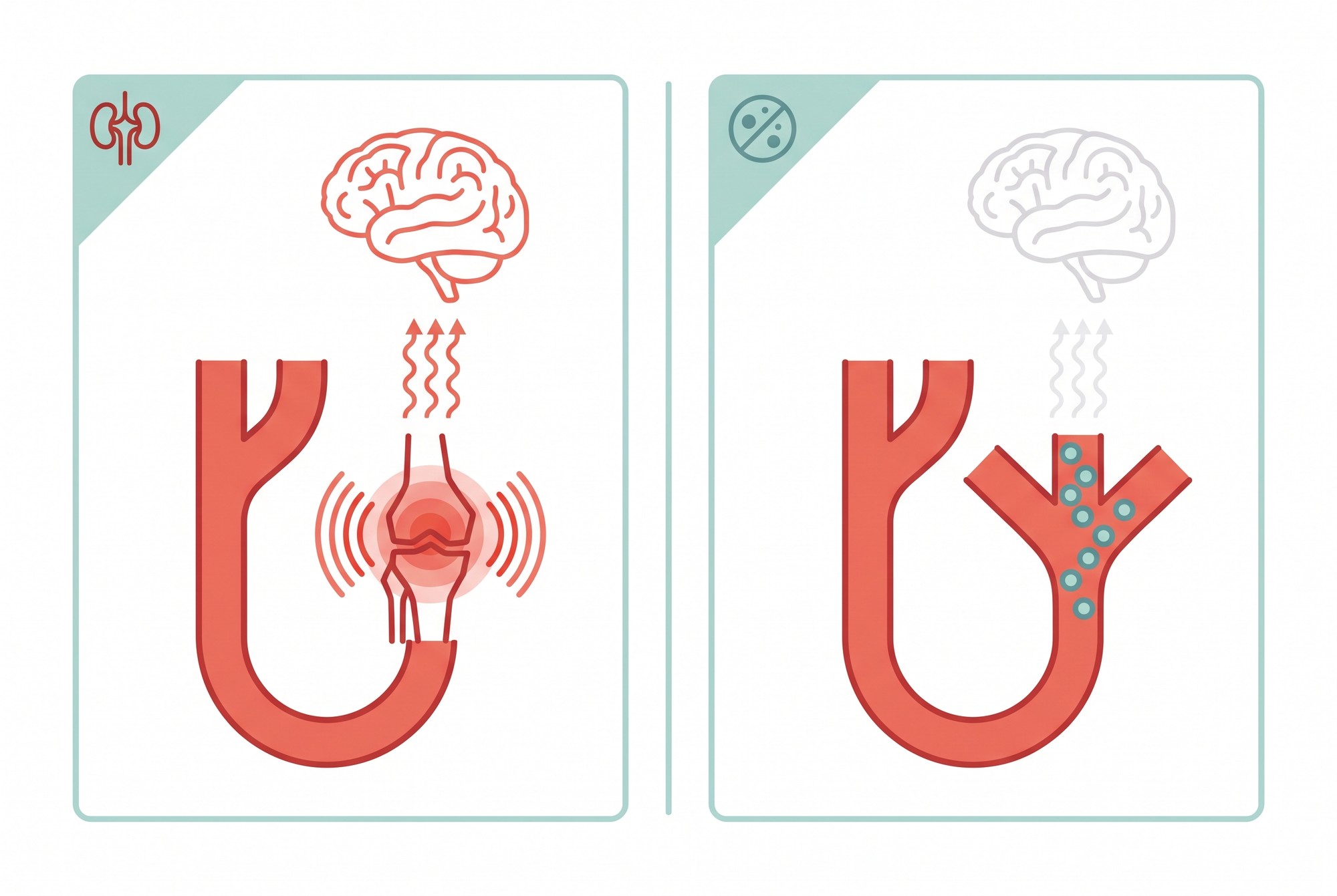
Because the two procedures have confusingly similar names, patients often ask about them together. They work in opposite ways, and the distinction matters.
Genicular nerve ablation, sometimes called genicular nerve radiofrequency ablation, deliberately destroys the sensory nerves around the knee using heat. It targets the pain signal itself. Genicular artery embolization targets the blood supply to the inflamed tissue, hoping that reducing the inflammation reduces the pain.
Radiofrequency ablation has a larger measured treatment effect than GAE in cost-effectiveness work using randomized trial data. A 2026 systematic review of 19 studies found it produced larger and more durable pain relief than genicular nerve blocks, commonly lasting 6 to 12 months and sometimes beyond a year. How much weight to put on that is less clear than it sounds, because other recent analyses have rated the evidence for radiofrequency ablation itself as low or very low certainty, with benefits that are modest and often not sustained beyond three months. The trade-off is that the nerves can regrow, so the effect may need repeating, and there is a risk of foot drop if the wrong nerve is targeted.
A 2021 indirect comparison of GAE, radiofrequency ablation and injections found no significant difference in outcomes between the three. If you are weighing two procedures with confusingly similar names, the honest answer is that neither has strong randomized evidence, and the better-studied option is probably the one that is actually recommended.
How long does the relief last?
The honest answer depends on which evidence you are reading, and the discrepancy is instructive.
From single-arm data, relief appears substantial within the first week, which is faster than many people expect. Pooled single-arm results show pain score reductions of 54% within a week and around 80% at two years, and the Japanese cohort found sustained improvement out to three years with the great majority of patients no longer needing oral medication or injections.
From the two better-blinded controlled trials, the picture is that the benefit people experience is comparable to what a convincing fake procedure achieves, and that this placebo effect is itself substantial and can persist for a full year.
There is a further complication. GAE is considered by some payers as a bridge to delay surgery, and a small study of patients who went on to have a total knee replacement after GAE found four adverse events out of 48 cases, including two wound healing issues, all of which resolved. The authors concluded GAE should not be considered a contraindication for future knee replacement, which is reassuring for anyone worried that the procedure would compromise their options later.
What are the risks and side effects?
The complication rates vary considerably between reviews, and the difference is instructive in itself.
Transient skin discoloration around the knee is the most common side effect, reported in around 11% of patients in one systematic review. Skin changes more generally affect between 10% and 65% of patients depending on the embolic agent used, and they typically resolve within three to twelve weeks. Access site hematoma occurred in 3% of patients in one review, and focal skin ulceration in 0.3%.
Systematic reviews report overall complication rates between 20% and 25.2%, and the great majority of these are minor and self-limiting. More serious events, including infection, vascular injury, bone infarction and transient nerve symptoms, are uncommon.
The main theoretical risk is non-target embolization, where particles block vessels they were not meant to block. The British Society of Interventional Radiology describes this as the most serious potential complication, with the usual destination being the blood supply to nearby skin. This is why the particle size matters. Interventional radiologists working with spherical particles of 100 micrometerss or larger report not seeing the transient sensory deficits they encountered with smaller particles.
There are also clear contraindications. Severe peripheral arterial disease is one, because the genicular arteries act as collateral supply to the lower limb, and blocking them in someone with poor circulation could cause serious problems. Active knee infection, severe renal dysfunction, low platelets, and patients with a history of knee surgery are all excluded in most series. The procedure is also generally not performed on a knee that has already been replaced.

What does it cost, and will insurance pay?
This is the question that most directly affects patients, and the answer is frustratingly inconsistent.
Several major insurers classify GAE as experimental, investigational and unproven for osteoarthritis of the knee, and do not cover it. HealthSpring’s published policy explicitly excludes it for degenerative joint disease, for osteoarthritis of the knee, as a treatment before or after knee replacement, and for anyone who is not a candidate for knee replacement surgery. Molina Healthcare’s policy reaches the same conclusion, citing insufficient peer-reviewed evidence on long-term safety and efficacy.
Medicare has no national coverage position for the procedure. Coverage is left to local carrier discretion, which means a patient’s access can depend on where they live and which contractor handles their claim.
On cost, be skeptical of any single figure. One published baseline estimate puts the procedure at roughly $3,096 before conservative care, but clinics advertising the treatment quote sticker prices anywhere from about $3,000 to $15,000 depending on facility, region and imaging needs. The $1,500 to $2,500 figure that circulates widely comes from a single interventional radiology clinic describing what its own commercially insured patients happen to pay, and it should not be treated as a national average.
The billing codes are not the obstacle. The CPT codes used for vascular embolization and catheterization are well established, which is why payers are comfortable with the mechanics of the procedure. What they are unwilling to accept is the evidence. Traditional Medicare patients without a supplement, where a contractor approves, are generally covered at 80 percent and responsible for the remainder. Many commercial plans, including several from Anthem, Humana and Aetna, currently label the procedure investigational, which excludes it from standard policy coverage.
Who might actually be a candidate?
Even setting the evidence question aside, this is not a procedure for everyone. The most consistent signal across the literature is that the procedure works best in earlier-stage disease, where the pain is driven by inflammation rather than structural damage and scarring. Based on the published criteria, a realistic candidate profile looks something like this:
- Mild to moderate osteoarthritis, usually Kellgren-Lawrence grades 1 to 3 on imaging. Effects diminish in advanced disease.
- Symptoms that failed conservative treatment, meaning at least three months of medication, physical therapy and injections.
- A clear structural cause on imaging. People whose scans look normal are unlikely to benefit, and may have a different condition entirely.
- No significant circulatory problems. Severe peripheral arterial disease is a firm contraindication because the genicular arteries act as collateral supply to the lower limb.
- No active knee infection and adequate kidney function, since contrast dye is used during the procedure.
- A knee that has not already been replaced.
It is also worth noting that the structural options are developing. Researchers are working on a number of ways to repair or regenerate the joint itself, including regrowing damaged joint cartilage using modified stem cells and Columbia’s ARPA-H backed living knee replacement, which has moved into preclinical testing. Some of those approaches address the underlying wear rather than the symptom, which is the opposite strategy to blocking blood supply.
The research design reflects that same pattern. Most of the trial work has focused on mild to moderate osteoarthritis, defined on imaging as Kellgren-Lawrence grades 1 to 3. The Japanese cohort itself showed this gradient clearly, with estimated cumulative clinical success at two years of 85% in the mild-to-moderate knees against 70% in grade 3. Effects diminish further in advanced disease.
Interventional radiologists who have performed the procedure extensively make the same point, arguing that pain in late-stage disease is driven more by fibrosis than inflammation, and so would not respond to blocking blood vessels. This is a plausible and physiologically coherent argument, but it is an argument from mechanism rather than from trial evidence.
In practice this means the group most likely to benefit is narrower than the marketing suggests: people with mild to moderate disease, no circulatory problems, and a genuine history of failed conservative treatment.
What to try before a procedure like this
The reason to be cautious about GAE is not that it is dangerous, but that it is unproven, expensive, usually self-funded, and that it may displace interventions that are both better evidenced and considerably cheaper.
Every major guideline agrees on the starting point. The American College of Rheumatology’s 2026 guideline update strongly recommends therapeutic exercise for knee and hip osteoarthritis, strongly recommends weight loss for people who are overweight or have obesity, strongly recommends intra-articular corticosteroid injections, and conditionally recommends tibiofemoral and patellofemoral knee braces. The NICE osteoarthritis guidance recommends tailored therapeutic exercise and weight management as core treatments for everyone, alongside information and support, and advises that joint pain may initially increase when starting exercise.
The exercise element is not a throwaway line. Researchers have found that walking can relieve pain and slow the actual damage in arthritic knees, and for anyone who has been told simply to rest, that finding runs against the usual instinct. Our guide to managing knee pain day to day covers the practical side of building that routine without aggravating the joint.
Two of those interventions are free. A 2026 meta-analysis in The BMJ of 69 randomized trials covering 153,902 adults looked at the other end of the self-management spectrum and found that calcium and vitamin D supplements, whether taken alone or together, do little to prevent fractures and falls in most older people. The editorial accompanying it argued that attention and funding should shift toward balance training and resistance exercise, which have demonstrated meaningful benefit.
For anyone currently facing a decision about knee replacement, the practical sequence is worth spelling out. The order matters, because the cheapest and best-evidenced options come first:
- Structured exercise and weight management. Strongly recommended by every major guideline, and two of the interventions in this list cost nothing.
- Topical NSAIDs, which are conditionally recommended for knee osteoarthritis, alongside any oral medication your doctor considers appropriate.
- An intra-articular corticosteroid injection if symptoms persist. Strongly recommended by the American College of Rheumatology, though effects are usually short-lived.
- A tibiofemoral or patellofemoral knee brace, conditionally recommended and often underused.
- Physical therapy referral where function is limited, and mobility aids such as canes where walking is difficult.
- Only then, a conversation with an interventional radiologist about GAE, and only if you go in knowing that the trials have been negative.
Some people also explore options outside the standard medical pathway before accepting either injections or surgery. Red light therapy is one of the more widely discussed, and while the research is early, there is evidence that it offers modest pain relief for arthritis and joints. It is worth understanding what that evidence does and does not support before spending money on a device.
It is also worth asking directly whether a patient is likely to be a responder. Most of the trial data comes from mild to moderate disease, and a cost-effectiveness analysis found GAE only becomes more cost-effective than radiofrequency ablation when clinical success rates exceed 32 to 51 percent, depending on the modeling assumptions. The Japanese cohort found 14% of patients needed a repeat procedure, so the procedure may not be a one-time answer even in the best case.
Frequently asked questions
What are the disadvantages of genicular artery embolization?
The main disadvantage is not safety but certainty. Two sham-controlled randomized trials, including the Dutch one followed for a full year, have failed to show the procedure outperforming a fake version of itself, and a pooled analysis of 45 studies rated the certainty of evidence as very low to low. NICE’s position is that the procedure should only be used in the context of research. The one trial that did find a benefit was small and compromised by switching its control group to the real procedure after a month. Beyond the evidence question, the procedure is usually not covered by insurance, published cost estimates range widely, and around 11% experience transient skin discoloration with overall complication rates of 20% to 25% reported in reviews, mostly minor.
Does Medicare pay for genicular artery embolization?
There is no national Medicare coverage position for the procedure, and coverage is left to local carrier discretion, so approval can depend on your region. Where a Medicare Administrative Contractor approves, patients with Part B and no supplement are generally covered at 80 percent and responsible for the balance. HealthSpring, Molina Healthcare and Kaiser Permanente all classify the procedure as experimental, investigational or unproven for knee osteoarthritis, and several major commercial insurers, including Anthem, Humana and Aetna, currently label it investigational, which excludes it from standard policy coverage.
What is the success rate for genicular artery embolization?
It depends entirely on which studies you read. Single-arm studies report 70 to 86 percent of patients improving, with the Japanese four-year cohort reporting clinical success of 86.3% at six months and 79.8% at three years. Of the three sham-controlled randomized trials, one small US trial found a significant benefit at one month, while the two better-blinded trials found no significant difference from a sham procedure at any point. A 2026 meta-analysis of 2,205 patients concluded there is no high-quality evidence of superiority over sham.
How much does a genicular artery embolization cost?
Figures vary widely, so treat any single number with caution. One published baseline estimate is about $3,096, while clinics quote sticker prices from roughly $3,000 to $15,000 depending on facility, region and imaging needs. The widely repeated $1,500 to $2,500 out-of-pocket figure comes from one clinic’s own insured patients rather than a national average. Since most commercial plans label the procedure investigational and decline to cover it, patients without coverage may face the full sticker price. Traditional Medicare patients, where a contractor approves, are generally covered at 80 percent. Medicaid coverage varies by state.
How long does genicular artery embolization last?
Single-arm data suggests relief can begin within the first week and persist for two to four years, with the Japanese cohort showing sustained improvement at three years. However, the controlled trials found that any benefit was equivalent to a sham procedure and that this placebo benefit itself persisted for a full year. Around 14% of patients in the Japanese cohort needed a second procedure.
Is genicular artery embolization covered by insurance?
Usually not. HealthSpring, Molina Healthcare and Kaiser Permanente all classify the procedure as experimental, investigational or unproven for knee osteoarthritis. Several major commercial insurers, including Anthem, Humana and Aetna, currently label it investigational, which excludes it from standard policy coverage. Medicare has no national position and defers to local contractors. NICE goes further, recommending the procedure only be used in research.
The bottom line
Genicular artery embolization is a well-performed procedure by trained interventional radiologists, with a safety profile that is reassuring and a recovery time that is genuinely better than surgery. Patients who have had it do often report real relief, and there is objective MRI evidence from the Japanese work that it can reduce joint inflammation.
It is also a procedure that has not convincingly demonstrated it works better than an elaborate placebo. Two properly blinded randomized trials found no difference, and the third, which did find a benefit, switched its control group to the real procedure after a month. That is a field where the enthusiasm has outrun the evidence for over a decade. It is why payers refuse to cover it and why no major clinical guideline recommends it.
That is not the same as saying it does not work. It is saying that the question has not been answered yet, and that patients are currently being asked to fund the search out of their own pockets. The people most likely to benefit are those with earlier-stage disease who have genuinely exhausted conservative treatment, and who go into the consultation understanding exactly what is known, what is claimed, and what is not known at all.


