
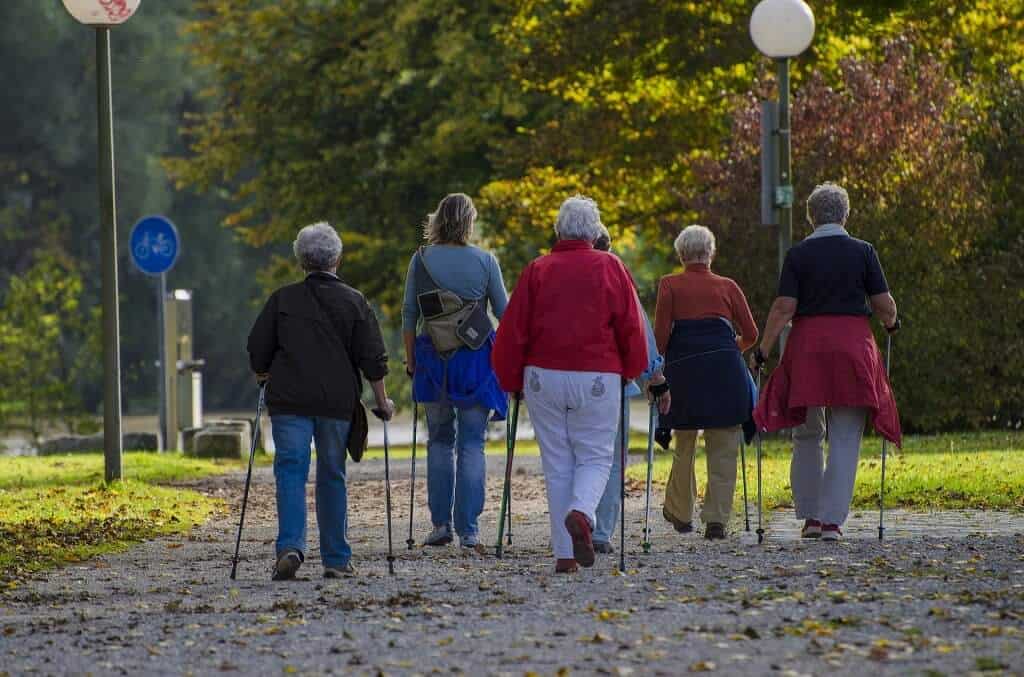
Walking is about as accessible as it gets when it comes to different ways to exercise the human body—and new research suggests it could be an effective approach to combat osteoarthritis in the knees. The new study looked at the benefits of a regular stroll in adults over 50 and discovered that it could relieve discomfort and prevent joint degeneration.
Scientists from Baylor College of Medicine conducted the research based on a multi-year observational study of over 1,200 people aged 50 and up who have knee osteoarthritis, the most prevalent type of arthritis. The participants self-reported their walking habits, including the amount of time they spent walking and how often they did so, allowing the researchers to categorize 73% of the cohort as “walkers” and the rest as “non-walkers.”
The likelihood of frequent knee pain was reduced by 40% in those who walked for exercise. X-ray images were also used to evaluate the course and degree of osteoarthritis in the knees, with the walkers having a lower risk of medial joint space narrowing, a sign of arthritis. This indicates that going for a walk regularly could relieve pain and slow down the progression of osteoarthritis in the knees.
Dr. Grace Hsiao-Wei Lo, the first author of the paper, explained:
“These findings are particularly useful for people who have radiographic evidence of osteoarthritis but don’t have pain every day in their knees. This study supports the possibility that walking for exercise can help prevent the onset of daily knee pain. It might also slow down the worsening of damage inside the joint from osteoarthritis.”
Although there is no cure or means to reverse osteoarthritis, therapies such as physical therapy and medication are available to alleviate pain and improve mobility. In addition, exciting discoveries in regenerative medicine are being developed, and grafts may one day be used to reduce inflammation and fortify problematic joints. Still, research like this new one shows that we already have some practical tools.
Walking is also the first thing recommended before considering any procedure, including genicular artery embolization, the minimally invasive treatment for knee osteoarthritis that blocks the blood vessels feeding joint inflammation. It is worth knowing about, though controlled trials have so far failed to show it outperforming a convincing placebo.
Dr. Lo advised:
“People diagnosed with knee osteoarthritis should walk for exercise, particularly if they do not have daily knee pain. However, if you already have daily knee pain, there still might be a benefit, especially if you have the kind of arthritis where your knees are bow-legged.”
The study was published on June 8, 2022, in Arthritis & Rheumatology.


