
China and Mexico are constructing distinct logistical shortcuts that fundamentally shift how global supply chains calculate the cost of moving freight. While one project transforms inland shipping in southern China, Mexico’s Tehuantepec Corridor creates a multimodal transport bridge designed to pull manufacturing directly into its path. Strategic investments in regional infrastructure represent a pivot toward reliability over simple geography.
Observed fluctuations in the price of moving goods from point A to point B are no longer tethered solely to fuel and miles. In a landscape defined by climate volatility and maritime congestion, real-time supply chain visibility has transitioned from a technical luxury to a survival requirement. Reliability now commands a premium, often outweighing the value of raw distance on a traditional trade map.
Strategic shortcuts emerge as a direct response to a fragile global system. When visibility drops, even the most established routes break, forcing logistics leaders to prioritize transit consistency. Within this new era, the ability to bypass traditional chokepoints is becoming the ultimate competitive advantage for modern commerce.

Understanding the Chokepoint Premium in Global Supply Chains
Why Chokepoints Suddenly Cost More than Distance
When a major chokepoint tightens, the market does not only lose time, it gains a new price layer. Reliability transitions from a vague concern to a quantifiable variable within contracts, freight quotes, and inventory plans.
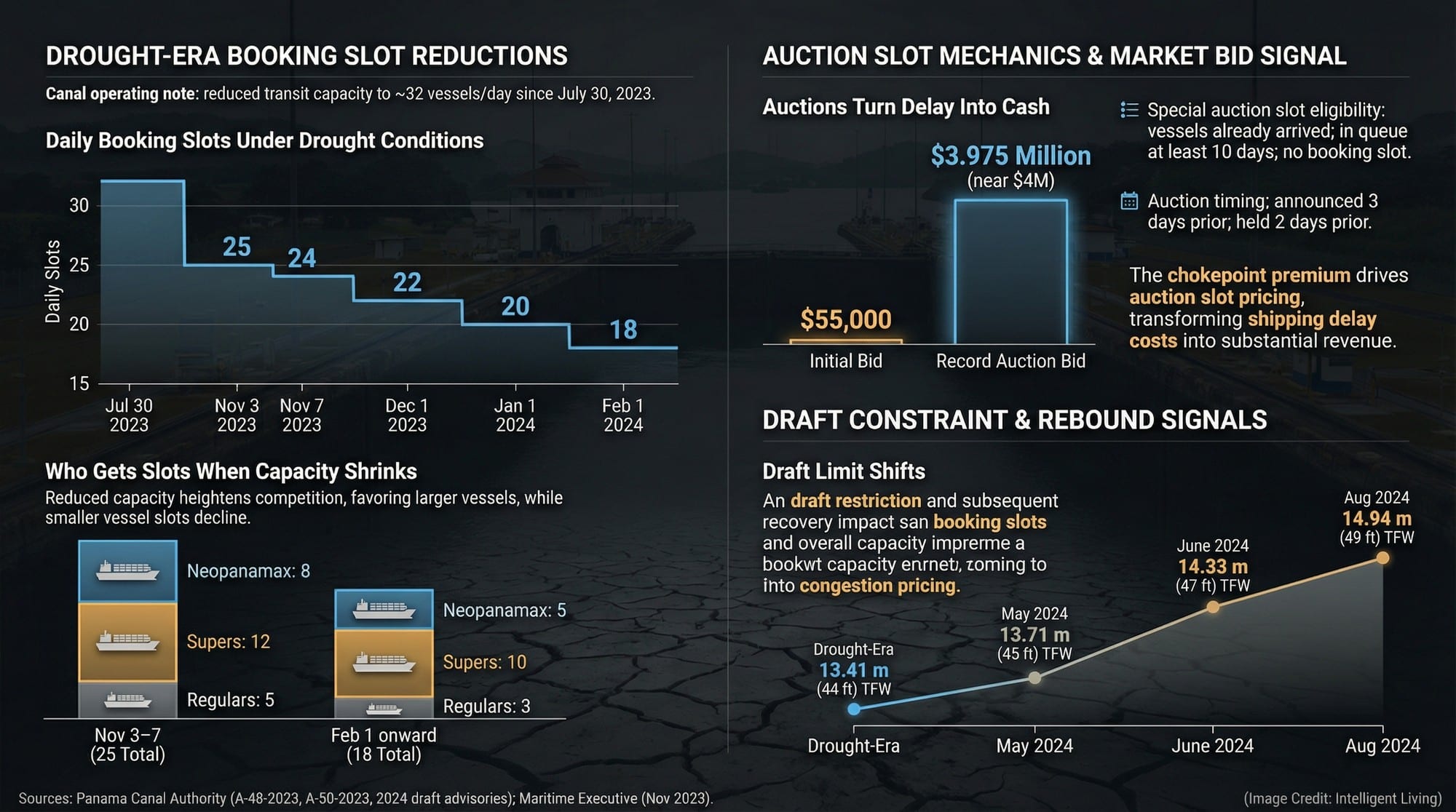
During the drought period, Panama introduced rules for an additional auction slot in the Panamax Locks. Auction implementation turned queue position into a bidding game that traders could not ignore.
Purchasing leads waiting on delayed component containers often face dual costs: expedited freight fees and production rescheduling labor. Analysis of chokepoint scarcity pricing found within the monthly canal operations summary utilized by industry operators highlights the direct link between chokepoint scarcity and rising shipping costs.
Quick Facts: The Three Corridors and the One Baseline
- Panama Canal: the authority described a plan to increase the number of daily transits to 24 after drought-era restrictions, showing how capacity can swing with water conditions.
- Pinglu Canal (China): construction updates describe the 134.2-kilometer Pinglu Canal as a river-to-sea route designed to link inland waterways with Beibu Gulf access; engineers utilize official estimates to frame these benefits until operational data confirms practical results.
- Tehuantepec Corridor (Mexico): the official CIIT planning page presents an interoceanic rail and port corridor blueprint that combines ports, rehabilitated rail, and “development poles” meant to attract industry, not only move containers.
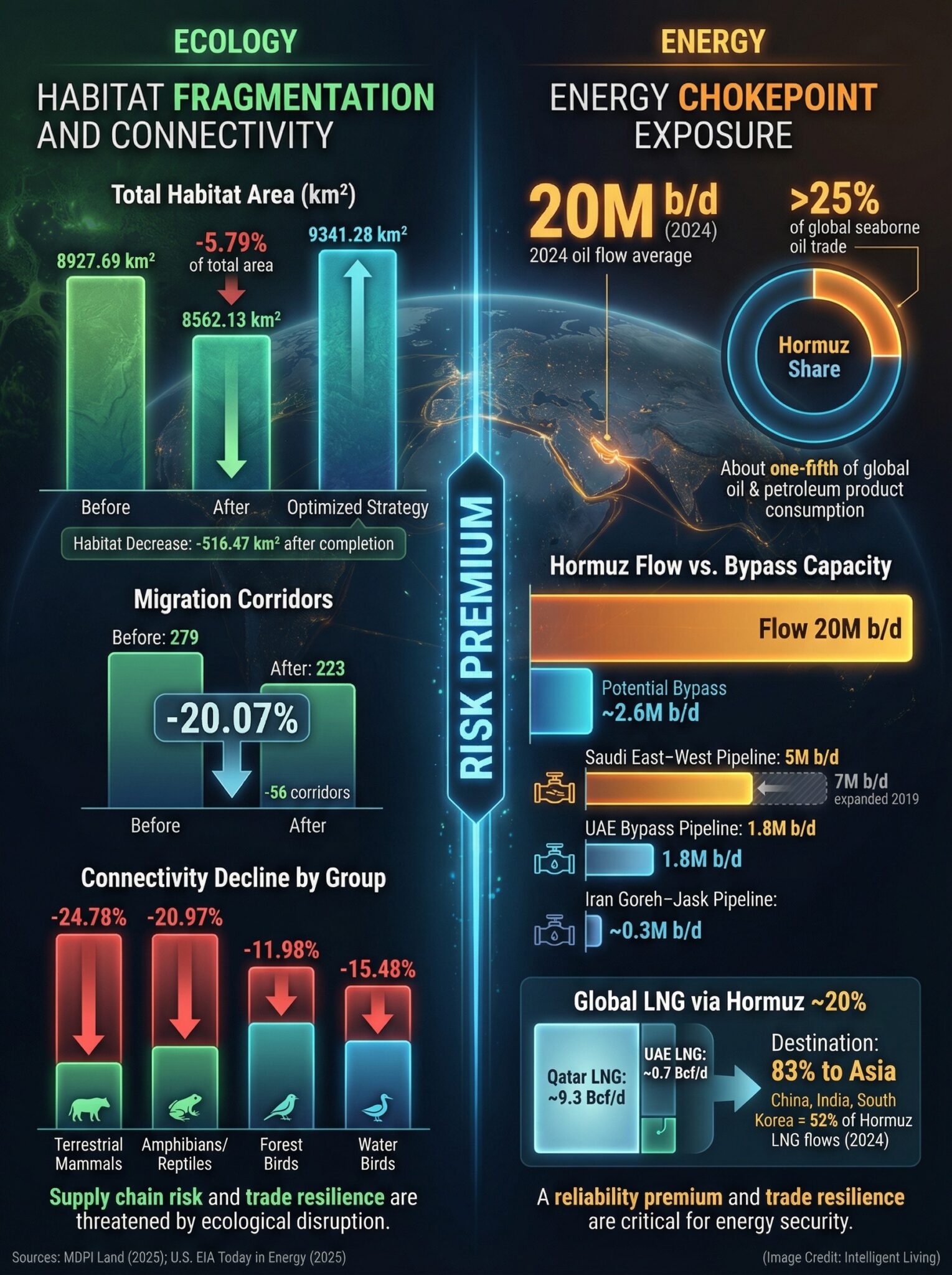
- Energy chokepoint signal: economic planners track whether pipelines can reduce dependence on the Strait of Hormuz because fuel and insurance shocks can spill into global freight costs.
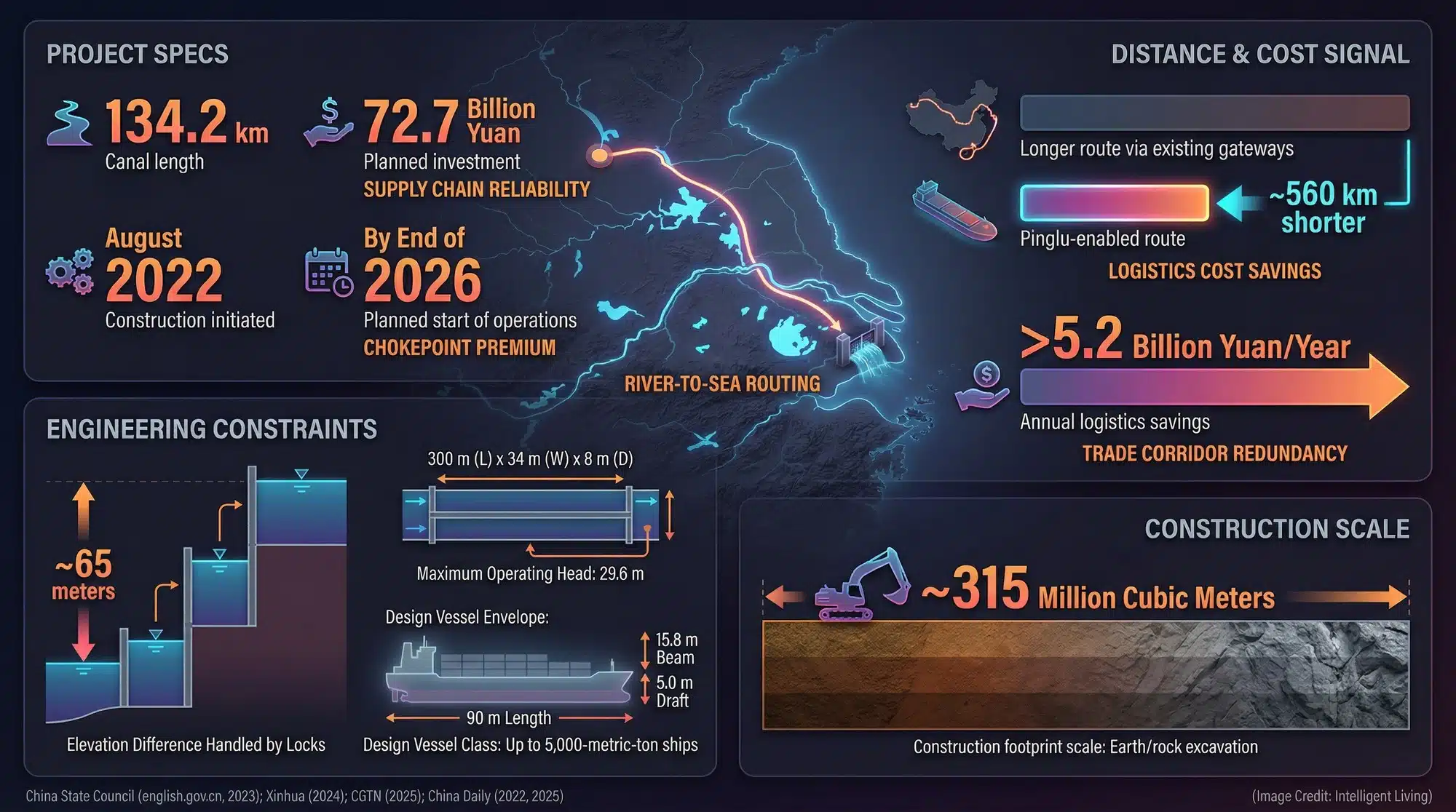
China’s Pinglu Canal: A River-to-Sea Shortcut Built for Regional Gravity
Operational Scope and Strategic Intent of the Pinglu Canal
Pinglu connects inland water transport with coastal port access in Guangxi, compressing logistics into a more direct route. Strategic advantages focus on predictability over raw speed. Key project targets include:
- Designed one-way annual capacity of 89 million tons
- Reduced intermodal handoffs
- Enhanced inland-to-coastal synchronization
Initial engineering specifications define annual capacity targets until independent operating data confirms practical achievements.
ASEAN Trade Integration and Southwestern China Logistics
Pinglu functions as a regional gravity play designed to tighten trade routines between southwestern China and Southeast Asia. Closer analysis of Pinglu’s ASEAN trade logic identifies the canal as vital infrastructure reducing friction for inland exporters. Shorter, predictable routes fundamentally alter where factories source parts and how suppliers compete.
Near-Term Economic Impacts on Supply Chain Operations
Operational habits, such as reduced buffer days and increased confidence in vessel slots, reflect immediate economic impacts. Supply chain teams prioritize effective inventory forecasting because maintaining predictability remains paramount in operations planning. Documented project approvals include China’s environmental impact assessment review, though long-term credibility rests on subsequent monitoring.

Mexico’s Dry Canal: The Tehuantepec Corridor as Industrial Policy Infrastructure
The Multimodal Mandate: Ports, Rail, and Development Poles
Mexico’s corridor functions as comprehensive economic infrastructure rather than a localized transport upgrade. The corridor design uses ports and rail to create a faster cross-isthmus transfer. Value capture functions as the corridor’s primary economic engine, occurring through several layers:
- Localized manufacturing and service clusters
- Reduced reliance on transit-only fees
- Long-term industrial development instruments
The 2019 decree creating the CIIT public entity codifies this developmental intent.
Industrial Zones and Strategic Value Capture Mechanisms
The corridor hosts production alongside transport. Government licitation procedures tied to the Development Poles reveal plans to attract investors capable of turning a logistics spine into an industrial ecosystem. Factory proximity reduces variability and shortens lead times, offering critical advantages for buyers sourcing components.
Small e-commerce operators frequently discover that predictable shipping outweighs raw speed, especially when warehouse tracking systems fail to flag delays before holiday windows collapse.
Measurable Performance Indicators for New Logistics Routes
The corridor’s early performance depends on measurable proof points:
- Port dwell times and rail reliability
- Terminal throughput and industrial park occupancy
- Leaner inventory maintenance for manufacturers
Operating success hinges on avoiding transit variability. Simultaneously, decarbonization efforts transform corridors into testing grounds for hydrogen trucks in closed-loop port routes.
Analyzing Pricing Power and the Panama Canal Logistics Benchmark
Pricing Power: Who Wins When Trade Corridors Multiply
Stakeholder Advantages in a Competitive Corridor Market
Chokepoint tightening grants immediate pricing power to those controlling the bottleneck. At the height of scarcity, a record $4 million auction bid made the lesson plain. The ability to pay reorders priority, forcing others to absorb delays, reroute, or pass costs downstream.
Panama as the Baseline for Congestion and Scarcity Pricing
Multiplying trade alternatives shifts leverage across the supply chain:
- Ports gain power to adjust handling charges and service tiers.
- Rail operators begin pricing reliability as a premium service.
- Manufacturers benefit from reduced variability, though captured margins remain negotiable.
Leverage frequently depends on who controls the bottleneck at each logistical step. Procurement managers often choose between paying higher handling fees for consistent delivery or buying extra inventory to absorb uncertainty. Both choices require capital. However, prioritizing reliability reduces daily operational stress, particularly when GPS tracking and route optimization maintain realistic delivery windows.
Ports, Rail Operators, and Manufacturers Renegotiating Leverage
Rising chokepoint risks compel insurance and finance markets to embed volatility into premiums and penalty structures. Strategic shifts toward redundancy now include 3PL logistics workflows to streamline operations when variability threatens margins.
Reality Check: Does Any of This “Surpass the Panama Canal”?
The Metric Test: Time, Cost, Reliability, Cargo Type, Handling Steps
“Surpass” is meaningless without a metric. A dry canal can be faster for specific lanes when the core metric is reliability under congestion. However, it also introduces handling steps that can raise the total landed cost. Ship operators prioritize these metrics by utilizing maritime shipping advisories rather than sensational headlines. A robust comparison must weigh:
- Door-to-door transit time
- All-in logistical costs
- Damage risk from intermodal transfers
- Variability of delivery schedules
Geopolitical Analysis: Infrastructure Reality vs Strategic Narrative
Strategic autonomy language frequently characterizes corridor projects, requiring a focus on measured outcomes rather than stated intent. Analyzing the geopolitical framing of trade impacts provides narrative context, while operational truth remains tethered to throughput and dwell-time data.
Evaluating Environmental Tradeoffs and Energy Chokepoint Risks
Regional Winners, Local Costs: The Environmental and Social License Ledger
Habitat Fragmentation, Mitigation, and Research Signals
Landscapes reshaped by infrastructure projects often incur substantial long-tail costs. A peer-reviewed habitat connectivity analysis highlights how corridor construction alters wildlife movement networks, necessitating dedicated long-term monitoring and restoration efforts.
Community Consent as a Constraint on Industrial Occupancy
Weak local consent converts logistical delays into acute financing risks. Projections regarding ecosystem and community impacts serve as binding constraints when communities contest land use. Corridors designed as low-carbon systems offer significant green shipping advantages that can improve social license while increasing throughput.
Integrating Energy Corridors into Global Supply Chain Resilience
Strategic Impacts of Energy Disruption in the Strait of Hormuz
Energy markets mirror the chokepoint logic found in container logistics. Disrupted exports drive up fuel prices and insurance costs. Reports regarding Iraq’s blocked Hormuz exports illustrate the immediate stress placed on output and logistics planning.
Evaluating Pipelines as Export Resilience Mechanisms
Export resilience initiatives focus on several strategic projects:
- Revamping Kirkuk oil exports to Turkey via revamped pipelines.
- Evaluating Hong Kong-financed pipeline proposals currently in the offer stage.
These efforts aim to reduce exposure to specific sea-lane risks if proven viable at scale.

Conclusion: Redrawing the Map of Trade Reliability
These emerging trade corridors signify a permanent shift toward a reliability-driven economy. Building redundancy into global supply chains allows markets to de-risk against the climate volatility and geopolitical shocks that reprice logistics overnight. The map is being redrawn with a new philosophy that prioritizes consistency and industrial proximity over the lowest immediate freight rate.
The most critical signals for success will be found in the data: port throughput, industrial park occupancy, and the actual performance of transit reliability. As China’s Pinglu Canal and Mexico’s dry canal move from design specifications to operational reality, their impact will be measured by how effectively they reduce variability for the end user. Recent critical mineral supply warnings reflect the same high-stakes logic where localized bottlenecks can instantly flip procurement pricing.
Procurement managers strive to reclaim schedule control through diverse shipping lanes and localized manufacturing hubs. Establishing these routes ensures the transition away from a single-chokepoint dependency remains well underway.
Moving forward, the winners in global trade will be those who value predictable delivery as much as the goods themselves.
FAQ: Future-Proofing Trade Routes and Logistics
How does the Pinglu Canal link to ASEAN trade?
Establishing a direct river-to-sea connection allows Pinglu to streamline southwestern China’s export logistics.
Can Mexico’s dry canal realistically compete with Panama?
It competes on reliability for manufactured goods, offering a faster alternative when maritime congestion triggers chokepoint scarcity pricing.
Why is supply chain visibility now more important than distance?
Visibility allows companies to predict disruptions, ensuring that reliability—not just raw miles—governs the final landed cost.
What role do development poles play in trade corridors?
These industrial zones host manufacturing directly along the route, reducing lead times and capturing value locally.
How does chokepoint scarcity pricing affect everyday shipping?
Tight capacity forces auctions for transit slots, turning time delays into explicit fees that drive up consumer prices.


