
The phrase “two months away from running out of critical minerals” sounds dramatic. In truth, the vulnerability is far more focused and systemic.
It is not that the United States will suddenly run out of all critical minerals across the economy. Instead, the risk lies with certain highly specialized inputs. While many of these materials are measured in small volumes, they remain essential to advanced systems and can become constrained quickly when supply chains tighten, a pattern the annual U.S. mineral supply and import reliance summaries track across dozens of commodities.
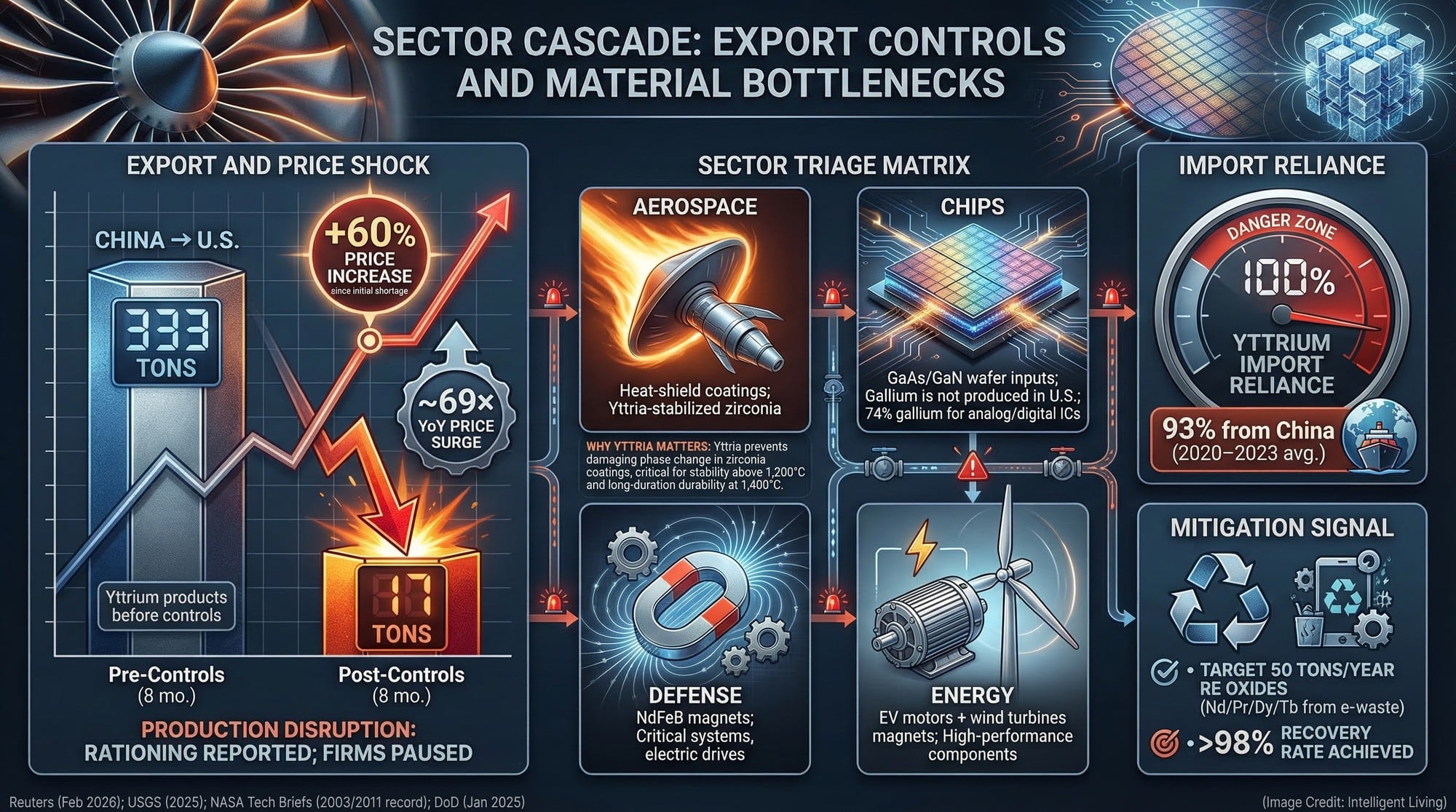
A recent example is yttrium, a little-known rare earth element used in thermal barrier coatings that protect jet engines from extreme heat. Following the tightening of export licenses, yttrium shipments to U.S. aerospace and chip manufacturers plummeted.
As prices spiked, industry leaders were forced to begin rationing the dwindling supply. When a coating input becomes scarce, the ripple can reach aircraft production lines and high-performance chips.
A practical question is how a tiny material can ground jets. Chemistry and physics provide the fundamental explanation for why specific materials are indispensable.
Advanced hardware architectures depend on ‘critical’ elements to provide specific properties that conventional materials simply cannot match, such as extreme heat tolerance, high magnetic strength, or very specific electrical behavior. The rare earths group includes scandium, yttrium, and the lanthanides, and their unique properties are why they show up in electric motors, high-frequency electronics, optics, and defense systems. Substitutes are often inferior, slower to qualify, or not available at all in the short term.
The two-month warning narrative circulating in defense-focused reporting refers to potential stockpile pressure in specific rare earth categories used in advanced systems, echoing long-running defense supply chain concerns about rare earth materials that predate today’s export controls.
National security risks differ from retail scarcity; supermarket shelves will not suddenly empty of everyday goods. Advanced sectors like aerospace and defense instead face throttling from specific processing chokepoints and export licensing.
On manufacturing floors, the constraint is often processing, not ore. As one factory manager put it: “We don’t run out of metal. We run out of the single ingredient that makes that metal usable.” That dynamic sits at the heart of how critical minerals and materials are defined in energy and manufacturing systems and explains why small bottlenecks can trigger outsized disruption.
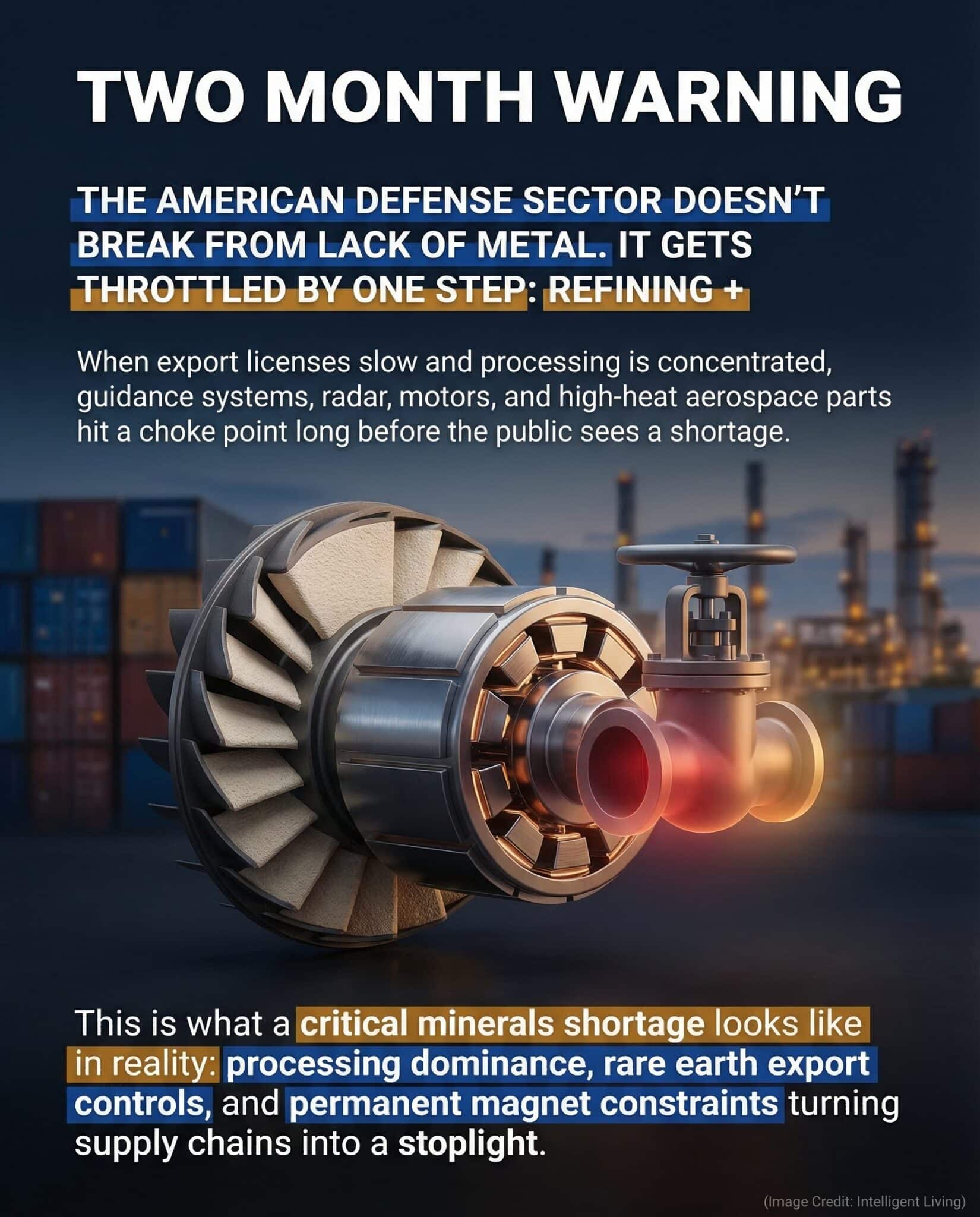
Critical Minerals Supply Chain Basics: Key Data and What “Critical” Really Means
Critical Minerals Shortage Snapshot: Key Data on Rare Earth Export Controls, Processing Dominance, and U.S. Vulnerabilities
- 60 minerals are now designated critical by the U.S. Geological Survey, reflecting materials deemed essential to economic and national security and vulnerable to disruption.
- Refining capacity is concentrated in a handful of countries, with the top three suppliers controlling a dominant share of processing capacity for many energy-related minerals.
- Export licensing now governs several medium and heavy rare earth items, and reduced shipments of materials such as yttrium and scandium can amplify price spikes and rationing across aerospace and semiconductor supply chains.
- Cobalt supply is dominated by Congo (Kinshasa), underscoring how mining concentration can translate into pricing power and policy leverage.
- Nickel markets are heavily influenced by Indonesia’s production surge, a key input for stainless steel, superalloys, and electric vehicle batteries.
- Rare earth permanent magnet supply chains are a known choke point for EV motors and wind turbines, and concentration in refining, alloying, and magnet production increases the risk that a single policy decision can ripple across robotics, power generation, and defense systems.
- Energy and manufacturing criticality assessments track rising demand pressure on magnet and battery inputs, tightening supply chains that were already concentrated before recent export controls.
Aggregated data reveals a singular, troubling pattern: real vulnerability isn’t found in total global reserves but in strategic chokepoints such as refining concentration, export controls, and market opacity. These are dynamics the IEA tracks in its multi-sector strategic minerals risk analysis because small disruptions can cascade fast into downstream industries.
Critical Minerals Shortage Explained: 2025 U.S. List, Supply Chain Risks, and Why it Matters
How The U.S. Defines Critical Minerals
Rarity alone does not define a ‘critical mineral’ under current standards. Under the Energy Act of 2020, a critical mineral is essential to economic and national security and has a vulnerable supply chain, which is why the list changes as technology and geopolitics change.
The U.S. Geological Survey’s final 2025 list identifies 60 minerals considered essential to economic and national security but at risk of supply disruption, and the technical methodology behind the 2025 list models how disruptions cascade through U.S. supply chains, including which downstream industries lose options first when a single input tightens.
Why The List Keeps Growing
The evolving landscape of industrial needs has placed a spotlight on several key materials essential for modern life. These substances are the backbone of high-tech production and energy storage.
- Lithium for high-capacity batteries powers the scaling of global electric vehicle fleets.
- Cobalt for energy-density cathodes ensures long-range stability for portable electronics and transportation.
- Gallium and germanium for semiconductors serve as the foundation for communications and high-frequency electronics.
- Graphite for battery anodes remains a critical but often overlooked component in fuel cells and energy storage.
Integrating these materials into a secure framework is vital for technological sovereignty. Identifying secure pathways for extracting rare-earth elements for green technologies helps ensure that growth does not compromise environmental standards.
Technological evolution forces a constant reassessment of the critical list. Scenario-based modeling allows the USGS to update the list by examining more than 1,200 potential disruption events. Rather than measuring underground volume, the agency prioritizes how quickly supply can be halted by the following:
- Rapid scaling of artificial intelligence, which accelerates data center buildouts.
- Global scaling of electric vehicles that outpaces the construction of new mines and processing plants.
- Rising demand for specialty alloys and high-performance magnets used in modern industrial hardware.
A Simple Way to Understand Supply Chain Fragility
An everyday way to understand this is through smartphones. A single device contains dozens of minerals, many sourced globally. If one input becomes restricted due to export controls or geopolitical tension, assembly slows even if every other component is available. The same logic applies at a national scale.
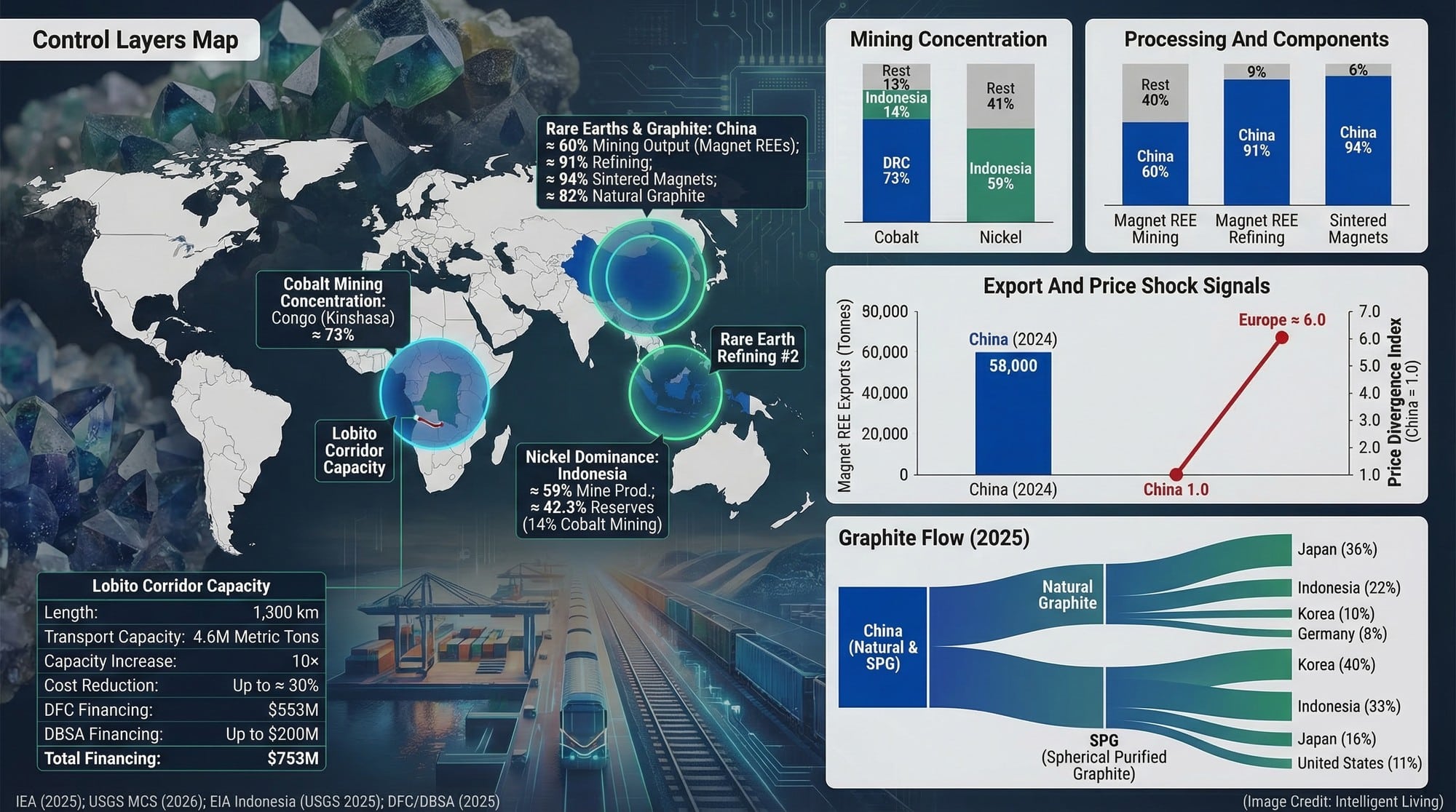
Who Holds The World’s Critical Minerals: Mining Power, Refining Control, Magnets, and Logistics
Mining Dominance
Strategic focus on mineral control often centers on the physical location of ore reserves. This market-leading dominance grants producing nations significant geopolitical leverage.
USGS Mineral Commodity Summaries 2026 estimate Congo (Kinshasa) accounted for an estimated 73% of the world’s mined cobalt supply in 2025, a level of concentration that makes policy and logistics changes in a single region matter globally. Indonesia produced 2.2 million tons of nickel in 2024, which helps explain why Indonesian decisions can move prices and availability quickly.
Market concentration in extraction provides producing nations with significant policy leverage. A miner in central Africa or Southeast Asia can influence battery supply chains thousands of miles away.
Refining and Processing Control
Minerals mined in Africa or South America must often flow through Asian processing facilities before reaching global manufacturers.
Processing and transformation stages represent the primary points of export licensing leverage. By controlling this phase, nations gain significant influence over the final availability of high-tech components. In the IEA’s 2025 critical minerals outlook, refining concentration remains extremely high for many energy-related minerals, with the top three suppliers controlling a dominant share of global processing capacity. China, in particular, has maintained a commanding role in refining lithium, cobalt, rare earths, and graphite.
Magnets and Component Bottlenecks
Rare earth magnets represent a third layer of control. The IEA notes that separation and refining of rare earths, along with production of sintered permanent magnets, is highly concentrated, which makes magnet supply a leverage point even when mined material exists elsewhere. These magnets power electric vehicle motors, wind turbines, robotics, radar systems, and missile guidance.
A small magnet, often hidden inside an electric motor, can determine whether a vehicle meets efficiency targets or a defense system achieves precision. High-performance magnets serve as the invisible engine behind electric vehicle motors, wind turbines, robotics, radar systems, and missile guidance.
That is one reason engineers are experimenting with magnet-free electric motor designs that reduce dependence on neodymium and dysprosium without sacrificing performance, alongside brushless magnet-free motor architectures built to avoid rare-earth magnet bottlenecks in high-volume electric drivetrains.
Logistics Corridors and Strategic Routes
The fourth layer is logistics. Minerals must move from mine to port to refinery to factory. Infrastructure projects such as the Lobito Corridor rail upgrade in Angola, backed by U.S. development finance support, are designed to diversify transport routes for copper and cobalt while reducing the time and cost required to move minerals from inland mining regions to global markets.
Control over rail lines, ports, and shipping lanes adds another dimension to mineral power. If a chokepoint closes, even abundant material can become inaccessible.

What The U.S. Has Been Planning: Domestic Mining, Allied Partnerships, and Stopgap Measures
Domestic Mining Versus Domestic Processing
Achieving self-sufficiency in domestic mining remains a primary strategic objective for policymakers. Standalone mining efforts cannot eliminate vulnerability if critical processing remains offshore.
The proclamation targeting processed critical minerals and derivative products underscores that dependence on foreign processing, especially from strategic competitors, poses national security risks and can become a hard constraint for defense, energy, and technology supply chains.
Permitting reforms and incentives aim to accelerate new projects, but mines and refineries take years to build. In the battery sector, domestic lithium independence efforts increasingly focus on building end-to-end capacity, because extracting ore is only one step in delivering battery-grade material at scale. Community review, environmental safeguards, and capital requirements slow timelines. The constraint is time, cost, and regulatory complexity, because new mines and new processing plants are multi-year builds even when financing is available.
Allied Partnerships and Resource Corridors
Strategic coordination among allies works to dismantle single-point dependencies while securing the long-term stability of the rare earth elements supply chain. Active programs focus on supporting strategic transport corridors and engaging in bilateral agreements to stabilize trade policies.
In Congo (Kinshasa), a move toward export quotas for cobalt shipments shows how producer nations can recalibrate leverage when global demand is rising faster than replacement supply can come online.
Stopgap and Emergency Policy Tools
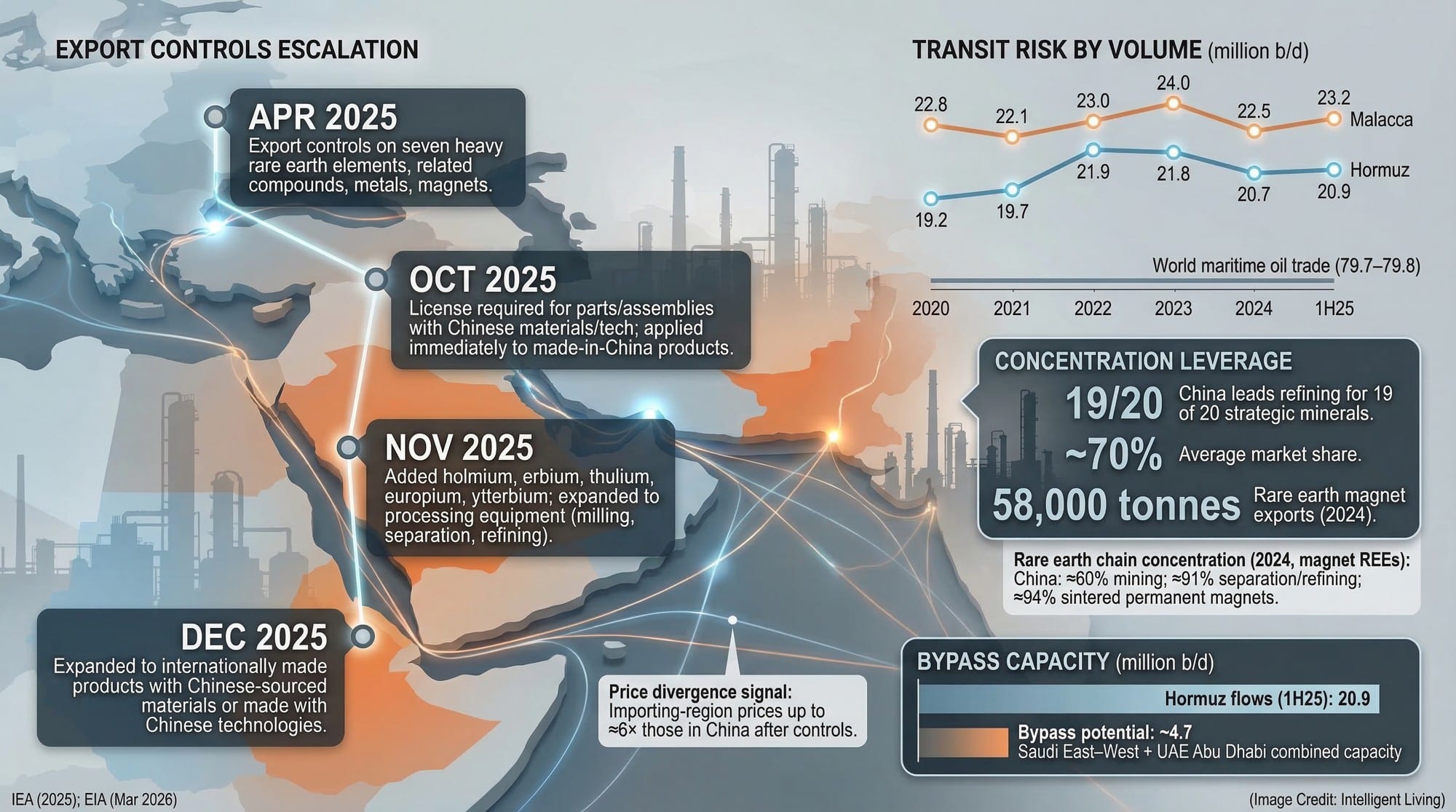
Short-term measures include strategic stockpiling, targeted financing, export control negotiations, and industrial policy tools designed to prevent sudden supply shocks. The U.S. has moved toward buffer stockpiles through a buffer stockpile designed to keep manufacturing lines running during short-term mineral disruptions, while China’s Announcement No. 18 of 2025 requires export licenses for several medium and heavy rare earth items.
The combination of licensing delays and limited substitute capacity can quickly tighten supply for time-sensitive manufacturing. On the domestic side, the Defense Production Act has been used to strengthen recycling and reprocessing, including a Department of Defense award that expands upcycling scrap into high-grade titanium, nickel, niobium, and tungsten for defense and commercial supply chains.
A procurement officer in the aerospace sector described the experience as “watching the supply chain slow in real time.” Orders were not canceled, but deliveries stretched, and qualification of alternative suppliers accelerated under pressure.
How The U.S. is Affected First: Aerospace, Chips, Defense, and Energy Systems
Aerospace and High-Temperature Coatings
Thermal barrier coatings protecting turbine blades rely on yttria-stabilized zirconia. In these systems, yttria helps stabilize zirconia under extreme jet-engine temperatures, ensuring the coating resists damaging phase changes over time. Recent export controls and reduced shipments at strategic mineral chokepoints have triggered production pauses and forced rationing across the aerospace supply chain. Even modest disruptions can affect aircraft delivery schedules.
Resource scarcity in coating compounds forces manufacturers to prioritize high-value strategic contracts. Consequently, smaller firms often feel the market squeeze first as supplies are diverted to tier-one defense and aerospace requirements.
Semiconductors and Advanced Electronics
Gallium, germanium, and certain rare earths are critical to chip manufacturing and high-frequency electronics. In parallel, germanium supports fiber-optic networks and infrared imaging used in communications and sensing.
Supply constraints add uncertainty to an already complex semiconductor ecosystem. Even upstream materials can become single points of failure, including ultra-pure quartz used to produce silicon wafers for chips at strategic locations, where one disrupted node can ripple across entire electronics supply chains.
In the chip race, post-silicon bismuth transistor research paired with mineral leverage shows how device physics and resource control are increasingly discussed as one strategic package.
Put simply, a slowdown in mineral inputs can ripple into slower server deployments, delayed product launches, and higher component costs.
Defense and Precision Systems
Modern defense systems rely on rare earth magnets, advanced alloys, and specialty materials for guidance, sensing, and propulsion. Title III industrial base programs have funded recovering rare earth oxides from recycled electronic waste for NdFeB magnets used in defense platforms.
The White House’s national security framing of processed critical minerals emphasizes their role in fighter aircraft, missile systems, communications infrastructure, and energy resilience. Reports of rising munitions expenditures and accelerated deployment cycles underscore how sustained military operations can increase mineral demand. If stockpiles tighten, strategic decisions about allocation become unavoidable.
Energy Transition and Grid Infrastructure
Electrification amplifies mineral demand. Copper, lithium, cobalt, and rare earth magnets underpin electric vehicles, wind turbines, and grid upgrades. The IEA’s outlook stresses that without diversification and new capacity, demand growth could outpace supply in the coming decade.
Consumer adoption of solar panels and electric vehicles may face indirect pressure from mineral constraints. While these shortages aren’t always visible to the public, they directly influence equipment pricing and the overall speed of the energy transition. One practical pressure valve is circular supply, and the economics of recycling lithium-ion batteries into recoverable lithium, cobalt, and nickel are increasingly being treated as an industrial capability rather than a niche green add-on.
Geopolitics and Crisis Response: How Mineral Chokepoints Shift Power
What this Does to U.S. Global Standing
Processing Power Becomes Diplomatic Power
Mineral dependency reshapes geopolitical influence. While oil supply once dictated the terms of global energy security, the modern era sees processing capacity and mineral supply chains defining the boundaries of technological sovereignty.
When a small group of countries controls refining and component manufacturing, they gain bargaining power in trade negotiations and diplomatic disputes. Export controls, quotas, and licensing regimes become tools of statecraft.
Credibility, Alliances, and Counter-Leverage
At the same time, diversification efforts and allied trade frameworks can strengthen cooperative networks. If the United States successfully builds resilient supply chains with partners, it can reinforce credibility. If constraints persist, adversaries may perceive leverage.
When Minerals Become Monetary Policy
In international forums, mineral access now sits alongside trade and defense as a pillar of strategic competition. That shift is also feeding new financial experiments, including proposals that treat critical minerals as monetary backing, such as a minerals-backed currency proposal tied to lithium and cobalt that reframes resource leverage as macroeconomic influence.
The Last-Mile Shock Absorber: Emergency Logistics and Industrial Sprint
Chokepoints and Transit Risk
Shipping lanes and logistics routes can determine whether material shortages intensify or ease. Geopolitical friction and sanctions often transform physical chokepoints into insurmountable barriers.
The Strait of Hormuz remains one of the world’s busiest routes, with oil and petroleum liquids transit volumes tracked year by year by the U.S. Energy Information Administration.
The Industrial Sprint Under Constraint
Emergency industrial measures in this sector often mirror a wartime mobilization. To maintain operational readiness under constraint, key actors perform an industrial sprint:
- Accelerated supplier qualification to bypass concentrated chokepoints.
- Fast-tracked government financing designed to bridge capital gaps for new refineries.
- Aggressive contract diversification performed by procurement teams to avoid single-point failures.
While new capacity may take years to finalize, these stopgap measures ensure that manufacturing lines do not stall during the transition.
Circular Supply and Substitution Priorities
An engineer overseeing supply resilience once summarized the effort this way: “It is not about building one new mine. It is about rewiring an entire ecosystem.” That rewiring includes recycling initiatives, alternative materials research, and substitution where technically feasible.
Ambitious proposals often reach for new extraction frontiers. However, the environmental tradeoffs around deep-sea mining for nickel and cobalt highlight why strategic planners prefer circular supply and diversified onshore processing.
In the near term, industrial-scale circular supply is one of the fastest levers, and e-waste recycling for high-tech metals is increasingly treated as a strategic feedstock rather than a waste problem.
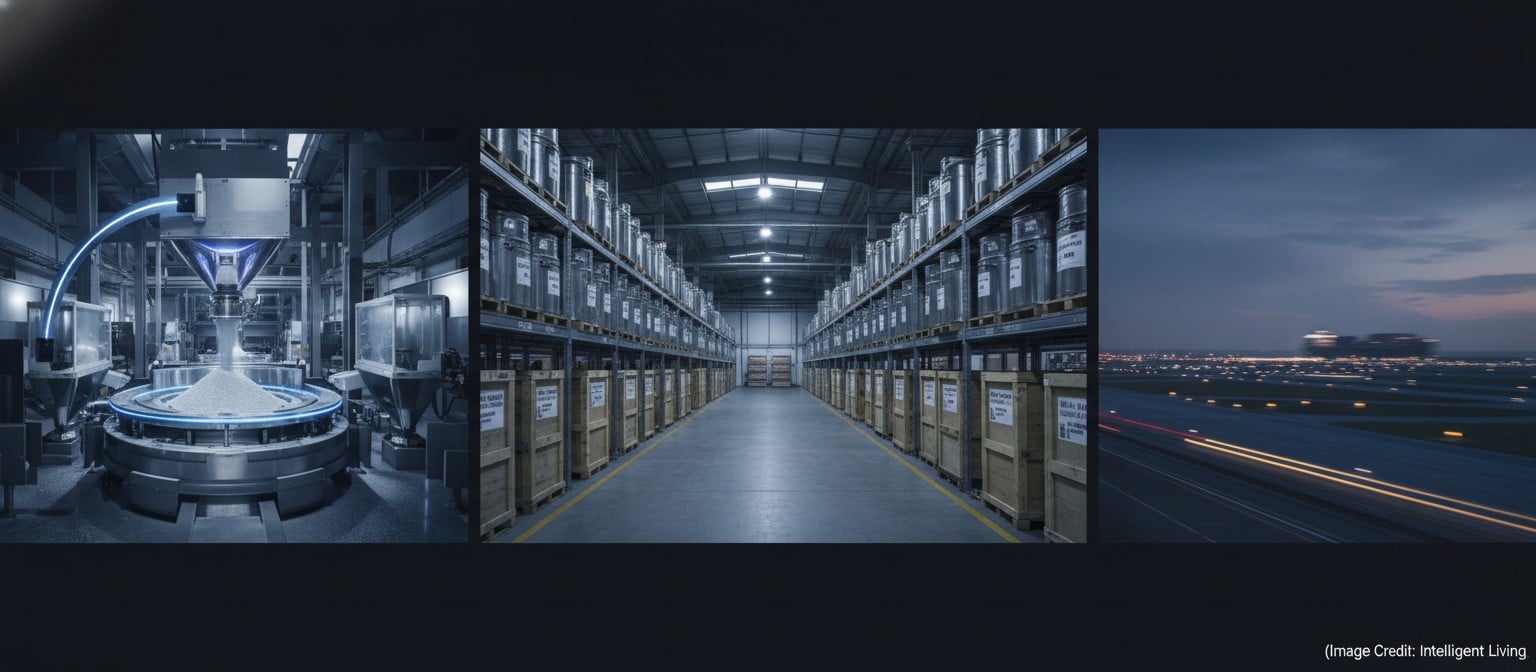
The Real Risk is Not Running Out; It is Getting Throttled
The image of the United States suddenly running out of all critical minerals oversimplifies a more complex reality. The deeper risk is throttling. When refining capacity, export licenses, logistics chokepoints, or specialty component manufacturing tighten, advanced industries feel pressure long before raw ore disappears.
A tiny input such as yttrium can ground a jet not because it is large in volume, but because it is irreplaceable in function. Resilience depends on diversification, domestic capacity, allied cooperation, and transparent policy within a landscape of concentrated processing and strategic export controls.
The minerals’ narrative centers fundamentally on the systems that sustain industrial growth. The most useful signal to watch is not a single headline about scarcity. Instead, focus on the real-world pipeline of new processing capacity and critical mineral breakthroughs expected in 2026. These technical shifts are what will ultimately determine how fast industries can escape strategic chokepoints.
Critical Minerals Shortage FAQ: Defense, Rare Earths, and Supply Chain Risks
What is The True Meaning of The Two-Month Warning?
The two-month critical minerals warning explained refers to the timeline for specific stockpile exhaustion in advanced manufacturing, not a total economic collapse. It highlights how quickly specialized components can vanish when export controls are triggered.
Why Does Refining Concentration Matter More than Mining?
While many nations have ore, mineral refining concentration is held by only a few players. This allows specific countries to control the transition from raw rock to usable material, creating a powerful geopolitical leverage point.
How Does US Mineral Import Reliance Affect Defense?
Advanced defense systems rely on rare earth magnets and specialty alloys for precision guidance. High US mineral import reliance means that disruptions in the rare earth elements supply chain can directly impact military readiness and production schedules.
Can Circular Supply Replace Traditional Mining?
Circular supply through e-waste recycling and scrap upcycling is a critical stopgap, but it cannot yet replace the volume of primary mining. It serves as an essential secondary feedstock that strengthens supply chain resilience.
What is Being Done to Secure Domestic Supply Chains?
The United States is utilizing the Defense Production Act and allied partnerships to build domestic refining capacity. These efforts aim to reduce single-point dependencies and fast-track the development of new, high-value mineral processing centers.


