
In the mountains of North Carolina lies a small town that plays an outsized role in our digital world. Spruce Pine might not be a household name, but this quaint Appalachian community is vital to producing ultra-pure quartz, a key ingredient in the manufacturing of silicon chips and solar panels. These chips are the brains behind every computer, smartphone, and much of today’s advanced technology. Without them, our digital lives—from streaming videos to smart home devices—would stall. NPR recently highlighted its significance when Hurricane Helene disrupted quartz production, threatening global tech supply chains.
Ultra-pure quartz is not your average sand. Within the high-tech world, it’s revered for its unmatched purity and is crucial in the semiconductor manufacturing process. This form of quartz is integral to making silicon wafers, which are the tiny but powerful chips that make modern computing possible. Wired elaborates on how this seemingly simple material forms the backbone of devices we rely on every day, from home assistants like Amazon’s Alexa to vital medical diagnostic tools.
Spruce Pine’s quartz has gained notoriety not only for its purity but also for its rarity. The region’s unique geological history has created deposits of quartz that are essential for producing the critical silicon used in chips across industries. As highlighted by MIT Technology Review, the challenge in obtaining such high-quality quartz puts North Carolina on the global map as a tech supply chain leader.
Hurricane Helene Unveils Vulnerability of Spruce Pine Quartz Supply Chain
However, this year brought unique challenges to Spruce Pine and its quartz operations. Hurricane Helene struck with severe force, causing flooding and damage to infrastructure. This natural disaster not only isolated the town but sent shockwaves through industries dependent on its quartz. The implications could reverberate worldwide, reflecting how interconnected our global supply chains have become.
Simultaneously, the demand for advanced AI chips is booming, driven by companies like Nvidia and Cerebras racing to provide ever-faster and more efficient processing capacities. Nvidia’s new Blackwell chips and Cerebras’ innovative wafer-scale design are pushing the boundaries of what’s possible with AI, as seen in their applications from digital assistants to autonomous vehicles. Artificial Intelligence chips, like the Nvidia Blackwell, are innovations critical in the fast-paced AI industry, highlighting the increasing need for high-quality materials like those sourced from Spruce Pine.
As we delve deeper into this article, prepare to explore how North Carolina not only contributes crucial materials to the tech industry but is also shaping the future of technology through innovation and resilience. This intersection of geology, technology, and climate challenges presents a unique glimpse into the heartbeat of modern tech economics.

The Importance of Ultra-Pure Quartz in Modern Technology
Ultra-pure quartz might seem like a stark, lifeless mineral, yet it is pivotal to the digital age. Sourced predominantly from the small town of Spruce Pine, North Carolina, this specialized type of quartz is celebrated for its extraordinary purity, making it essential in the manufacture of silicon chips found in just about every modern electronic device. From your everyday smartphone to critical infrastructure in space exploration, these chips serve as the brains controlling our digital interactions.
North Carolina’s Spruce Pine Quartz: Key to Global Technology
First, let’s take a closer look at why this mineral from Spruce Pine is so vital. The quartz mined here is used to create silicon wafers. These wafers are the foundational components for microchips—tiny yet powerful slices of silicon that power electronics by housing millions, even billions, of transistors in each chip. Imagine them as a city of switches that control electrical circuits, working tirelessly to process information. Their purity must be exceptionally high, as even a single contaminant can disrupt performance, akin to how grit might jam a machine’s gears.
The source of this high-purity quartz is deeply tied to the geological narrative of Spruce Pine. The unique conditions there, forged over millions of years, gave rise to quartz with negligible impurities, differentiating it from the more common gritty or grainy varieties encountered elsewhere. Such pure quartz is rare globally, making Spruce Pine indispensable for the critical materials supply chain.
Cornerstone of Global Tech Amidst Climate Challenges
Its significance cannot be overstated, especially as global demand for cutting-edge technology swells, propelled by the immense capabilities unlocked by smartphones, AI-driven processes, and renewable energy innovations. Unfortunately, weather phenomena like Hurricane Helene underline the vulnerability of supply routes and the importance of adaptation to maintain this vital supply chain against such disruptions.
Thus, Spruce Pine’s quartz is not just a regional gem but a cornerstone of the world’s technology framework. Its continuous supply is crucial for sustaining ongoing advancements in tech development and innovation.

Challenges and Opportunities Amidst Natural Disasters
The quaint town of Spruce Pine in North Carolina found itself unexpectedly thrust into the spotlight due to Hurricane Helene. With extreme weather conditions dropping over two feet of rain on the region, this small community faced significant damage, disrupting not only local life but also a critical global supply chain. Spruce Pine, known for providing the world with ultra-pure quartz essential for silicon chip manufacturing, suddenly became a focus for industries worldwide as they grappled with potential supply shortages.
Natural disasters like this hurricane highlight the vulnerabilities in our interconnected global economy. The storm didn’t just wash away roads and cut power in a small town; it created waves that reached far beyond. For technology companies reliant on quartz for components essential to electronics and solar panels, any disruption poses a significant risk. The fragile yet vital supply line of this high-purity mineral emphasizes broader supply chain risks inherent in today’s globalized markets.
Innovating Resilient Supply Chains Post-Hurricane Helene
However, crises also present opportunities for innovation and adaptation. Companies and regions are motivated to reassess their supply chains, developing contingency plans to mitigate similar disruptions in the future. Modern industries might rethink their dependency on single-source supplies. By proactively diversifying their resource base, these industries can build more resilience against unforeseen events.
Moreover, the damage brought by Hurricane Helene pushes technology and geological experts to explore alternative materials and methods. While substitutes for Spruce Pine’s quartz are still in infancy stages, the research prompted by necessity could lead to discovering new materials or innovations that can alleviate pressure on this delicate supply chain.
Embracing Rebuild: Strengthening Local Economies and Tech Resilience
Another aspect worth noting is the potential for local economic revitalization. In rebuilding and recovery efforts, there’s scope for investment in infrastructure improvements and job creation. Such opportunities could bolster local economies and fortify against future shocks, setting examples of resilient community planning and strengthening local-global economic ties.
In the face of natural calamities, the tech industry and local communities must adapt and innovate. While disruptions are challenging, they spur much-needed evolution in how industries function and communities operate. By learning from these experiences, both global tech supply chains and local infrastructures can evolve to be more robust, ensuring a steadier, more secure future against the backdrop of our changing climate.

The AI Chip Race: Nvidia vs. Cerebras
The growing demand for artificial intelligence (AI) is driving a competitive race to develop advanced AI chips. Leading this charge are Nvidia and Cerebras, both pioneers in the field but with distinct approaches. Nvidia, traditionally a leader in graphics processing units (GPUs), is making significant strides in AI with its Blackwell chip architecture. These chips are specifically engineered to handle complex data processing for AI models, vastly extending Nvidia’s influence beyond gaming into sectors like autonomous vehicles and cloud computing for major companies such as Microsoft and Amazon.
Cerebras Systems offers a bold alternative with its Wafer Scale Engine (WSE). This innovative chip is unusually large, the size of a dinner plate, significantly departing from traditional chip designs. The substantial size of the WSE allows for unprecedented processing power within a single unit, addressing inefficiencies common in multi-chip data transfers. Cerebras’ approach uniquely positions it to handle immense computational tasks, challenging standard practices in AI hardware development.
Each company contributes to the escalating need for potent AI chips, albeit through different methodologies. Nvidia enhances chip capability and versatility for widespread application, while Cerebras focuses on revolutionary design to boost processing efficiency. These groundbreaking innovations are pivotal in deploying AI across various fields, including medicine and real-time language processing, ensuring AI remains central to technological progress. As competition intensifies, the technological advances from these endeavors will likely foster new AI innovations that seamlessly integrate into our daily lives.
North Carolina’s Role in the AI Revolution
North Carolina is emerging as a pivotal player in the realm of artificial intelligence (AI), leveraging its rich deposits of ultra-pure quartz essential for creating silicon chips. Central to this development is Spruce Pine, which is recognized globally for supplying high-purity quartz, which is crucial for semiconductor manufacturing. These semiconductors serve as the backbone for AI applications, powering devices from smart homes to autonomous vehicles and systems for market prediction and medical diagnostics.
In the heart of North Carolina’s Blue Ridge Mountains, Spruce Pine is renowned for its two prominent mines, operated by The Quartz Corp and Sibelco.
The Quartz Corp utilizes the region’s extraordinary high-purity quartz for the production of semiconductor-grade material that is integral to technology like solar cells and fiber optics. Meanwhile, Sibelco’s operations in Spruce Pine have deep roots, beginning in the 1970s, with continued investments ensuring it remains a leading provider of high-purity quartz globally.
IOTA® HPQ, mined from two exceptionally pure ore bodies, serves as a fundamental component in the manufacture of high-tech products, including semiconductors and optical fibers. This strategic mining district, shaped over 380 million years ago, underscores North Carolina’s pivotal role in the supply chains sustaining cutting-edge technological advancements.
North Carolina: Rising Hub for Tech Innovation and Economic Growth
The state’s technological boom, rooted in its quartz resources, has triggered a broader economic revival. High-tech firms are investing in North Carolina, establishing research centers and manufacturing facilities to utilize the steady quartz supply.
This influx is attracting skilled professionals and creating new jobs, affirming North Carolina’s growing influence in the tech industry. As companies like Nvidia and Cerebras push forward in AI chip development, the steady demand for quality components bolsters this trend, underscoring the state’s role in supporting advanced technologies.
Beyond raw materials, North Carolina excels in research and development. The state’s institutions foster collaborations with tech giants and support startups in machine learning and data analysis, driving innovation. This synergy of resources and academic insight positions North Carolina as a leader in technological progress, with state and local leaders investing further in infrastructure and education. By merging its natural strengths with forward-thinking initiatives, North Carolina not only supplies the essentials for the tech world but also nurtures the talent to shape its future, playing an indispensable role in the evolution of AI.
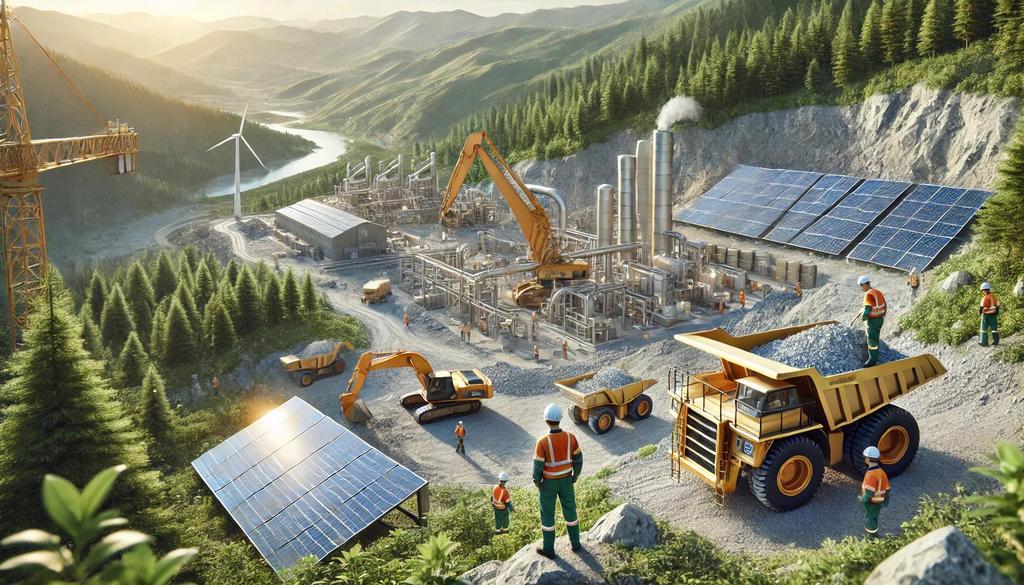
Sustainable Mining and Socioeconomics in Tech Industries
As the demand for advanced technologies continues to soar, the emphasis on sustainable mining practices has never been more crucial. Mining for essential minerals like quartz, lithium, and cobalt facilitates the production of cutting-edge gadgets and systems integral to the AI and renewable energy sectors. However, traditional mining methods often pose environmental risks, which have led to a pressing need for more sustainable and ethical practices.
Understanding the Importance of Sustainable Mining
Mining activities are notorious for their potential to disrupt ecosystems, pollute water sources, and create unsustainable land conditions. As such, finding a balance between resource extraction and environmental preservation is pivotal. Industry leaders and governments worldwide are turning their attention to innovative methods of reducing the ecological footprint of mining operations. For instance, exploratory studies in sustainable mineral extraction are underway to utilize seaweed to absorb minerals from the ocean, presenting novel, eco-friendly extraction techniques.
Advances in green chemistry are revolutionizing mineral processing to rely less on harmful chemicals, making these processes more environmentally sound. Plasmonic catalysis, leveraging the power of light to drive chemical reactions, exemplifies how technology can transform mineral processing into a more sustainable practice.
Ethical Practices in Resource Extraction
Ethical mining practices prioritize both environmental stewardship and human rights. Reports of forced labor and unsafe working conditions in mining regions have spurred calls for greater transparency and accountability in mineral supply chains. Adopting fair trade mining standards and ensuring workers’ rights are protected are critical steps in this journey. By supporting ethical sourcing practices, technology companies can lead the charge toward a more equitable industry.
These incremental improvements in sustainable and ethical mining practices not only help protect the planet but also ensure that the tech industry can continue innovating without depleting the earth’s precious resources or compromising on human rights.
Environmentally, the tech industry must reconcile its needs with the imperative of preserving biodiversity, reducing pollution, and managing resource consumption. The tech sector’s growing demand for natural resources necessitates new policies and innovative approaches to mitigate environmental impacts. Techniques like closed-loop recycling, where materials are reused rather than discarded, help reduce the environmental burden of tech production.
Socioeconomic Impacts
On the economic front, regions rich in natural resources, like those in North Carolina, often see significant boosts in local employment and economic activity due to strategic investments from high-tech firms. The influx of skilled labor and corporate resources acts as a catalyst for local development, improving infrastructure, and raising living standards. However, these opportunities must be managed to prevent economic dependency and ensure sustainable community growth.
Environmental Impacts and Mitigation Strategies
Moreover, addressing climate change—a major driver of natural resources like quartz—requires industry-wide commitments to decarbonize processes and supply chains. Strategic efforts toward developing renewable energy sources and carbon-neutral technologies are critical paths forward for the tech industry to align with global sustainability goals.

North Carolina’s Sustainable Future in Technology and Innovation
In the heart of North Carolina’s lush landscapes and amidst the global demand for cutting-edge technology, the synergy between natural resources and human innovation portrays a compelling picture of the future. From the enduring significance of ultra-pure quartz to the relentless pursuit of AI chip advancement by industry leaders like Nvidia and Cerebras, North Carolina is not just contributing to technological evolution; it’s shaping it.
The challenges posed by natural disasters and global demand underscore the delicate balance the tech industry must maintain between growth and sustainability. By embracing sustainable mining and fostering ethical practices, the industry can ensure the continued availability of key materials, securing its future while protecting the planet and its people.
As the narrative unfolds, the story of technological progress is interwoven with the threads of environmental stewardship and socioeconomic responsibility. This multifaceted approach not only advances technology but empowers communities and ecosystems to thrive together. Through dedicated efforts and innovations, today’s actions can safeguard tomorrow’s innovations—a testament to the transformative potential of harmonizing human progress with the planet’s health. By continuing to tread this path of thoughtful balance, North Carolina and the global tech industry lay the groundwork for a sustainable, resilient, and exciting future.


