
The creator economy is undergoing a seismic shift, and the traditional barriers to entry in filmmaking have effectively collapsed. Just a few years ago, producing a high-quality short film required thousands of dollars, a dedicated crew, expensive camera gear, and weeks of location scouting. Today, independent creators are orchestrating entire cinematic universes from their laptops.
If you have been paying attention to YouTube lately, you have likely noticed a booming new genre: the “faceless” channel. From gripping historical documentaries and sci-fi world-building to true crime and suspense stories, a new wave of digital creators is building massive audiences without ever stepping in front of a camera. These channels aren’t just passion projects; they are highly profitable media businesses. By leveraging AI video generation, creators are raking in YouTube Partner Program ad revenue, securing lucrative brand sponsorships, and generating substantial affiliate income.
Simultaneously, the artistic merit of AI-generated cinema is gaining undeniable mainstream validation. Fully AI-generated short films are now entering and winning awards at specialized AI film festivals and even traditional indie showcases. The message is clear: the technology is no longer just a surreal novelty. It is a legitimate storytelling medium.
However, the gap between a disjointed series of AI-generated images and a cohesive, emotionally resonant film is vast. The secret lies in the tech stack. In this guide, we will break down the exact 48-hour workflow indie creators use to go from a blank page to a monetizable AI short film, centered around the breakthrough capabilities of modern AI production platforms.
The Core Challenge: Character Consistency
Historically, the biggest hurdle for AI filmmakers was the “uncanny valley” of character consistency. You could generate a stunning shot of a detective in a neon-lit alleyway, but in the next shot, his facial structure, age, and clothing would morph entirely. Furthermore, giving these characters a voice that synchronized naturally with their lip movements was nearly impossible without intensive manual VFX work.
Today, that barrier has been shattered by platforms like APOB, which allow creators to lock in digital avatars and seamlessly match them with highly realistic voice generation. Here is how the modern indie filmmaker’s workflow operates.
Step 1: Ideation, Scripting, and Visualizing the Scenes
The foundation of any successful film, whether AI or live-action, is the story. In the AI workflow, your role shifts from a traditional writer to a creative director. You will rely on Large Language Models (LLMs) like ChatGPT or Claude to act as your writers’ room.
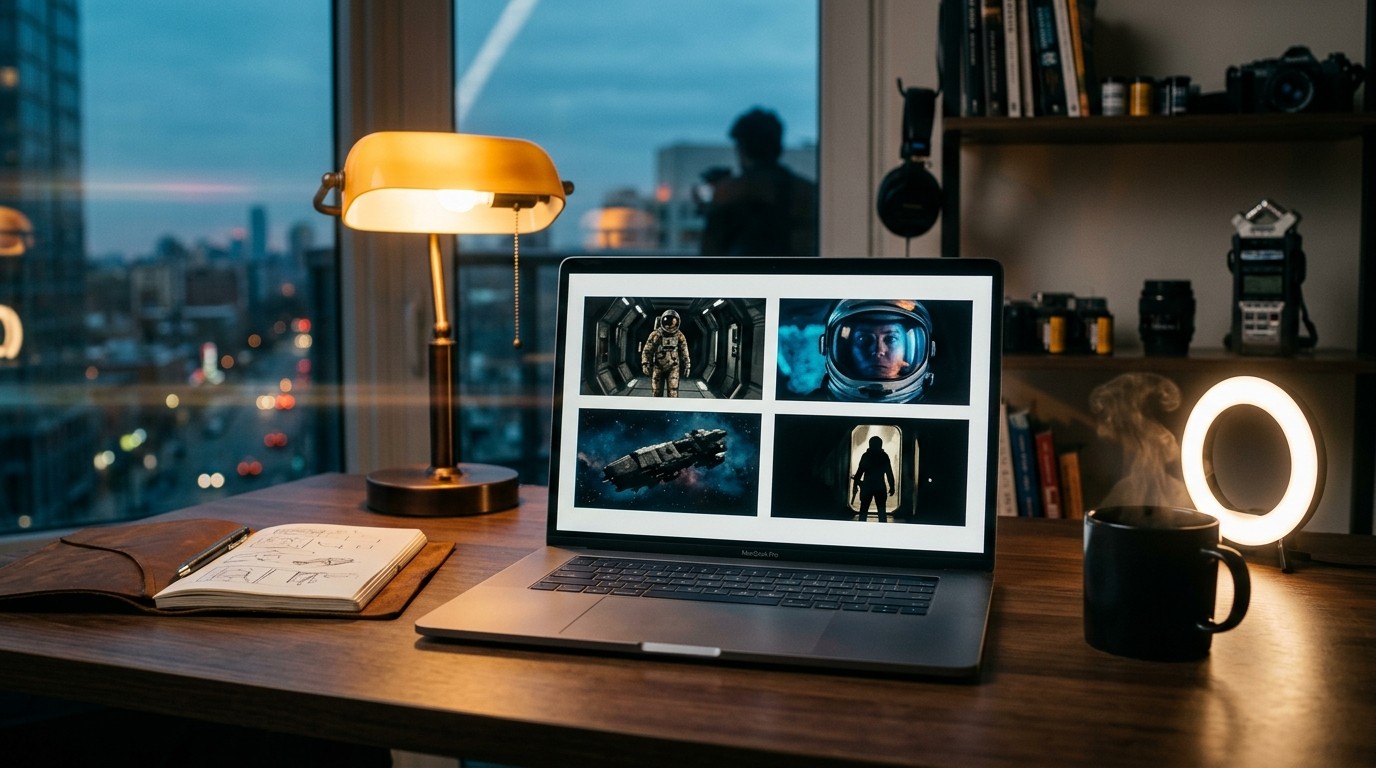
Start by feeding the AI a strong premise. For example: “Write a 3-minute sci-fi suspense script about an astronaut who discovers a derelict ship that is broadcasting her own voice.”
Once the script is locked, you must translate narrative text into a visual language. Ask your LLM to generate a Shot List and Prompt Blueprint. The prompt blueprint should break down every single camera angle into descriptive, image-generator-friendly text.
- Example Prompt: Wide shot, cinematic lighting, dramatic shadows, a lone astronaut in a weathered white space suit standing in a dimly lit, abandoned spacecraft corridor, 4k resolution, photorealistic, anamorphic lens flare.
By visualizing your scenes structurally before you generate a single frame of video, you save hours of computational time and ensure your narrative pacing remains tight.
Step 2: Character Creation
A monetizable YouTube channel relies on audience retention and emotional connection, and audiences connect with characters, not just pretty landscapes. Before generating your video scenes, you must establish who your protagonist is.
Instead of rolling the dice with random face generation in every scene, you need to establish a base character. This involves creating a highly detailed visual profile of your protagonist, down to their ethnicity, jawline, eye color, and signature clothing.
By saving this core character profile, you ensure that the audience recognizes the hero whether they are shown in a close-up, a wide action shot, or a dramatic profile angle. Consistency is what transforms a tech demo into a watchable movie.
Step 3: Video Generation & Lip-Syncing with APOB
This is where the actual production happens, and it is where the workflow has evolved the most in recent months. To solve the notorious consistency and dialogue problems, creators are turning to comprehensive platforms designed specifically for narrative generation.
For this phase, consistent AI avatar tools like APOB are becoming the industry standard. Under the hood, APOB is powered by the cutting-edge Seedance 2.5 architecture, which fundamentally changes how AI interprets video prompts.
Here is how the production step works:
- Scene Generation: You input the descriptive prompts you generated in Step 1 directly into the platform. Thanks to the underlying Seedance 2.5 technology, the engine understands cinematic language. You can dictate camera movements (a slow pan, a dolly zoom, or a tracking shot), and the platform will output fluid, continuous action without the warping or glitching that plagued older models.
- Voice and Performance: A silent film rarely goes viral on modern social platforms. You need your characters to speak. Instead of using separate, clunky software to animate a still image, you can upload your base character, generate a hyper-realistic AI voiceover, and use APOB to create perfect lip-syncing.
- Acting: Because the system maintains the structural integrity of the face, the generated dialogue scenes look remarkably natural. The digital avatar’s mouth movements align perfectly with the syllables of the script, giving the character actual emotional weight and bridging the gap between surreal AI art and genuine storytelling.
By housing the scene generation, character consistency, and lip-syncing in one environment, what used to take a team of VFX artists a week can now be rendered by a solo creator in an afternoon.
Step 4: Sound Design, Editing, and the Final Polish
Visuals only account for half of the cinematic experience; sound design is what sells the reality of the AI-generated world.
While platforms like APOB can automatically generate your short film complete with foundational background music, the final 10% of polish is what pushes a video into the YouTube algorithm’s viral tier. Export your rendered clips and bring them into a non-linear editor like CapCut, Premiere Pro, or DaVinci Resolve.
Here, you should focus on two critical audio elements:
- Foley and Sound Effects: Layer in environmental sounds. If your character is walking through a spaceship, add the low hum of an engine, the clank of metallic footsteps, and the subtle hiss of oxygen vents. Libraries like Epidemic Sound or AI audio generators like ElevenLabs are excellent resources for this.
- Trending Audio Integration: If your goal is monetization and rapid channel growth (especially on YouTube Shorts or TikTok), music choice is vital. While a cinematic orchestral score is great for a film festival, integrating trending audio tracks or viral sound bites during key dramatic moments can significantly increase your video’s reach on social algorithms.

The Monetization Playbook
Once your 48-hour production window closes and your film is exported, the business phase begins.
To successfully monetize, packaging is everything. Use AI image generators to create a highly clickable, dramatic YouTube thumbnail. Write an SEO-optimized title and description that taps into current search trends (e.g., “The Last Signal – AI Sci-Fi Short Film”).
As your channel grows and hits the YouTube Partner Program thresholds (1,000 subscribers plus either 4,000 watch hours or 10 million Shorts views in the last 90 days), ad revenue will become a baseline income. But the real leverage comes from the workflow itself. By placing affiliate links for the AI tools you used, like the text-to-speech engines or video generators, in your video descriptions, you can earn recurring commissions from viewers who want to learn how to make films just like yours.
We have entered a new era of decentralized media. The indie creator’s tech stack has democratized storytelling, proving that a massive Hollywood budget is no longer a prerequisite for cinematic success. With a strong script, a laptop, and the right AI workflow, the only limit to your production studio is your imagination.


