
If you’ve ever asked a digital assistant like Siri or Alexa a question and marveled at how quickly they provided an answer, you’re witnessing the power of artificial intelligence (AI) in action. At the heart of this technology are specialized computer chips designed to handle incredibly complex computations at rapid speeds. These chips have become essential not just for smart gadgets but for everything from predicting weather changes to helping doctors with diagnosis using AI models.
Recently, a small but ambitious company named Cerebras Systems stepped into the spotlight by making a bold claim: their new AI chips perform better at certain tasks than the ones made by Nvidia, the current leader in the field. Specifically, Cerebras alleges its chips, known for their unique design that’s literally dinner-plate-sized, can complete the type of AI task called “inference” faster than Nvidia’s widely used H100 chips.
To truly understand the significance of such a claim, it’s not just about comparing hardware. It involves delving into the technical details behind these chips, the broader market dynamics, and the rapidly expanding demand for AI capabilities across various sectors. Understanding these dynamics becomes even more crucial as the AI chip market grows, with expectations to expand to a $40 billion industry this year alone.
Understanding AI Inference and Chip Technology
Before we dive into the specifics of what makes Cerebras’ chips different, let’s break down what AI inference means. Imagine you’re assembling a jigsaw puzzle: inference in AI is the process of piecing together information from the puzzle pieces or, in the AI world, from vast amounts of data. Once a machine learning model (an AI “puzzle”) has been trained—in other words, once it’s learned how to recognize patterns like faces or voices from data—it uses inference to apply this knowledge in real-world applications.
Traditionally, this inference process requires high computing power, which is where specialized chips come into play. These chips are designed to handle vast data quantities faster than standard processors found in everyday computers. The competition in the chip world has been fierce, with giants like Nvidia leading the charge.
Nvidia Faces Challenge from Cerebras’ Unique Chip Design
Nvidia’s dominance in the chip market stems from its groundbreaking GPUs (Graphics Processing Units), which are designed to handle multiple operations simultaneously. They have been the go-to for tasks that need a high level of parallel processing—think of processing many threads or tasks at once, much like a conductor overseeing an orchestra full of musicians playing different instruments.
Enter Cerebras with its Wafer Scale Engine (WSE). Unlike traditional chips chopped into small, manageable pieces during manufacturing, Cerebras’ chip remains as one huge, intact piece, allowing it to accommodate more processing cores—900,000, to be exact. This design promises to overcome traditional memory bottlenecks by keeping everything the model needs right on the chip, thereby reducing delays caused by data shuffling back and forth. Such a setup is claimed to make AI processes like understanding and generating human language faster and more efficient.
Nvidia and Cerebras Navigate the AI Revolution
However, the story doesn’t end with design differences. Each company’s approach to handling these complex AI tasks reflects deeper strategic plays, aiming to capture the lion’s share of the rapidly expanding AI landscape. Understanding these intricacies paves the way for appreciating how such technologies can ultimately transform different aspects of our daily lives—from smart gadgets and healthcare systems to autonomous vehicles and beyond.
With AI evolving at a breakneck pace, it’s essential to keep an eye on these developments as they shape the future of technology.

The Cerebras Advantage: Wafer-Scale Innovation
In the bustling world of AI technology, Cerebras Systems has chosen a path less traveled—and it might just be paying off. At the heart of their recent breakthrough is the Wafer Scale Engine (WSE), a unique chip that’s redefining the boundaries of computing. Unlike traditional chips that are small in size, Cerebras’ WSE is akin to a technological titan, measuring about the size of a dinner plate.
To understand why size matters here, think of this massive chip as a sprawling factory, with every square inch humming away on different tasks simultaneously. The WSE hosts a staggering 900,000 cores, which are essentially tiny processing units tasked with handling complex calculations. Conventional GPUs, such as those by Nvidia, typically have far fewer cores packed within a smaller footprint, necessitating intricate data gymnastics that can slow down processing.
Cerebras’ Chip Design Breaks the Memory Bottleneck Barrier
One of the standout features of Cerebras’ chip is its ability to eliminate what tech experts call the “memory bottleneck.” In simpler terms, this refers to the delays caused when data has to be moved back and forth between the processing units and memory during tasks like AI inference. By integrating everything a model needs directly onto the chip, Cerebras drastically minimizes these delays, allowing for faster processing speeds. Imagine a busy restaurant where the chef has all of the ingredients and kitchen tools within an arm’s reach, enabling quick service.
This innovation not only enhances speed but also brings down costs. By reducing reliance on multiple smaller chips and external memory systems, Cerebras’ approach promises to deliver high-performance computing at a fraction of the cost typically associated with cloud-based AI services. It’s a bold move that could reshape how developers build AI applications, particularly those requiring real-time processing.

Nvidia’s Blackwell Chips: A Powerful Contender
On the other side of this technological duel stands Nvidia, a company that has consistently stayed a step ahead with its cutting-edge GPUs. Nvidia’s latest creation, the Blackwell chip, represents the pinnacle of their innovation efforts in revolutionizing AI capabilities. Named after the famed mathematician David Blackwell, these chips are designed not just for speed but also for versatility across a plethora of AI applications.
The Blackwell architecture introduces several groundbreaking features, most notably the second-generation Transformer Engine. This feature plays a crucial role in improving the chips’ efficiency at processing large AI models, such as those used in language translation and content generation. Think of it as a highly efficient logistics system, ensuring that every piece of data reaches its destination swiftly and securely without unnecessary overhead.
Nvidia’s Strategic Edge: Security Enhancements and Powerful Industry Alliances
Moreover, Nvidia has also placed significant emphasis on security within its chips, introducing enhanced measures to protect data from potential cyber threats, a feature known as confidential computing. This ensures that sensitive information remains safeguarded as it is processed, addressing a critical concern in today’s digital age where cyber threats loom large.
The breadth of Nvidia’s reach extends beyond just technology through strategic partnerships with tech giants like Microsoft and Amazon. These collaborations have allowed Nvidia to embed its chips in massive data centers globally, enhancing their accessibility and utility for businesses of all sizes. Such strategic alliances are akin to a vast network of highways ensuring efficient and wide-reaching transportation of information and services.

Market Dynamics and Demand for AI Chips
Looking at the bigger picture, the demand for AI chips is growing at an unprecedented rate, with the global market projected to hit dizzying heights of $119 billion by 2027. This surging demand is driven by advancements in AI technology, which have spurred a demand for faster, more efficient processing capabilities.
The AI chip landscape is witnessing a competitive surge with various players, including established giants and nimble startups like Cerebras, vying for a piece of the pie. Nvidia has been the frontrunner with a dominating presence, but the landscape is shifting as more companies enter the fray, bringing innovations that challenge the status quo.
Demand and Geopolitics: The Challenges of AI Chip Production
The need for high-speed, energy-efficient chips is being propelled by industries ranging from healthcare to autonomous vehicles, all seeking to leverage AI’s transformative potential. However, this booming demand faces hurdles such as manufacturing constraints and geopolitical tensions that can impact supply chain stability.
Significantly, the geopolitical context cannot be ignored. With advanced AI chip production concentrated mainly in Asia, countries like the United States and Europe are exploring measures to bolster domestic capabilities to reduce dependency and enhance national security. Meanwhile, ongoing trade restrictions involving major powers such as the U.S. and China add layers of complexity to global supply dynamics.
AI Chip Market Growth Opportunities Meet Supply Challenges
As the market evolves, companies investing in new AI chip technologies could either ride the wave of rapid growth or face challenges if demand outpaces supply. The shifting sands of AI chip demand underscore challenges and present opportunities for growth and innovation that could shape the technological landscape for years to come.
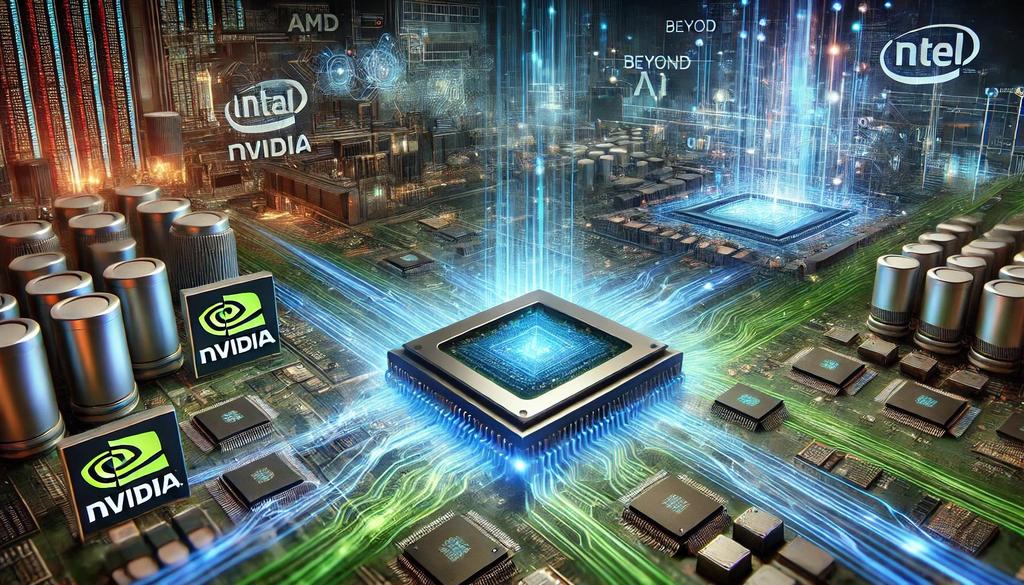
Competitive Landscape: Beyond Cerebras and Nvidia
While Cerebras and Nvidia are prominent players in the AI chip saga, they are by no means the only contenders in the arena. The landscape is rich with pioneering companies, each bringing unique innovations to the table. AMD and Intel, recognized veterans in semiconductor technology, continue to make strides in AI with advanced chip designs that cater to a range of applications from cloud computing to enterprise solutions.
Contenders in AI: AMD and Intel’s Bold Advances in Chip Technology
AMD, for instance, has launched the MI300, an ambitious chip model that aims to challenge existing players by offering enhanced performance metrics particularly suited to cloud-based AI tasks. Meanwhile, Intel remains a formidable force with its Xeon server CPUs known for their robust performance in AI workloads. Their anticipated release of Gaudi3 promises to push these standards even further, reflecting ongoing innovation and industry momentum.
Innovators in Focus: Groq and SambaNova Redefine Niche AI Chips
Startups like Groq and SambaNova present another fascinating facet of this industry. These companies are focusing on niche areas of the AI chip market, offering services that cater specifically to AI training and inference, respectively. Groq, for example, boasts impressive speed metrics for its inference capabilities, providing competition for established GPU solutions.
AI Chip Race: Innovation in a Crowded Market
The strategic maneuvers of these companies are juxtaposed against the backdrop of an increasingly crowded market. As AI continues to permeate various sectors, the demand for varied and specialized AI chips is on the rise, prompting both incumbents and newcomers to innovate rapidly. This dynamic ecosystem ensures that the race for AI supremacy remains excitingly unpredictable as every player strives to carve out a larger slice of the AI pie.

Potential Future Developments and Considerations
Looking ahead, the future of AI chips is as promising as it is complex. Technological advancements are set to push the boundaries of what’s possible, with innovations poised to enhance everything from computing speed to energy efficiency. For instance, Cerebras plans to introduce larger AI models, opening up possibilities for handling even more complex data-driven challenges.
Toward Ethical AI: Innovation with Sustainability and Privacy
Another aspect that garners attention is the ethical and sustainable deployment of these technologies. As AI systems become more entrenched in everyday life, addressing concerns like data privacy, algorithmic bias, and energy consumption becomes paramount. Nvidia and others are developing sustainable solutions, such as liquid cooling technologies, to mitigate the environmental footprint of these power-hungry chips.
Geopolitical Forces Shape Global Semiconductor Supply Chains
Moreover, the geopolitical landscape plays a critical role. As nations vie for technological dominance, ensuring secure and stable supply chains becomes crucial. Anticipated developments from the U.S. and Europe to boost domestic chip production capacity reflect this pressing need. These efforts aim to reduce dependency on a geographically concentrated supply chain and foster a more resilient global semiconductor market.
Synergy of Chipmakers and AI Developers
Collaborations between chip makers and AI developers will likely continue to deepen, creating integrated AI solutions that are both scalable and customizable. This convergence of hardware and intelligent software may lead to breakthroughs in areas like autonomous vehicles, smart cities, and advanced healthcare diagnostics, revolutionizing how industries and societies function.

AI Chip Wars: Transformative and Competitive Landscape
Cerebras’ bold claims of outperforming Nvidia exemplify the fierce competition shaping the AI chip domain. Yet, as this analysis shows, the landscape is multidimensional, with numerous players contributing to a rapidly evolving field marked by relentless innovation and strategic foresight.
As the demand for advanced AI capabilities grows, driven by an array of applications in diverse industries, the market for AI chips will find itself at an interesting crossroads. Companies that can effectively balance speed, efficiency, and ethical considerations stand to reap substantial benefits, potentially reshaping the future technological landscape.
The innovative efforts of Cerebras, Nvidia, and their contemporaries not only spotlight the transformative potential of AI but also underscore the importance of sustained, responsible development. As we continue to witness the fusion of technology and daily life, the advancements in AI chips promise to open new vistas of possibility, challenging our imagination and redefining what lies ahead.


