
The intersection of artificial intelligence and 3D modeling is not just a glimpse into the future—it’s happening now, and it’s transformational. Among the multitude of AI innovations, one model has emerged as a game-changer in the field: Luma AI. Imagine creating detailed, realistic 3D models and videos as easily as snapping a photograph. That’s the promise of Luma AI, a technology that is providing new opportunities across diverse sectors such as architecture, gaming, and industrial design.
Artificial intelligence (AI) refers to the simulation of human intelligence in machines that are programmed to think and learn. Luma AI exemplifies this with its advanced capabilities in generating high-quality 3D models and videos, making previously complex tasks simpler and faster. Through AI, the process of creating these models, which typically requires significant time and expertise, has become much more accessible.
This article delves into Luma AI’s history, its present technological feats, and how it is poised to shape the future of 3D modeling. We’ll cover how this tool emerged, what it can do today, and where it might be headed, providing insights that even readers with no prior AI knowledge can appreciate.

Evolutionary Genesis of Luma AI: From Vision to Reality
Luma AI didn’t just appear out of nowhere; it is the product of dedicated research and innovation led by a team of experts passionate about technology and its applications. Founded by Jiaming Song, the Chief Scientist, along with a group of pioneering minds, Luma AI’s journey began with a focus on the intersection of computer vision, deep learning, and 3D modeling. Computer vision is a field of AI that enables computers to interpret and make decisions based on visual data, while deep learning is a subset of AI focused on neural networks that mimic the human brain’s ability to learn.
The team’s credentials are impressive and critical to understanding the depth of expertise behind Luma AI. For instance, one of their advisors, Angjoo Kanazawa, is an Assistant Professor at the University of California, Berkeley, specializing in computer vision and machine learning. Her contribution, along with others, laid a solid foundation for what Luma AI would become.
Milestones and Momentum: Luma AI’s Path to Innovation
Since its inception, Luma AI has achieved several significant milestones. Initially, much of their work concentrated on refining the technology to ensure it could deliver reliable and high-quality 3D models and videos. Over time, they began to receive recognition and funding to further their research and development. In January 2024, Luma AI successfully raised $43 million in funding to expand its capabilities and continue developing AI models. This funding not only fueled their growth but also validated the potential and impact of their work.
Dream Machine: Revolutionizing Video Production with AI Mastery
One of the most notable advancements in the journey of Luma AI is the Dream Machine—an AI model designed to create high-quality, realistic videos from text and images. This tool allows users to generate professional-grade video content in a fraction of the time traditionally required, demonstrating the practical applications of Luma AI’s technology in everyday scenarios.
The development of Dream Machine and the consistent evolution of their models showcase the company’s commitment to technological excellence. Luma AI’s ability to consistently push boundaries and adapt to new challenges is a testament to the vision and resilience of its founders and team.
Transformative Journey from Inception to Innovation
By understanding both its origins and its developmental journey, it becomes clear that Luma AI is not merely a tool but a transformative technology rooted in deep expertise and forward-thinking innovation. The stages of its development, from foundational research to groundbreaking products, illustrate a trajectory that is as impressive as it is promising.

Explore Luma AI’s Cutting-Edge Capabilities and Applications
Luma AI’s impressive journey from a nascent technology to a robust tool has resulted in a suite of powerful capabilities that are making waves across various industries. Let’s explore what Luma AI can do today and the diverse applications it supports.
Innovative Features
At the heart of Luma AI’s present capabilities lies its flagship product, the Dream Machine. This AI-powered tool specializes in generating high-quality, realistic 3D videos from simple text descriptions or images. Imagine describing a scene or uploading a few photos, and the Dream Machine rapidly creates a dynamic, lifelike video with smooth motions and detailed visuals.
One of Dream Machine’s standout features is its speed. The tool can generate 120 frames in just 120 seconds, an impressive feat considering the traditionally laborious and time-consuming nature of video production.
But speed is only part of the equation. Dream Machine is designed to maintain character consistency and accurate physics, meaning it understands how people, animals, and objects interact within the physical world. This results in videos where movements look natural and lifelike, enhancing the overall viewer experience.
Dream Machine offers flexibility in creative exploration. Users can experiment with different ideas quickly, iterating through various concepts without the typical constraints of time and resources. This capacity to bridge imagination and execution seamlessly marks a significant breakthrough in video creation technologies.

Luma AI’s Use in Various Industries
The versatility of Luma AI’s technology has found applications in a multitude of industries, each leveraging its capabilities in unique and innovative ways.
Architecture and Design
In architecture and design, visualization is key. Luma AI aids architects and designers by creating detailed 3D models and videos that can demonstrate how a building or space will look long before construction begins. This not only helps in presenting ideas to clients but also in identifying potential issues early in the design process.
For example, architects can use Luma AI to generate realistic renderings of their designs, making it easier to convey complex architectural ideas in a visually appealing way. This can be particularly beneficial during client presentations, where the ability to showcase a lifelike model can significantly enhance understanding and approval rates.
Gaming
The gaming industry has also warmly embraced Luma AI. Creating high-quality 3D assets for games can be both time-consuming and expensive. Luma AI simplifies this by enabling developers to produce detailed 3D models swiftly, reducing both the time and cost involved.
Developers can use Luma AI to generate diverse assets, from characters to environments, with high fidelity and realistic texture details. This enhances the gaming experience by populating virtual worlds with varied and interesting objects that keep players engaged.
Industrial Applications
In the industrial sector, digitalization and automation are key trends, and Luma AI plays a crucial role here too. Its ability to create accurate 3D models is particularly valuable for creating digital twins—virtual replicas of physical assets used for simulation and optimization.
Industries such as manufacturing and automotive leverage Luma AI to simulate processes and design workflows, enabling more efficient production lines and better quality control. For instance, automotive companies can create digital twins of their vehicles to test and refine designs before physical prototypes are built, saving time and reducing costs.
Best Practices for Implementation
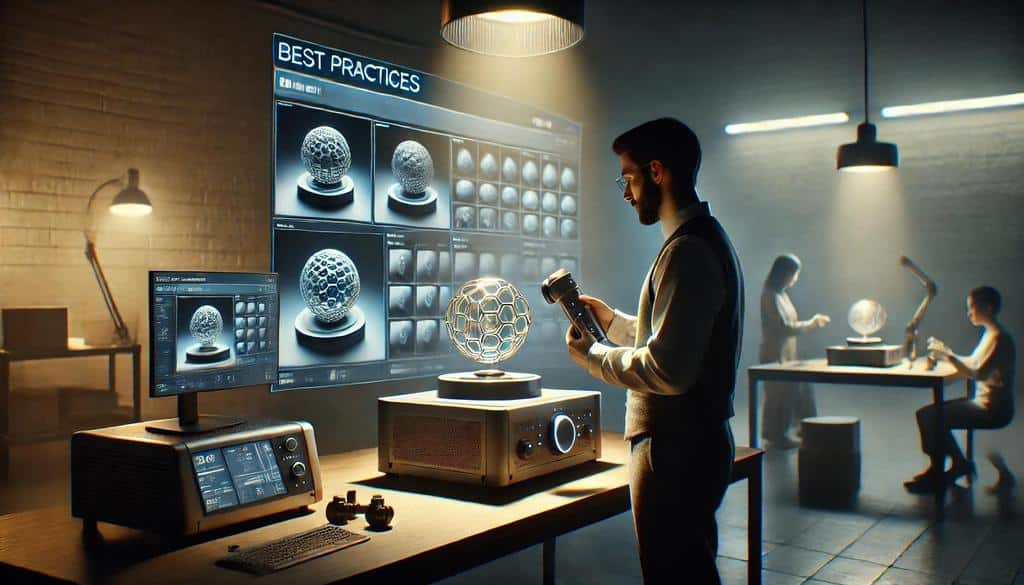
Despite its advanced capabilities, utilizing Luma AI to its full potential requires following certain best practices. Here are some key guidelines:
- Capture Speed: Moving the capturing device slowly can prevent motion blur, which significantly degrades the quality of the final output. Rapid movements should be minimized, especially rotations.
- Scene Coverage: Capturing the object or scene from as many unique viewpoints as possible improves the quality of the model. Moving the device around in 3D space rather than rotating it from a single spot can yield better results.
- Object Size and Distance: For optimal results, ensure that the entire object is in the frame while scanning. This provides more information to the AI about reflections and shapes, resulting in a more accurate reconstruction.
- Lighting Conditions: Good lighting conditions are crucial. The scene or object should be well-lit to ensure textures are visible and not washed out or too dark.
- Environment Stability: Movements within the scene, like waving tree leaves or walking people, can introduce artifacts. Ensuring a stable environment during capture can improve the final model quality.
Understanding and implementing these best practices can maximize the output quality and reliability of Luma AI, ensuring that the technology delivers on its promise of producing high-fidelity 3D models and videos.
Pioneering the Future of AI-Driven Innovation
With these robust features and widespread applications, Luma AI stands as a testament to how artificial intelligence can revolutionize traditional practices, making complex processes more efficient and accessible. Whether it’s transforming architectural visualization, enhancing gaming environments, or modernizing industrial processes, Luma AI is carving a path toward a future where imagination seamlessly blends with reality.

The Luma AI Phenomenon Redefines Community and Industry Standards
Luma AI isn’t just a powerful tool; it’s a phenomenon that has gained substantial traction and acclaim across various sectors. Its ability to simplify and accelerate the creation of 3D models and videos has resonated with a broad audience, from tech enthusiasts to industry professionals.
Community Engagement
The reception of Luma AI has been overwhelmingly positive, garnering enthusiastic support from a growing community of users. On platforms like Reddit, users share their experiences, tips, and creative outputs made possible by Luma AI. This has cultivated a supportive environment where new and experienced users can learn and grow together. For instance, discussions about its applications and future potential serve as both a feedback loop for the developers and a knowledge base for new adopters.
Moreover, professionals from diverse fields have begun integrating Luma AI into their workflows, citing its robustness and versatility. This blend of communal and professional adoption underscores the model’s broad appeal and utility.
Comparative Advantage
Luma AI stands out in a crowded field of generative AI tools. Its edge lies in the quality and consistency of its outputs. While other tools may offer fast generation, they often compromise on the detail and realism of the models. Luma AI, in contrast, ensures high fidelity and precise physics, making its models and videos not just visually appealing but also functionally accurate. This level of detail is critical for applications requiring a high degree of realism, such as architectural visualization and game development.
Additionally, Luma AI’s integration with platforms like NVIDIA’s Omniverse furthers its reach and capabilities. This integration enhances 3D workflows, enabling even more complex and high-quality outputs, which are crucial for industrial and digital twin applications.

New Frontiers: The Future of Luma AI Will Expand Horizons
The journey of Luma AI is far from over. Its future teems with potential advancements and expanded applications, driven by continuous innovation and growing market needs.
Technological Advancements
Luma AI’s development roadmap includes enhancing its existing features and introducing new capabilities that push the boundaries of what AI in 3D modeling can achieve. According to industry experts, future iterations of Luma AI might incorporate even more sophisticated interactions between objects and environments, providing an even higher level of realism and utility.
Research and development efforts are likely to focus on expanding the range of applications. For instance, improving the tool’s ability to handle complex environments and dynamic elements, making it even more versatile. This could include better handling of reflective surfaces, transparent objects, and changing light conditions, which are currently challenging areas.
Broader Implications for AI in 3D Modeling
The advancements of Luma AI signal broader implications for the use of AI in 3D modeling. As the technology becomes more sophisticated, it paves the way for new applications across various industries. In construction, for example, AI-generated 3D models can be used for more accurate project planning and real-time adjustments. In entertainment, filmmakers and game developers can create more immersive experiences with less manual input.
However, as with any rapidly advancing technology, ethical considerations will need to be addressed. Issues such as data privacy, intellectual property rights, and the potential for misuse must be carefully managed to ensure that the benefits of AI are realized without compromising ethical standards.

Luma AI Pushes the Boundaries of Creativity and Innovation
Reflections on the advancements in AI technologies often evoke a mix of amazement and skepticism. Luma AI, however, stands as a testament to the positive potential of AI when thoughtfully developed and applied. From revolutionizing the way architects present their designs to easing the burdens of 3D asset creation for game developers, Luma AI has demonstrated that intelligent innovation can indeed make complex tasks more manageable and efficient.
The trajectory of Luma AI, from its foundational research to its current applications and future potential, illustrates a remarkable journey of technological evolution. It has not only carved a niche for itself but has set new standards for what is achievable with AI in 3D modeling. As it continues to evolve, Luma AI promises to remain at the forefront, driving new possibilities and innovations.
As we navigate this transformative period in technology, one thing is clear: tools like Luma AI are not just enhancing our capabilities but are inviting us to re-imagine what is possible. Whether you are a professional in architecture, gaming, or industrial design—or simply a tech enthusiast—there’s an invitation to explore, adopt, and push the boundaries of creativity with AI.
Luma AI reminds us that the future is not a distant reality but a rapidly unfolding narrative, one where technology and human ingenuity coalesce to create something truly extraordinary.


