
Artificial intelligence (AI) is reshaping the world at an unprecedented pace, and at the center of this evolution are three tech giants: OpenAI, Microsoft, and Nvidia. These companies have formed a partnership that leverages each other’s strengths to push the boundaries of what AI can achieve. Their collaboration has not only spurred technological advancements but also had a profound impact on the global economy and regulatory landscape.
The synergy between these companies is transforming industries, creating new economic opportunities, and even attracting regulatory scrutiny from governments worldwide. In this article, we’ll explore the historical context of their partnerships, delve into their current projects, and consider the future trajectory of AI driven by these key players. From massive investments to antitrust investigations, the journey of OpenAI, Microsoft, and Nvidia provides a vivid picture of the transformative power and complex challenges of AI in our modern world.

Historical Context
A. Origin and Evolution of Partnerships
OpenAI and Microsoft
The partnership between OpenAI and Microsoft dates back to 2019, when Microsoft invested $1 billion in OpenAI to support the development of artificial general intelligence (AGI), a type of AI that can understand, learn, and apply knowledge across a wide range of tasks. This initial investment was aimed at accelerating AI capabilities and integrating them into Microsoft’s products and services. By 2023, Microsoft’s investment had swelled to around $13 billion, making it a dominant player in the AI landscape. Their collaboration has resulted in the integration of OpenAI’s advanced language models into Microsoft’s Azure cloud platform, enhancing tools like Azure AI and Microsoft Copilot, which assist with tasks ranging from language translation to automated email drafting.
Nvidia’s Role
Nvidia, known for its powerful graphics processing units (GPUs), has been a cornerstone in the development of AI hardware. GPUs are essential for the massive computational tasks required for AI training and inference, which is the process by which AI systems make predictions or decisions based on data. Nvidia’s technology became integral to both OpenAI and Microsoft’s AI initiatives. The long-standing relationship between these companies involves Nvidia supplying cutting-edge GPUs that power AI models hosted on Microsoft’s Azure platform. Nvidia’s advancements in GPU technology, such as the Grace Blackwell 200 (GB200) Superchip specifically designed for large-scale AI workloads, have been crucial for training complex AI models.

B. Initial Motivations and Strategic Goals
Microsoft’s AI Strategy
Microsoft’s foray into AI was driven by the desire to enhance its cloud computing capabilities and integrate AI into its suite of productivity tools. With products like Azure AI and Microsoft Copilot, Microsoft aimed to automate routine tasks, provide intelligent suggestions, and boost productivity for users. For instance, Copilot can generate meeting summaries, automate repetitive tasks, and assist with data analysis, significantly improving efficiency for businesses.
Nvidia’s Technological Advancements
Nvidia’s focus has been on developing GPUs capable of handling the immense computational demands of AI. These GPUs are not only used for gaming but are also vital in AI training environments, where they process large amounts of data to refine AI models. Nvidia’s GPUs have become the backbone for many AI applications, enabling faster and more efficient AI training and deployment. This has positioned Nvidia as a leader in the AI hardware market, with its technology being adopted by major cloud service providers, including Microsoft Azure.
Current Scenario
A. Existing Projects and Technological Integrations
1. Azure and Nvidia Integration
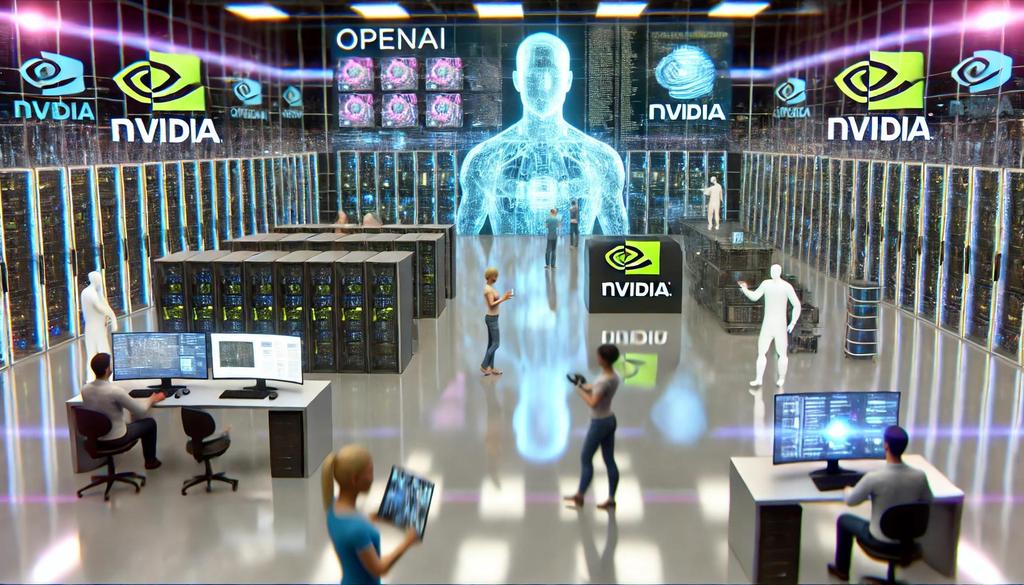
Microsoft’s Azure platform has become a powerhouse for AI development, largely due to its integration with Nvidia’s advanced hardware. One of the most significant integrations is the deployment of Nvidia’s Grace Blackwell 200 (GB200) Superchip in Azure data centers. Designed for massive AI workloads, the GB200 enables the handling of large-scale generative AI models, which are types of AI that can create new content, such as writing text or generating images. This integration allows Azure to support a broad range of AI applications, from natural language processing to computer vision, making it a versatile platform for businesses across various industries.
Additionally, Microsoft has incorporated Nvidia’s Quantum-X800 InfiniBand networking platform into Azure. This high-speed networking technology enhances the performance of AI compute workloads by facilitating rapid data transfer and reducing latency. Such advancements are critical for training and deploying complex AI models efficiently and at scale.
2. Microsoft’s AI Infrastructure
Microsoft has built a comprehensive AI infrastructure that includes a wide array of services designed to help businesses leverage AI. Azure Machine Learning offers tools for building, training, and deploying AI models. AI Studio provides a platform for developing AI applications with ease, while Azure Synapse Analytics integrates data analytics and AI capabilities for deeper insights. All these services are powered by Nvidia’s GPUs, ensuring robust performance and scalability.

B. Regulatory and Legal Landscape
1. Antitrust Investigations
The rapidly growing influence of OpenAI, Microsoft, and Nvidia has not gone unnoticed by regulators. In mid-2024, the U.S. Department of Justice (DOJ) and the Federal Trade Commission (FTC) launched antitrust investigations into these companies to examine their market dominance and competitive practices. The DOJ is focusing on Nvidia, investigating its market control over AI hardware, particularly GPUs essential for AI development. Meanwhile, the FTC is scrutinizing Microsoft’s extensive investments in OpenAI and the strategic partnerships that might be circumventing traditional regulatory oversight.
These investigations highlight concerns about whether the collaborations and market strategies of these companies might hinder competition and innovation in the AI sector. Regulatory bodies aim to ensure that the market remains competitive and that no single entity can dominate the critical AI infrastructure.
2. Legal Challenges and Lawsuits
In addition to antitrust probes, OpenAI and Microsoft have faced legal challenges related to data privacy and copyright issues. For example, several media companies have filed lawsuits against OpenAI, alleging that their copyrighted content was used without permission to train AI models like ChatGPT. Microsoft, as a significant investor in OpenAI, is also a target of these lawsuits. These legal battles underscore the complex ethical and legal landscape surrounding AI development and highlight the need for robust data governance and ethical AI practices.

Economic Impacts
A. Market Valuation and Economic Influence
1. Nvidia’s Economic Footprint
Nvidia has emerged as a massive player in the tech industry, with its stock market value skyrocketing due to the high demand for its GPUs, which are crucial for AI applications. Nvidia’s market capitalization reached over $3 trillion earlier this year, making it one of the most valuable companies in the world. This enormous valuation reflects the critical role Nvidia’s technology plays in the modern AI landscape. GPUs are essential for the heavy computational tasks needed to train AI models, which involve processing vast amounts of data to improve performance.
Interestingly, the rapid growth in Nvidia’s stock value has led some analysts to caution about the sustainability of such an upward trajectory. If Nvidia’s stock continues to grow at its current pace, it could inflate to an unsustainable level, reminiscent of historical market bubbles that eventually burst. Nonetheless, Nvidia’s technology is likely to remain a cornerstone of AI development for the foreseeable future.
2. Microsoft’s Investments and Returns
Microsoft has been heavily investing in AI, most notably through its $3.3 billion investment in Wisconsin. This initiative aims to transform the area into a hub for AI innovation and economic growth. The investment includes the development of a data center campus and an AI co-innovation lab focused on manufacturing. The goal is to drive economic activity, create thousands of jobs, and enhance AI capabilities for businesses in the region. Moreover, Microsoft plans to equip over 100,000 residents with essential AI skills by 2030, demonstrating its commitment to workforce development.
By building a robust AI infrastructure and fostering innovation, Microsoft aims to generate significant economic returns. The integration of AI into its cloud services, such as Azure, and products like Microsoft 365, has the potential to drive productivity and efficiency across various industries. This, in turn, can lead to substantial economic gains and enhanced global competitiveness for Microsoft.

B. Global Economic Influence
1. Generative AI’s Contribution
Generative AI, a technology that creates new content like text and images from vast data sets, has the potential to significantly boost the global economy. According to Goldman Sachs, generative AI could increase global GDP by nearly $7 trillion and boost productivity growth by 1.5 percentage points by 2030. This transformative impact is due to generative AI’s ability to automate a wide range of tasks, from customer service interactions to content creation, effectively enhancing efficiency and reducing costs.
However, the introduction of generative AI also poses challenges, particularly in terms of job displacement. While AI can automate many existing roles, it will also create new jobs in areas like AI development, data management, and digital marketing. The net effect is expected to be positive, as the technology will likely complement rather than completely replace most jobs. This creates a dynamic shift in the job market, necessitating new skills and continuous learning.
2. Job Market Dynamics
The rapid adoption of AI technologies is reshaping the global job market. While some roles are being automated, AI is creating demand for new positions in tech-related fields. Microsoft, for example, is dedicated to training tens of thousands of people in AI skills to prepare them for the future workforce. This includes both technical roles, such as AI developers and data scientists, and non-technical roles that leverage AI to enhance productivity in various sectors.
As AI becomes more integrated into everyday business operations, employees will need to adapt by acquiring new skills and competencies. Continuous education and training will be critical to ensuring that the workforce can meet the demands of an AI-driven economy. This transition presents both opportunities and challenges, requiring collaboration between businesses, educational institutions, and governments to facilitate a smooth and inclusive shift.

Future Trajectory
A. Technological Innovations on the Horizon
1. Next-Gen Hardware and Software
The future of AI is poised to be driven by continuous advancements in both hardware and software. Nvidia is at the forefront with its development of next-generation GPUs and AI-specific processors like the Grace Blackwell 200 (GB200) Superchip. These powerful processors are designed to handle the immense computational needs of advanced AI models, enabling even more complex and capable AI systems. As these technologies evolve, they will unlock new possibilities for AI applications in various fields, from healthcare to education to entertainment.
On the software side, Microsoft and OpenAI are continually enhancing their AI models and integrating them into practical applications. For instance, Microsoft’s Copilot utilizes AI to assist with tasks in its Office suite, making everyday work more efficient. The continuous refinement of these tools aims to make AI more accessible and useful for businesses and individuals alike.
2. Strategic Partnerships
Collaborations between major tech companies and innovative startups will continue to drive AI progress. Microsoft’s partnership with OpenAI has already proven successful, and similar alliances are expected to emerge as companies seek to combine their strengths. Nvidia’s role as a key hardware provider places it in a pivotal position to support various AI initiatives, both independently and through partnerships with other tech giants. These collaborations will likely focus on tackling complex challenges and exploring new AI capabilities.

B. Predictive Analysis and Speculative Developments
1. Long-term Economic Forecasts
Economists and analysts predict that the integration of AI will have a profound and lasting impact on the global economy. Generative AI alone is projected to significantly boost global productivity and GDP. However, this growth is contingent on the responsible and ethical deployment of AI technologies. Ensuring that AI advancements benefit a broad spectrum of society will be critical to maintaining economic stability and fostering inclusive growth.
As AI continues to evolve, it will likely drive the development of new industries and redefine existing ones. Businesses that can effectively integrate AI into their operations will gain competitive advantages, and economies that embrace AI innovation will enhance their global standing. Nevertheless, the rapid pace of AI development also poses risks, such as market saturation and potential ethical concerns, that need to be carefully managed.
2. Global Leadership in AI
The United States, with its robust tech ecosystem and leading AI companies, is well-positioned to maintain its leadership in AI innovation. However, competition from other regions, particularly Europe and Asia, is intensifying. The European Union has implemented comprehensive regulations to govern AI, while countries like China are making significant investments in AI research and development. To stay ahead, U.S. companies will need to continuously innovate and adapt to changing global dynamics.
Maintaining global leadership in AI will require a balanced approach that fosters innovation while addressing ethical and regulatory challenges. Collaboration between governments, businesses, and academic institutions will be essential to navigating the complex landscape of AI development and ensuring that its benefits are widely distributed.

The Road Ahead: Navigating AI’s Boundless Future
The rapid advancement of artificial intelligence, driven by the powerful partnerships between OpenAI, Microsoft, and Nvidia, represents a transformative force in the modern world. These collaborations have fueled significant technological progress, reshaped industries, and influenced global economic dynamics. At the same time, they have sparked regulatory scrutiny and ethical debates, highlighting the complexities of integrating AI into society.
Historically, the strategic alliances among these tech giants have aimed to harness the full potential of AI, culminating in groundbreaking innovations that enhance productivity and redefine the capabilities of technology. Presently, their combined efforts in developing cutting-edge hardware and software solutions set a new standard for AI applications, from enterprise solutions to consumer-facing tools. These advancements promise substantial economic benefits, including increased GDP, job creation, and improved efficiencies across various sectors.
Looking ahead, the future trajectory of AI is marked by both tremendous opportunities and significant challenges. Continued innovation and strategic partnerships will be crucial in navigating this evolving landscape. Ensuring responsible and ethical AI deployment will be paramount to achieving sustained growth and maintaining global leadership in the AI arena.
In conclusion, the intertwined destinies of OpenAI, Microsoft, and Nvidia illustrate the dynamic interplay of technological progress, economic impact, and regulatory oversight in the AI age. Their journey provides valuable lessons on the importance of collaboration, innovation, and ethical considerations. As AI continues to evolve, these lessons will serve as guiding principles for future developments, ensuring that the benefits of AI are broad-based and equitable, and that the technology contributes positively to the global community.


