
The first time you pull onto a highway, the sheer force of the wind often catches you off guard. Most beginners shop for motorcycle gear essentials based on style or budget, only to realize later that the true test of any kit happens in the wild. Experience teaches us that what looks good in a showroom might fail miserably during a cross-country tour.
Riding in different conditions forces a rider to confront the limitations of their equipment. A sudden temperature drop or a face full of road spray quickly separates high-performance apparel from basic fashion.
These moments of discomfort serve as the best teachers for anyone looking to upgrade their long-distance motorcycle riding gear. Every mile covered adds a layer of understanding about how specialized tools impact the journey. From the clarity of your vision in low light to the warmth of your hands in a frost, the right choices turn a grueling ride into an enjoyable adventure.
While starting with the basics is fine, the non-negotiable gear decisions usually stem from hard-earned experience, appearing only when a specific condition exposes a gap in your kit you didn’t know existed. We all have that story of one piece of gear we wish we’d sorted out sooner. Usually, it’s related to poor weather conditions, reduced visibility, or discomfort—none of which hit all at once but instead built up over hours. The good news? Once learned, these lessons truly stay with you.
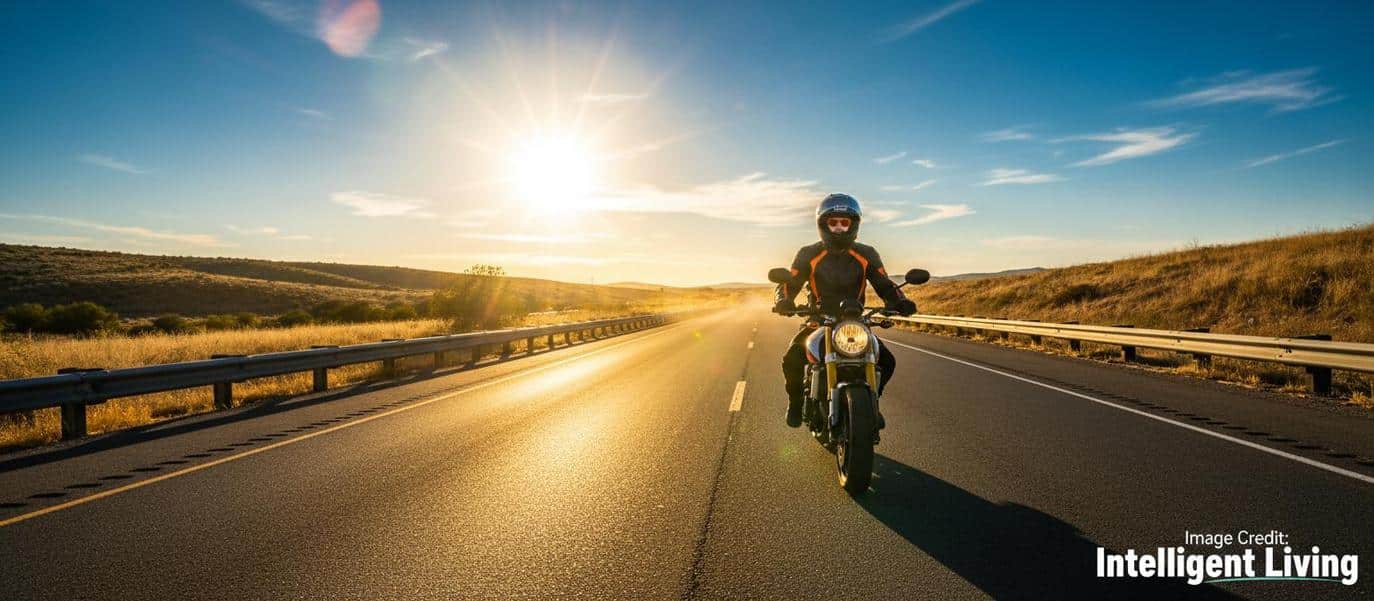
Bright Sun and Glare: More Challenging than it Sounds
A bright, sunny day is probably the simplest type of riding condition to endure. Yet glare is a real concern. The challenge becomes particularly acute when the sun hangs low, whether it’s the first light of morning or the final glow before sunset. Squinting into a visor or relying on a tinted visor that’s not quite dark enough gets old quickly. Over a long day, that constant squinting transforms into a deep, mental fatigue that wears you down.
Strategic eyewear selection earns its place in the kit bag during these high-glare hours. For riders who need vision correction, prescription motorcycle glasses with polarized or tinted lenses designed for riding conditions offer a meaningful step up from managing with standard prescription frames under a helmet. The difference in comfort over a full day’s riding is hard to overstate, and most riders who make the switch wonder why they waited.
Rain and Low Visibility: Comfort Meets Functionality
Few scenarios test your motorcycle gear essentials as ruthlessly as a sudden downpour. You quickly discover that the gear you rely on daily might have hidden breaking points when the weather turns.
Common equipment failures during heavy rain include:
- Waterproofing that seems adequate for a quick commute often fails during a relentless thirty-minute downpour.
- Responsive gloves frequently become cold, stiff, and heavy once they are thoroughly soaked.
- Low visibility becomes compounded as glasses or visors fog up and become streaked with road grime.
Addressing these gaps early keeps you focused on the road rather than struggling with your apparel in a storm. High-performance outer layers featuring sealed waterproofing around collars and cuffs provide a vital barrier against the elements, as do gloves that are rated waterproof rather than merely resistant.
When it comes to eyewear, anti-fog abilities reign supreme. Lenses that fog over in inclement weather or frigid air are more than an inconvenience; when visibility is already poor, they become a significant safety hazard.
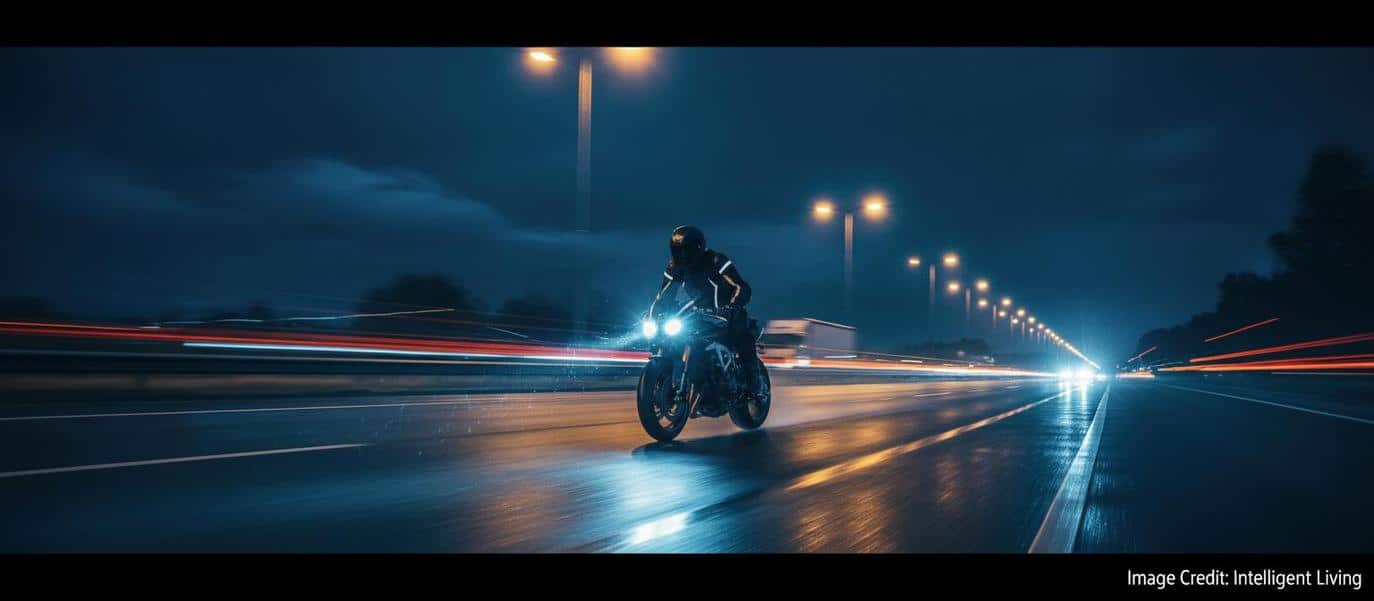
Low Light & Night Riding: A Different Challenge
As evening sets in, nightfall changes the stakes entirely. Your eyes strain to track headlights from every angle while depth perception fades, turning the proximity of other vehicles into a dangerous guessing game. It’s harder to see what lies ahead in the roadway, and general night fatigue sets in.
Premium visors equipped with anti-reflective coatings repel oncoming traffic glare effectively, while light lenses remain the best choice when the sun disappears. Riders who lack specialized night eyewear—unless they use transitions—often don’t realize how much they’re missing until they finally swap their lenses.
Reflective gear elements make a significant difference in ensuring that other drivers can actually see your position on the road. Heated grips are another indicator when it comes to nighttime rides and cooler weather. Keeping your fingers functional allows for fewer hand aches when they’re cold.
High Speed/Motorway: Where Duration Means Comfort
Motorway stretches are the ultimate test of comfort. Between the wind buffeting your bars and the constant engine vibration, the physical toll accumulates rapidly over a long haul.
Aerodynamic helmets designed for noise reduction provide a significant advantage against fatigue during high-speed travel. The smoother the airflow over the motorbike, the less energy you waste fighting the elements at sustained speeds. Extended stretches of motorway driving challenge your gear choices more than almost any other riding environment motorway driving.
Beyond aerodynamics, the quality of your seating position becomes a critical factor in maintaining stamina. What feels fine for thirty minutes suddenly becomes an issue after three hours’ time. An aftermarket seat suitable for long-distance rides is one of those changes made early on that riders rarely regret.
The simplest and most affordable upgrade is a pair of high-decibel reduction earplugs. Wind noise at high speeds creates a persistent roar that leads to hearing fatigue; most riders don’t realize how taxing this is until they start using protection regularly.

Refined Wisdom for the Long Haul
Building a kit that stands up to the elements is a continuous process of trial and error. Every soaked glove or fogged visor provides a lesson that shapes your next purchase, eventually leading to a setup that feels like a second skin. The transition from being ‘caught out’ to being prepared marks the growth of a truly seasoned rider.
Invest in quality where it counts. Prioritizing motorcycle comfort and safety ensures that your focus remains on the road ahead rather than the distractions of physical discomfort. When you finally stop fighting your gear, you start enjoying the ride for what it truly is—pure, unadulterated freedom.
Common Questions About Motorcycle Gear Performance
How do I choose the best motorcycle gear for long motorway trips?
Focus on aerodynamics and wind noise reduction for bikers to minimize physical fatigue during high-speed travel.
Does waterproof motorcycle gear really stay dry in heavy rain?
High-quality gear with sealed membranes works well, though prolonged exposure eventually tests even the most durable seals.
Are prescription motorcycle glasses better than standard frames?
Yes, because they are specifically designed to fit securely under helmets and offer superior wind and glare protection for your eyes.
Why is wind noise reduction for bikers so important?
Constant wind exposure leads to hearing damage and mental exhaustion, making earplugs a vital safety tool for every ride.
How can I improve my night riding visibility?
Utilize high-visibility apparel and clear or light-tinted lenses with anti-reflective coatings to spot road hazards earlier.


