
We routinely make medical decisions based on the visible price tag, completely ignoring the hidden tail risks. You experience chronic inflammation, and you finally decide it is time to correct the anatomy. You start calculating the circumcision cost in Singapore clinics advertise, looking for a bargain. This is a profound error in risk assessment.
You are negotiating the price of a permanent alteration to a highly sensitive biological system. When you hunt for the cheapest surgical option, you are accepting a massive, asymmetric risk. The money you save upfront is almost always paid back with heavy interest during a painful, prolonged recovery. You must understand the hidden mathematics of this procedure before you let anyone near you with a blade.
The Fragility of the Cheap Scalpel
The traditional surgical method involves a doctor using a steel scalpel and manual stitches. It is inexpensive because the materials cost almost nothing. However, this method is highly fragile.
Manual suturing relies entirely on the steady hand and subjective judgement of the operator. A tired doctor might space the stitches unevenly, leading to a jagged, asymmetric scar. More importantly, cutting with a raw blade results in significant blood loss and severe tissue trauma. You save a few hundred dollars on the invoice, but you purchase a massive risk of post-operative infection and a highly unpredictable cosmetic outcome.
The Hidden Mathematics of Recovery
Most pricing guides only calculate the clinic fee. They completely ignore the economic reality of your own time. The true cost of a medical procedure includes the wages you lose while lying in bed.
Consider the concrete numbers of your recovery timeline. A traditional scalpel surgery requires a minimum of ten to fourteen days of strict rest before you can comfortably walk around an office or engage in physical labour. If you use a modern, automated stapler device, the mechanical precision reduces the tissue trauma so drastically that most men return to a desk job in three days. You must factor eleven days of lost productivity into the price of the “cheap” operation. Similar recovery dynamics apply across many surgical disciplines, where minimally invasive techniques routinely outperform older open methods, as outlined in robotic colorectal surgery patient guidance.
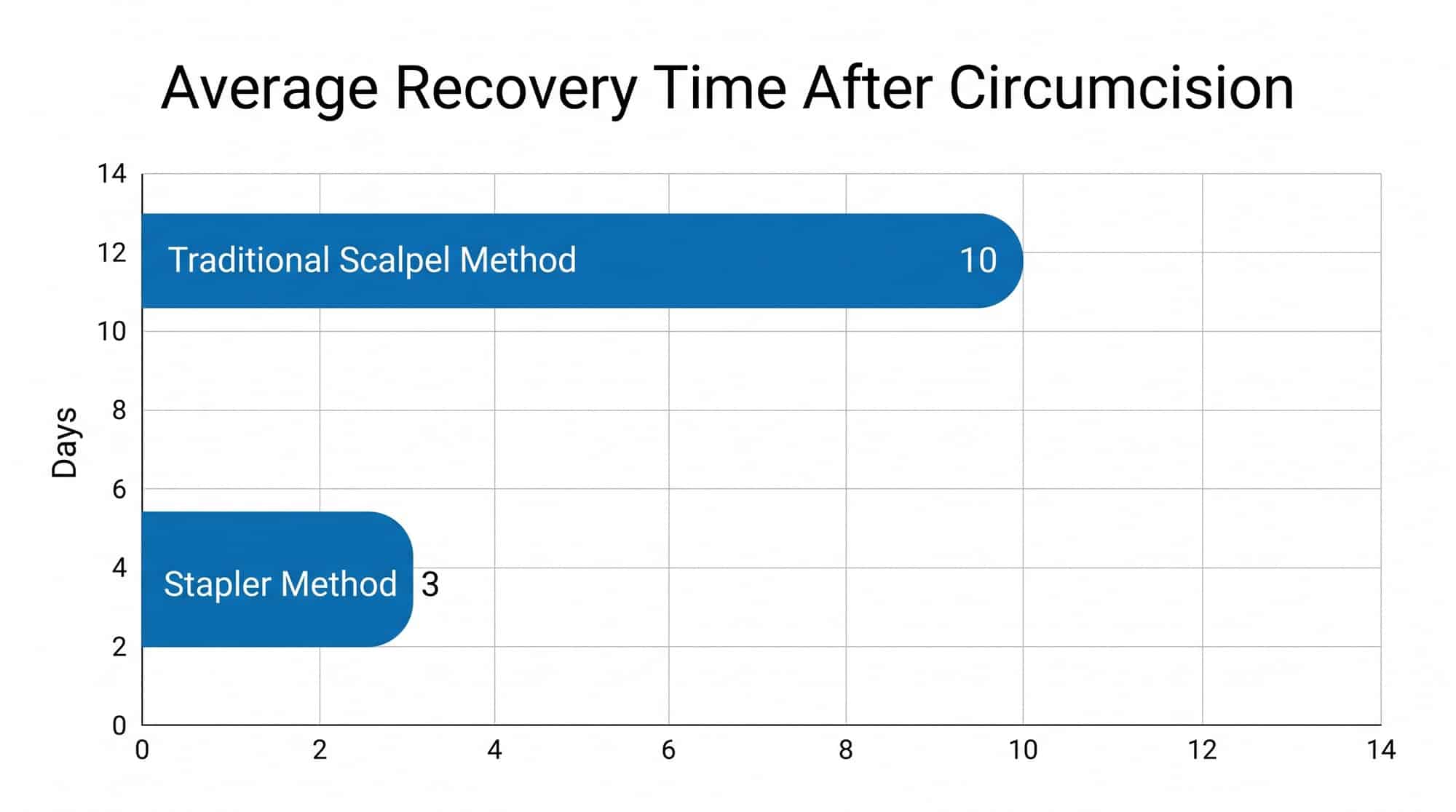 Recovery time comparison between traditional scalpel and stapler circumcision methods (Credit: Intelligent Living)
The Modern Stapler Technology
To avoid the fragility of the human hand, modern medicine engineered a mechanical solution. The most common alternative today is the ZSR stapler device.
This mechanism creates a perfect, circular incision while simultaneously firing a row of microscopic titanium staples into the wound.
- The cut and the seal happen in the exact same millisecond.
- The simultaneous action completely eliminates bleeding.
- The uniform staples guarantee a perfectly straight, predictable scar line.
You pay a higher upfront premium for the single-use mechanical device, but you buy absolute geometric precision and an infinitely safer healing environment. A randomised clinical trial published in PMC confirmed that stapler circumcision produces significantly less blood loss, shorter operative time, and lower postoperative pain than conventional techniques.
A Clear Rule for Medical Pricing
When you sit in the consultation room, you need a rigid heuristic to protect yourself from predatory billing. You must ask for the absolute ceiling price.
Apply this clear decision rule: If a clinic refuses to provide a single, all-inclusive nett price before the procedure, walk out the door. A reputable facility will bundle the local anaesthesia, the surgical facility fee, the device cost, and all post-operative painkillers into one guaranteed figure. If they quote a low surgical fee but leave the anaesthesia and follow-up visits open-ended, they are setting an economic trap.
 Transparent medical pricing: a critical factor in surgical decision-making (Credit: Intelligent Living)
The Psychological Price Of Delay
Men often delay this decision for years because they are terrified of the financial and physical cost. They endure chronic micro-tears and daily discomfort, hoping the anatomy will magically correct itself.
This delay carries the highest price of all. Chronic inflammation eventually causes the skin to lose its elasticity entirely, turning soft tissue into rigid, painful scar tissue. You cannot negotiate with a biological failure. You must look at the total cost of the intervention, the money, the time, and the pain, and realise that paying a premium for modern mechanical precision is the only rational way to eliminate the daily suffering and move on with your life.


