
The very first moments of human development are tentative. Studying them are highly challenging. But a new development made by two teams of scientists promises to change that. They have managed to make a clump of human tissue behave like early-stage embryos. They call these clumps of cells blastoids.
Blastoids are smaller than a millimeter across. They resemble blastocysts – structures that form within days of an egg being fertilized. Blastocysts typically contain around 100 cells that give rise to every tissue in the body.
The researchers made their tiny blastoids by growing either reprogrammed skin cells or stem cells in a 3D well filled with a broth of chemicals naturally needed for blastocyst formation. After six to eight days in the culture, the cells self-assemble into ball-shaped blastoids that contain all of the cells found in natural blastocysts. Some of the blastoids even attached themselves to the plastic culture dish, mimicking the implantation process in the uterus.
Scientists hope to use blastoids to learn how newly formed embryos develop pre-implantation. Such studies could help them understand infertility and why many miscarriages happen at this delicate stage in pregnancy.
Naomi Moris, a researcher at the Francis Crick Institute in London, said:
The excitement of these models is that we can hopefully use them to begin to gain an understanding of how normal human development proceeds and what processes might be at play when things go wrong, in miscarriage or congenital abnormalities, for instance.
They can also use the cells to examine how particular congenital disabilities manifest and the impact of drugs, environmental toxins, and viral infections on healthy embryonic development.
José Polo, a professor at Australia’s Monash University who led one of the teams, said:
The capacity to work at scale, we think, will revolutionize our understanding of these early stages of human development.
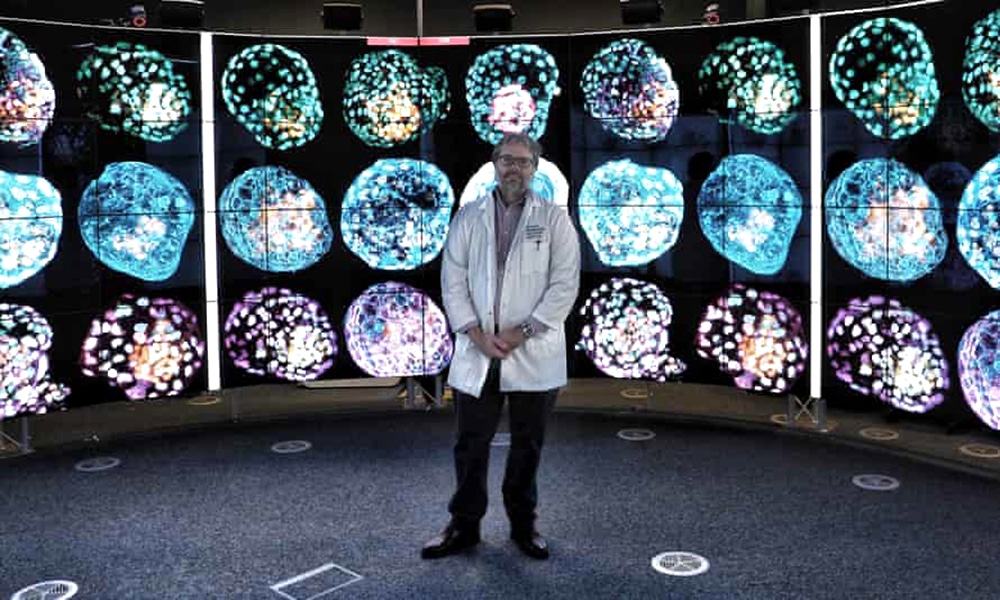
Before this development, scientists studying the earliest stages of human development depended largely on couples donating surplus IVF embryos to science. But limited donations meant severe restrictions to progress, and the practice has also drawn ethical objections. It’s illegal for researchers to study human embryos past 14 days old. Blastoids could allow researchers to make hundreds of embryo-like structures in the lab simultaneously and overcome these current problems.
Jun Wu, an assistant professor at the University of Texas Southwestern Medical Centre who is a leader of a separate team, said:
We’re very excited. Studying human development is difficult, especially at this stage of development. It’s essentially a black box.
According to Wu, the blastoids were grown until the equivalent of around ten days old for a human embryo.
Scientists Yi Zheng and Jianping Fu raised bioethical questions. They wrote:
This will inevitably lead to bioethical questions. What should the ethical status of the human blastoids be, and how should they be regulated? Should the 14-day rule be applicable? These questions will need to be answered before research on human blastoids can proceed with due caution.
However, the approach won’t be used to make human embryos for implantation, said researcher Amander Clark of the University of California, who worked with Polo.


