
Immune inhibiting therapy for atopic dermatitis is showing promise in human trials.
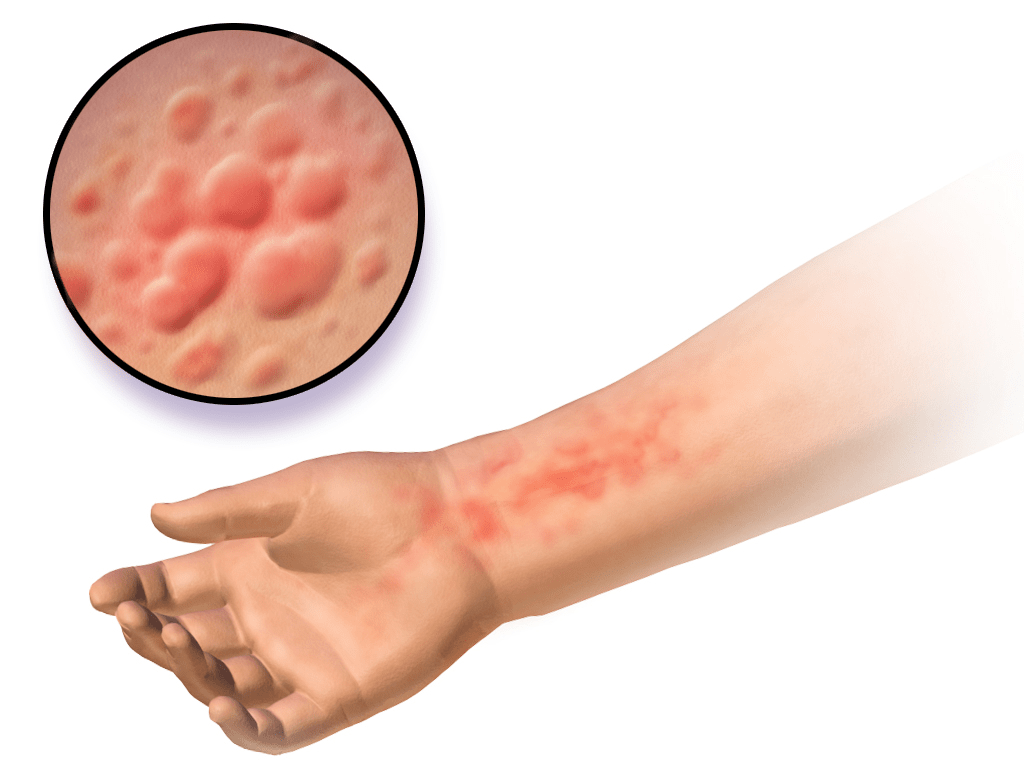
Atopic dermatitis is a widespread inflammatory skin condition caused by the overproduction of an immune signaling protein named IL-33. This molecule acts as an immune system alarm, released by several different kinds of cells in the body, in response to conditions such as stress or infection. IL-33’s job is to summon other immune system cells to the damaged site. However, too much IL-33 production leads to several autoimmune conditions like asthma, eczema, and allergies.
Scientists have been working on making a drug called etokimab for over a decade now. It’s designed to inhibit the activity of IL-33. The drug has been undergoing testing and the Phase 2a trial results suggest the novel immune inhibiting drug could become a promising new treatment for atopic dermatitis. The positive outcome of these early clinical trials has accelerated the research into a more substantial, placebo-controlled 300-person clinical trial. The results have been published in the medical journal Science Translational Medicine.
Graham Ogg, who led on the new clinical trial, explained:
We’ve been studying the role of IL-33 in human skin for nearly 10 years, with the lab work suggesting IL-33 might be a potential target for therapies. So, we are pleased that in this first human trial in patients with atopic dermatitis, we have confirmed that the IL-33 pathway appears to be a therapeutic target in its own right.
The Phase 2a Trial (Part A)
- Twelve patients suffering from moderate to severe atopic dermatitis participated.
- They were all given a single intravenous dose of etokimab.
The Results
- Four weeks later, all participants displayed a 50% (at least) improvement in symptomatic severity.
- Two months later, they came in for a follow-up observation and most of the participants still displayed symptomatic improvements.
The Phase 2a Trial (Part B)
- To examine the cohort’s skin inflammatory responses the researchers administered a skin allergen challenge. Before and after the etokimab treatment, each participant was exposed to a skin allergen to investigate whether the immune inhibiting drug effectively subdued the body’s immune response.
The Result
- The following day, fluid and cells from the patients were sampled, researchers found that fewer neutrophils (the type of immune cell involved in inflammation) had moved to the site.
- Therefore, the drug does potentially suppress inflammatory immune activity.
- This also suggests that the etokimab treatment (specific anti-IL-33 treatment) may be useful for a variety of autoimmune conditions related to overactive neutrophils activity.
Conclusion
Though still in its infancy this prospective new therapy shows excellent promise.
Patrick Chinnery, clinical director at the Medical Research Council in the UK, said:
This exciting experimental medicine trial is an excellent example of how long-term support for fundamental science leads to new treatments for diseases that severely affect the quality of life for millions of people. As this is the first study of its kind, the trial also suggests that IL-33 may have an important role in a number of immune-mediated disorders which will also lead to new avenues of research for other conditions.
Ogg added:
These results are only very preliminary, and we need to be cautious. But we’re currently testing the therapy in a larger double-blind randomized trial in people with atopic dermatitis and we look forward to seeing the results. New antibody therapies, like etokimab, are exquisitely specific in what they target and they have the potential to help patients and to help us better understand the disease.
Overall, the promising results do confirm the drug’s safety profile and demonstrate initial efficiency. However, it’ll be a while before the results are verified in large cohorts, and the treatment becomes clinically available.


