
The winner of the Irish top national James Dyson Award 2019 goes to a pair of students from the National College of Art and Design (NCAD) for their invention of the Personal Patient Pack (PPP) – which could drastically reduce medical waste and contribute to a more sustainable society. The PPP can reduce the volume of clinical waste in a healthcare emergency by up to 67%!
The need to prevent the spread of disease means the urgency of eliminating single-use plastic can’t be applied to emergency medical waste. However, with the PPP the waste can be reduced dramatically. The students said:
We know that sustainability is not considered with high importance in healthcare. It is our responsibility to spread the message of our project to really get healthcare bodies to start thinking differently in order to create a positive environmental change.
The two students, Máire Kane and Hannah Grogan, came up with a way for the single-use of medical devices such as oxygen masks, to be re-used multiple times by a patient rather than the patient using up multiple of the item throughout their visit. For example, instead of a new mask having to be used and thrown away every time the patient goes from ambulance, to hospital, and so forth into every new room – the patient will use the same mask they first used in the ambulance the whole way through.
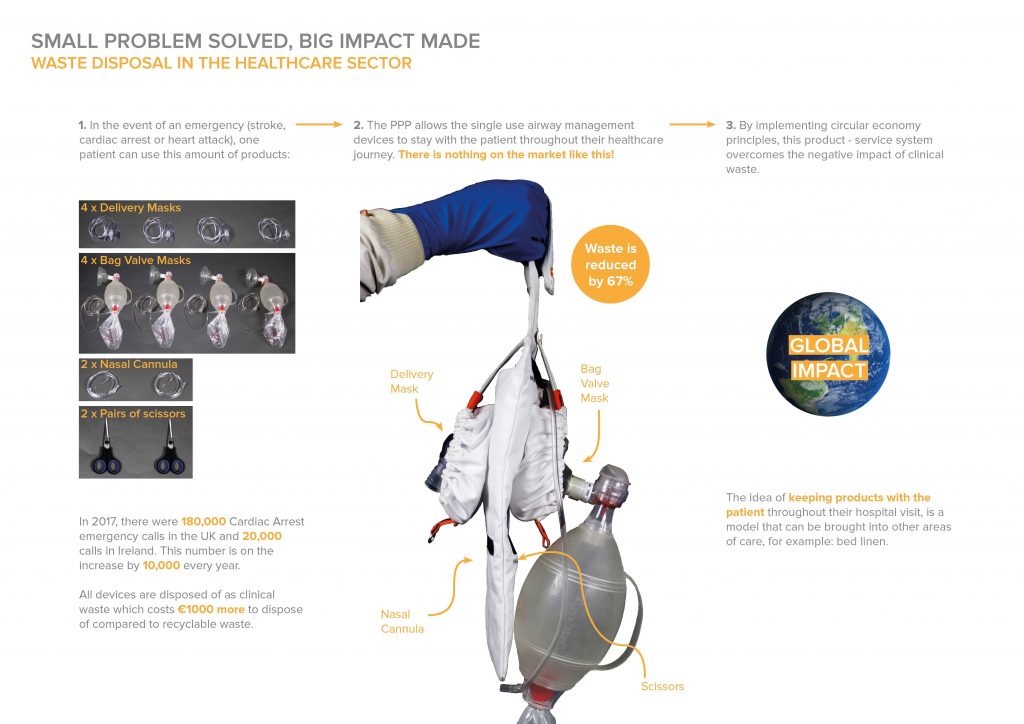
Kane and Grogan developed the PPP design in consultation with healthcare experts from St. James’s Hospital, Dún Laoghaire Rehabilitation Hospital and Medical Ambulance Service. They learned that throughout the patients’ stay in hospital and as they move wards, more items are again thrown away, significantly increasing the amount of plastic waste. The solution they came up with is a pack that transports an individual patient’s items in sterile pockets so they can be reused multiple times. The pack accompanies the patient the whole way, from the ambulance to their time at a hospital ward.
To ensure the pack belongs to the patient, each PPP is fully traceable to the patient through an embedded Radio Frequency Identification tag (RFID). Beginning in the ambulance, the patient’s details are taken by the paramedic and input on an iPad, which scans the pack using an RFID reader and sends the details to the hospital in real-time.
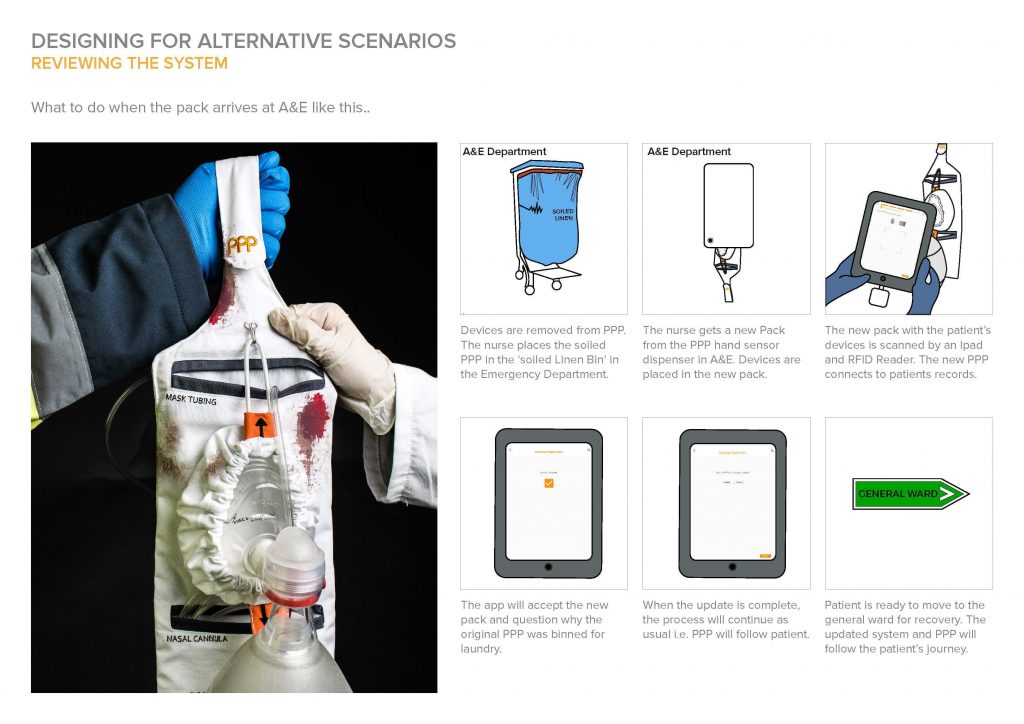
Once the patient has commenced their visit, the pack can be put in the existing hospital laundry bin as the polycotton material (the same material used in nurses’ and doctors’ uniforms) can withstand the high laundry temperatures needed to eliminate germs.
Head of design at TU Dublin and one of the competition’s judges, Barry Sheehan, said the device was “deceptively simple and very clever” but that “it is not about the object itself but rather the process that it affords.”
He said:
One simple, relatively low-tech product can have an immediate effect on the high cost and high waste incurred as patients are on their health journey from accident to recovery.
At the moment, the students are in discussion with Enterprise Ireland who would like to make their project into a business and they have been talking to the Ellen MacArthur trust who are looking at their design from a sustainability point of view to ensure all elements have been designed for sustainability too.


