
As the world is still dealing with the coronavirus crisis, a new type of swine flu has been discovered in China – and it has pandemic potential. The researchers say it has “all the essential hallmarks of being highly adapted to infect humans.” The virus is called G4, and it is genetically descended from the H1N1 strain that caused an outbreak in 2009. It isn’t an immediate problem, but it’s new, so people have little or no immunity to the virus.
A World Health Organization spokeswoman said:
Eurasian avian-like swine influenza viruses are known to be circulating in the swine population in Asia and to be able to infect humans sporadically. Twice a year during the influenza vaccine composition meetings, all information on the viruses is reviewed and the need for new candidate vaccine viruses is discussed. We will carefully read the paper to understand what is new. It also highlights that we cannot let down our guard on influenza; we need to be vigilant and continue surveillance even during the COVID-19 pandemic.
How They Found The Virus
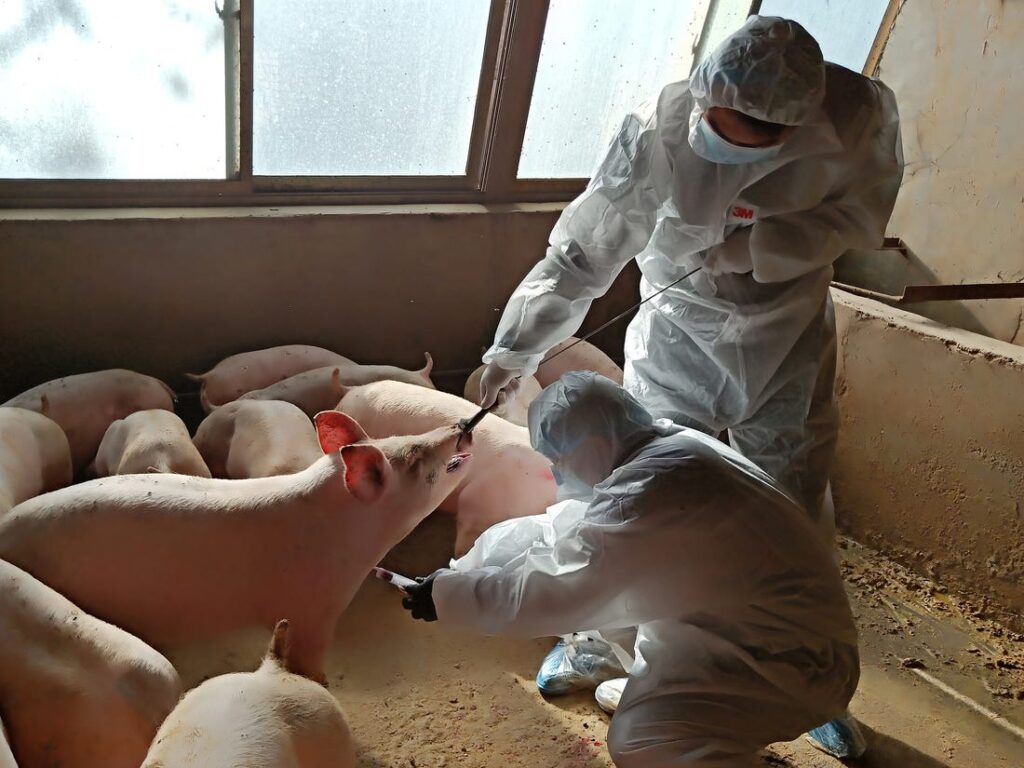
Scientists from Chinese universities collected 30,000 nasal swabs from pigs in slaughterhouses in ten Chinese provinces from 2011 to 2018. From these, they isolated 179 swine flu viruses, of which most of them had been dominant among pigs since 2016. They are carried by pigs but can infect humans who come in contact with the animal.
Further analysis revealed that some of the people working with stricken pigs became infected. Blood tests showed antibodies that were created by exposure to the virus. G4 has already infected as many as 10.4% of swine workers and 4.4% of the general population. However, there’s no evidence that it can pass from human to human, which is the primary concern here. A global outbreak can be triggered if a virus can spread from human to human.
Prof Kin-Chow Chang, who works at Nottingham University in the UK, told the BBC:
Right now, we are distracted with coronavirus and rightly so. But we must not lose sight of potentially dangerous new viruses. While this new virus is not an immediate problem, we should not ignore it.
Control and Monitoring
For this reason, the authors call for critical measures to control the virus in pigs while closely monitoring anyone who comes in contact with the animals.
The researchers carried out further experiments to see how infections G4 can be. The team employed ferrets as they experience symptoms closely resembling humans – such as coughing, sneezing, and fever. G4 caused more severe symptoms in ferrets than all other viruses. Other tests revealed that the virus can replicate in human cells and that any immunity humans gain from being exposed to seasonal flu doesn’t protect against G4.
James Wood, head of the department of veterinary medicine at Cambridge University, said:
The work comes as a salutary reminder that we are constantly at risk of a new emergence of zoonotic pathogens (those that jump from non-human animal to human) and that farmed animals, with which humans have greater contact than with wildlife, may act as the source for important pandemic viruses.
The current flu vaccines don’t appear to protect against G4.


