
A recent research article published in Nature talks about phytoplankton. Phytoplankton create their food just like plants in the sense that they make their food using sunlight and carbon dioxide (CO2) and they are known as the foundation of the oceanic food chain. They can absorb a lot of the CO2 during their life cycle, and when they die they sink and take that CO2 with them to the bottom of the ocean.
A biological pump, as it’s known, is the constant removal of CO2 from the air to the water’s surface and then brought down to the ocean floor. The more phytoplankton, the stronger the biological pump, which leads to less CO2 and a cooler planet.
The Southern Ocean and the subarctic Pacific offer very good conditions for this process, first and foremost because they cover a very big area. They also have high concentrations of unconsumed phosphate, and they produce organic matter that is enriched in biological carbon (C). The tropical waters in the Atlantic, Pacific, and Indian oceans also have greater depths that allow the organic matter to sink further into the ocean. With the combination of these conditions along with the utilization and production of organic matter close to oxygen-deficient zones, it would allow for an effective pathway for CO2 drawdown.
Along with the phytoplankton, another very special tiny bacteria plays an important role in pulling CO2 from the atmosphere called nitrogen fixers. The phytoplankton in the tropics is starved of nitrogen, so the nitrogen fixers feed the phytoplankton with nitrogen fertilizer that they need to grow. This, in turn, strengthens the overall biological pump and the CO2 drawdown. The enzyme these microbes rely on to convert nitrogen gas into a usable form is nitrogenase, and understanding it better is a key part of figuring out how the whole cycle could be strengthened.
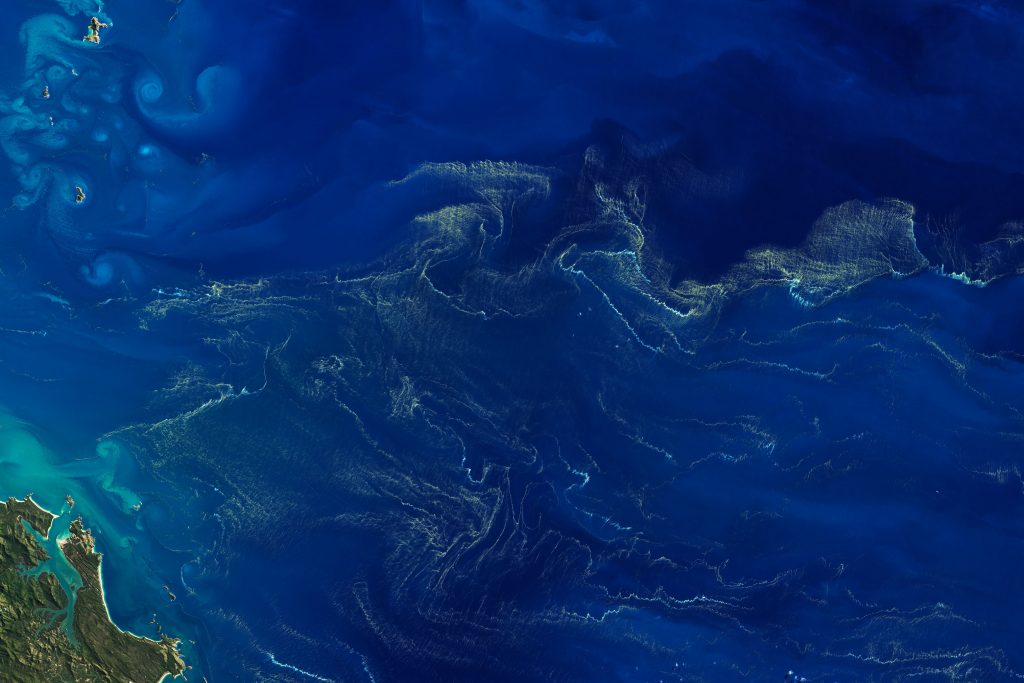
In colder waters, phytoplankton and nitrogen fixers need iron for the entire life cycle to have maximum results. The research shows that during the ice ages, the climate contained high amounts of iron-rich dust. This would help the growth and expansion of cold-water phytoplankton. Our oceans today are iron depleted.
The nitrogen fixers that feed the phytoplankton also need iron to flourish. The researchers made a climate model and tested just how it would help the biological pump. What they discovered is that when adding more iron, the nitrogen fixers played an even greater role in strengthening the biological pump.
More research will need to be done on this subject, as the researchers pointed out. With our growing need for solutions to help combat climate change and global warming, there will be a greater need to understand how nature works. This study can help us figure out ways to possibly feed the nitrogen fixers and the phytoplankton to help the planet pull more CO2 from the atmosphere.


