Imagine if people could monitor their health conditions by picking up a pencil and drawing a shape on their arm? Well, imagine no more. In a recent study, engineers from the University of Missouri have shown that the simple combination of ordinary office copy paper and graphite pencil lead could be used to create bioelectronic devices that monitor personal health.
While the concept is far from becoming a reality, you can imagine the potential: Sketching on your arm during the day to keep tabs on your heart rate or drawing a shape or a squiggle on your arm to monitor your sleep overnight.
In the study, published in the journal Proceedings of the National Academy of Sciences, the team found that the most crucial part of the process is the pencil lead. After trying different versions of pencil lead, the engineers found that 93% graphite mix was the best because the patterns that the lead creates acts as sensing electrodes that collect signals from the skin.
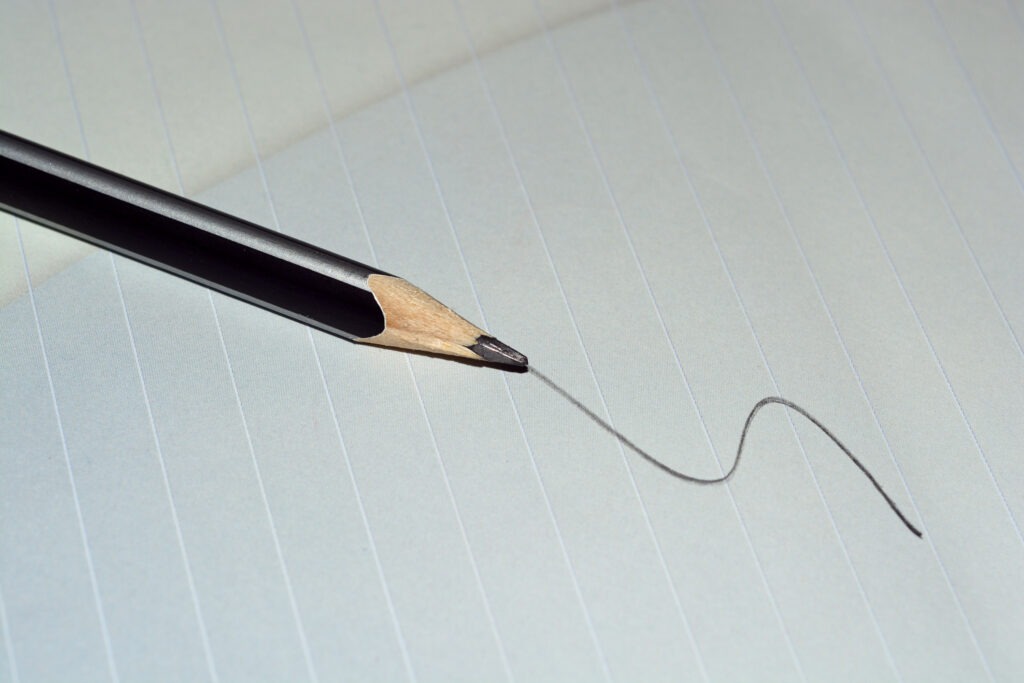 Meanwhile, the paper plays the role of a flexible, supporting substrate. How would the paper stay on your skin? Either a frame or a biocompatible spray-on adhesive could be used to keep the paper in place. When the user is finished using the sensor, they can peel it off like plaster and then throw it away without guilt because it’s biodegradable.
When the team tested out this futuristic device, the results and fidelity were similar to existing wearable sensors. The device is self-powered through the harnessing of ambient humidity. However, it currently needs to be connected to another tool to read data from the sensors. This is something the engineers are working to improve.
Assistant Professor Zheng Yan said:
The conventional approach for developing an on-skin biomedical electronic device is usually complex and often expensive to produce. In contrast, our approach is low-cost and very simple. We can make a similar device using widely available pencils and paper.
The sensors could potentially be used to measure health statuses, such as sweat acidity, glucose levels, heart rates, skin temperatures, respiratory rates, and more. Extra sensing capabilities or more power can also be applied by adding additional sheets of paper.
The engineers plan to continue experimenting with different kinds of biomedical components, and eventually, they will add wireless capabilities to the device as well. Once this technology is complete, its simplicity and inexpensive qualities will allow it to be used everywhere, from homes to hospitals.