
Not all custom jerseys are created equal. The gap between a team jersey that looks sharp after a full season of wear and one that’s cracked and faded after six washes isn’t about price alone. It’s about materials, production method, and supplier quality.
For organizations in New Jersey evaluating premium team jerseys, understanding what actually determines output quality makes the difference between an investment that pays off and one that gets replaced prematurely.
The Quality Markers That Matter
Print durability through repeated washing. A jersey worn by an active player gets laundered frequently. The most common failure point for custom team jerseys is the print: cracking, peeling, or fading before the season is over. Quality transfers applied correctly — at the right temperature and pressure for the fabric — should survive 50+ wash cycles without visible degradation.
Color accuracy and vibrancy. A team’s visual identity is tied to its colors. A jersey where the logo looks dull, faded, or off-color undermines the whole point of having a custom design. Production quality shows up immediately in color accuracy on both light and dark garments.
Print on dark fabrics. Many team colors run dark — navy, black, forest green, charcoal. Printing full-color designs on dark garments requires a white underbase layer that makes the overlaid colors appear accurately. Without it, designs look washed out or transparent. With a properly printed white underbase, colors on dark jerseys look as vibrant as on light garments.
Soft, flexible finish. A premium jersey print moves with the fabric. It doesn’t feel stiff or plasticky, and it doesn’t restrict movement. The feel of the print under a player’s hand is one of the quickest indicators of production quality.
Fabric choice. The blank garment matters as much as the print. Athletic dry-fit polyester handles sweat better than cotton for active sport use. Cotton is more comfortable for casual wear and holds DTF transfers with slightly easier pressing. Knowing which fabric fits your team’s actual use — game-day athletic wear versus practice and travel shirts — informs the garment selection.
How DTF Transfers Produce Premium Results
Direct to Film (DTF) printing has become the standard production method for premium team jerseys because it handles all of the quality markers above without per-color pricing penalties. Industry analysis from the Printing United Journal highlights DTF’s transformative impact on apparel decoration through its versatility and cost efficiency.
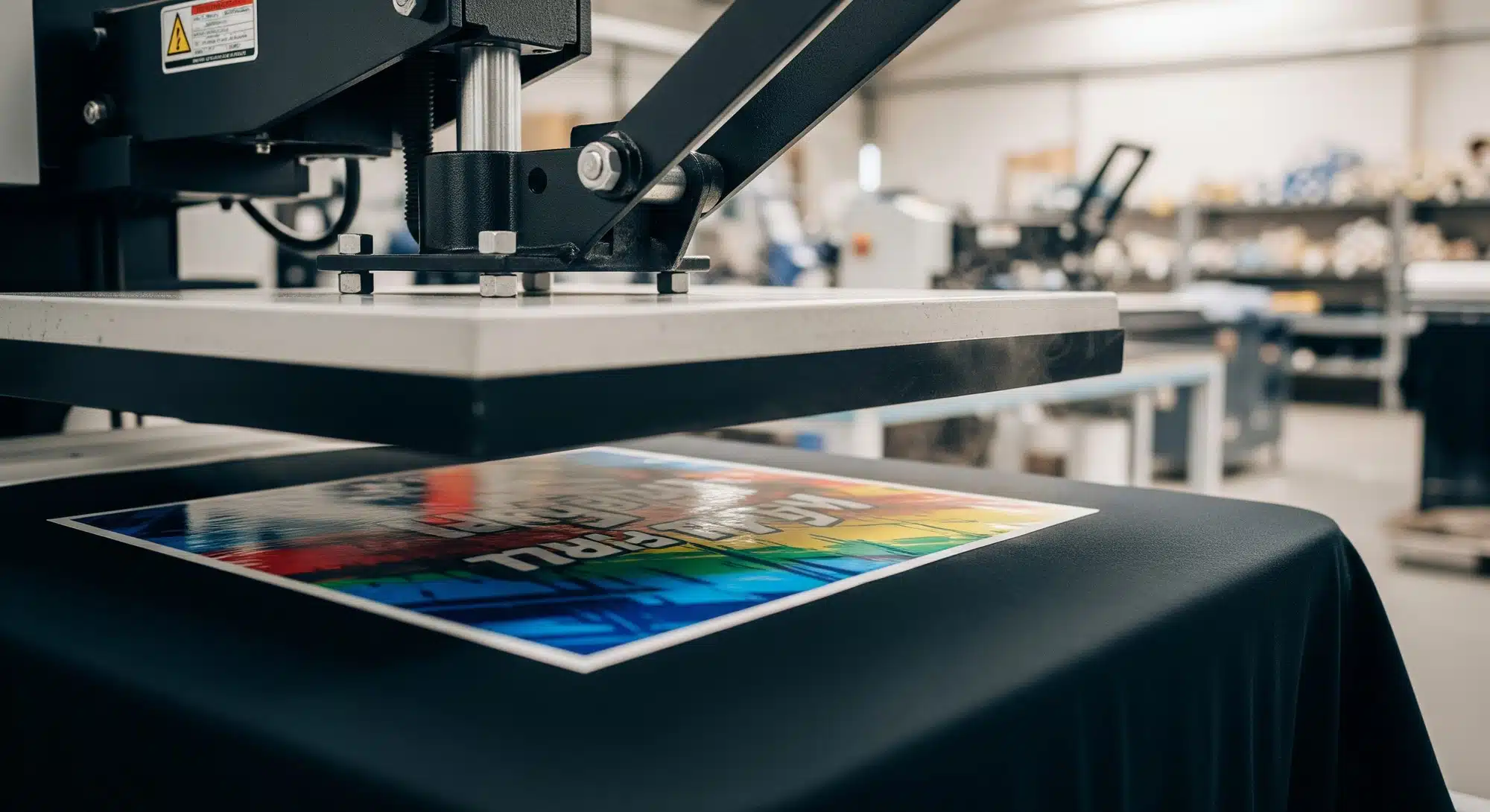
Full-color output includes the white underbase layer for dark fabrics. Printing happens on PET film with water-based inks before the transfer is applied to the garment, allowing production quality to be consistent regardless of garment color. The adhesive powder is cured before application, so the bond to the garment is strong and flexible.
Properly applied DTF transfers on quality blank garments produce the soft feel, color accuracy, and wash durability that define premium team jerseys. The production quality difference between a good DTF supplier and a poor one shows up in exactly these areas: ink density, powder coverage consistency, and curing quality.
DTF Jersey produces transfers for team jerseys in NJ with same-day shipping and no minimums. For organizations evaluating quality, ordering a single test transfer before committing to a full team run is a practical approach. Their full transfers collection covers custom uploads and pre-designed options.
The Fabric Selection Decision
For team jerseys specifically, the fabric choice drives the use case:
Cotton (100% or blend): Comfortable for casual wear and travel. Holds DTF transfers well. Better for spirit wear, practice shirts, and casual team apparel. Not ideal for high-sweat athletic activity.
Polyester dry-fit: Moisture-wicking and athletic-appropriate. Standard for game-day jerseys and active sport use. Requires slightly lower pressing temperature than cotton (295-305°F vs. 315-320°F) to avoid dye migration. DTF works on polyester without the pre-treatment that some other printing methods require.
Cotton-poly blend (50/50): Balances comfort and moisture management. Works well for teams that want a single jersey type for both practice and casual wear.
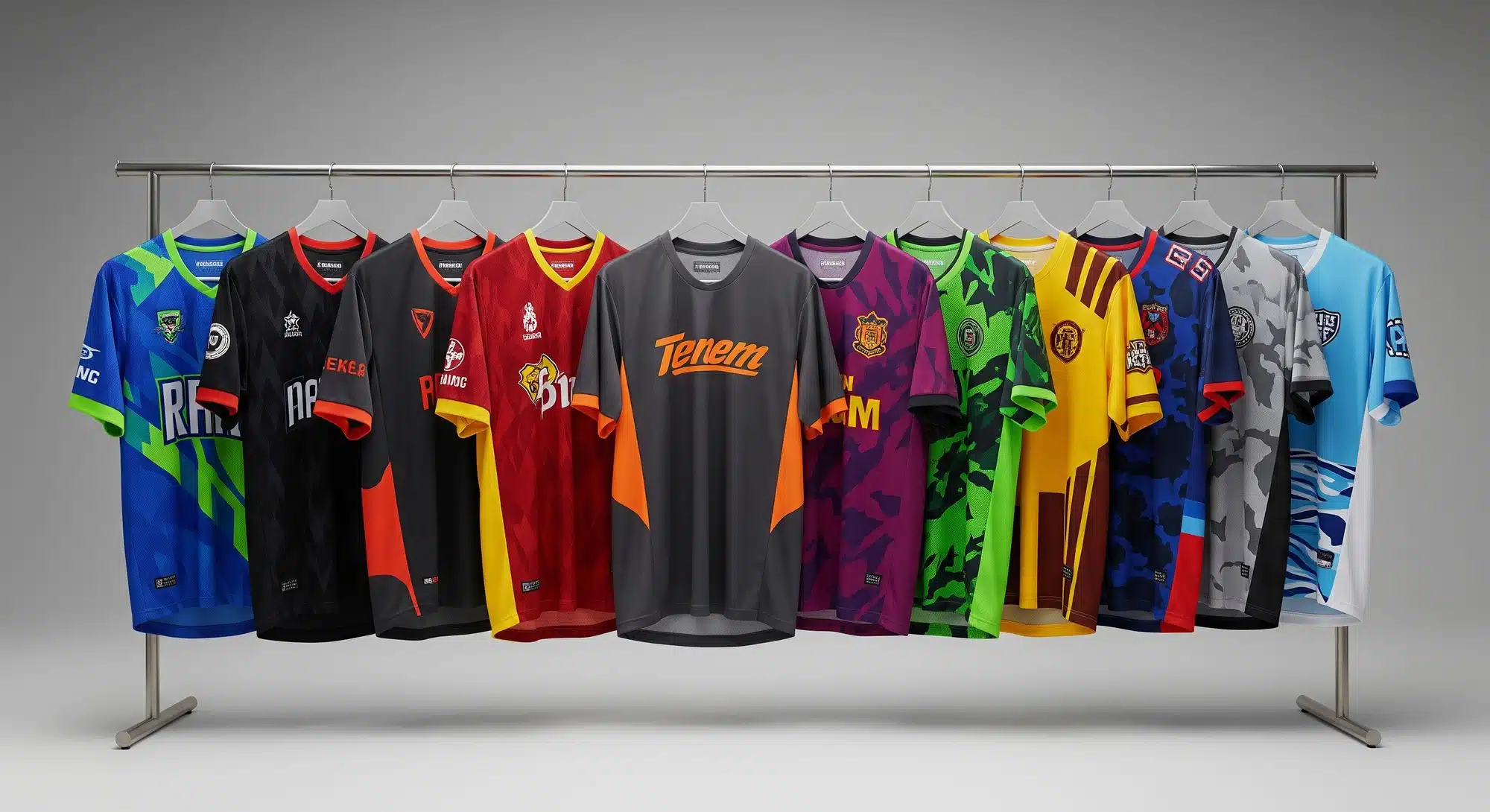
Choosing the right fabric for the actual use context is part of what makes a team jersey feel premium rather than generic.
The Supplier Selection Decision
For NJ organizations investing in premium team jerseys, the supplier choice matters for both quality and logistics.
The questions that separate reliable suppliers from unreliable ones:
Do they review your artwork before printing? A supplier who prints whatever file is uploaded without checking resolution or sizing will produce unexpected results. One who reviews files and flags issues before production saves an expensive reprint.
Can you order a test unit? A supplier who accepts single-unit test orders lets you verify quality before committing to a full team run. No-minimum ordering is the baseline requirement for this.
What’s their actual turnaround time? Ask specifically: if I place an order before noon today, when does it ship? A clear answer separates suppliers who are actually fast from those who market fast and deliver slowly.
How do they handle quality issues? Any supplier will occasionally have a production problem. The question is whether they make it right promptly and straightforwardly.
Premium team jerseys in NJ are achievable at reasonable per-unit costs. The investment is worth making correctly — with a supplier whose quality and reliability justify the team’s trust in wearing what they produce.


