
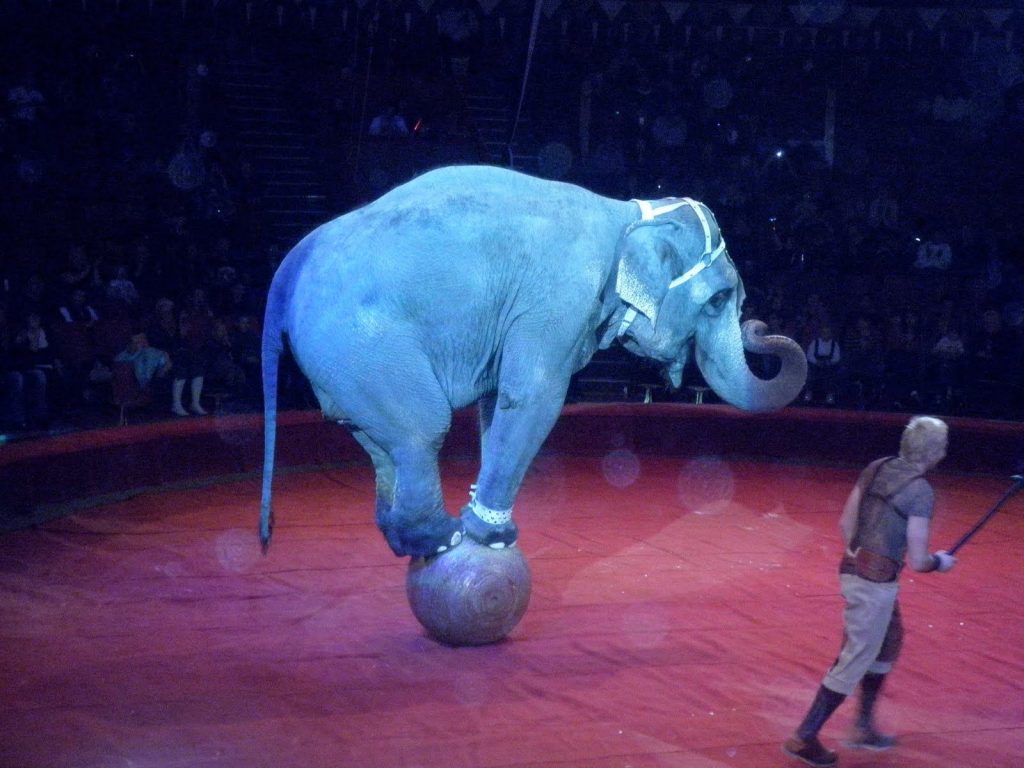
A battle to help rescue Ramba to safety, which started almost eight years ago, is finally over. The Asian elephant had a rough and lonely life with abusive owners, spending decades performing in South American circuses. Now, after a 2,551-mile journey by plane and truck from a Chilean zoo, Ramba is relaxing with some elephant friends in her new home at a beautiful open-air sanctuary in Brazil.
The Long Journey
Ramba’s journey to the sanctuary began many years ago. In 2012, Ecopolis, a Chilean animal welfare group, contacted the Global Elephant Sanctuary (GSE) to help rescue Ramba from her abusive circus owners. Finally, after years, Ecopolis successfully petitioned the government of Chile to confiscate Ramba, which officially ended all practice of performing circus elephants in Chile.
Elephant experts Scott Blais and Kat Blais arranged for Ramba’s transportation to a roadside zoo in Rancagua, Chile. This zoo was only a temporary home until a proper elephant sanctuary was found to relocate her there. However, there was no elephant sanctuary in all of South America, so they had to build one.
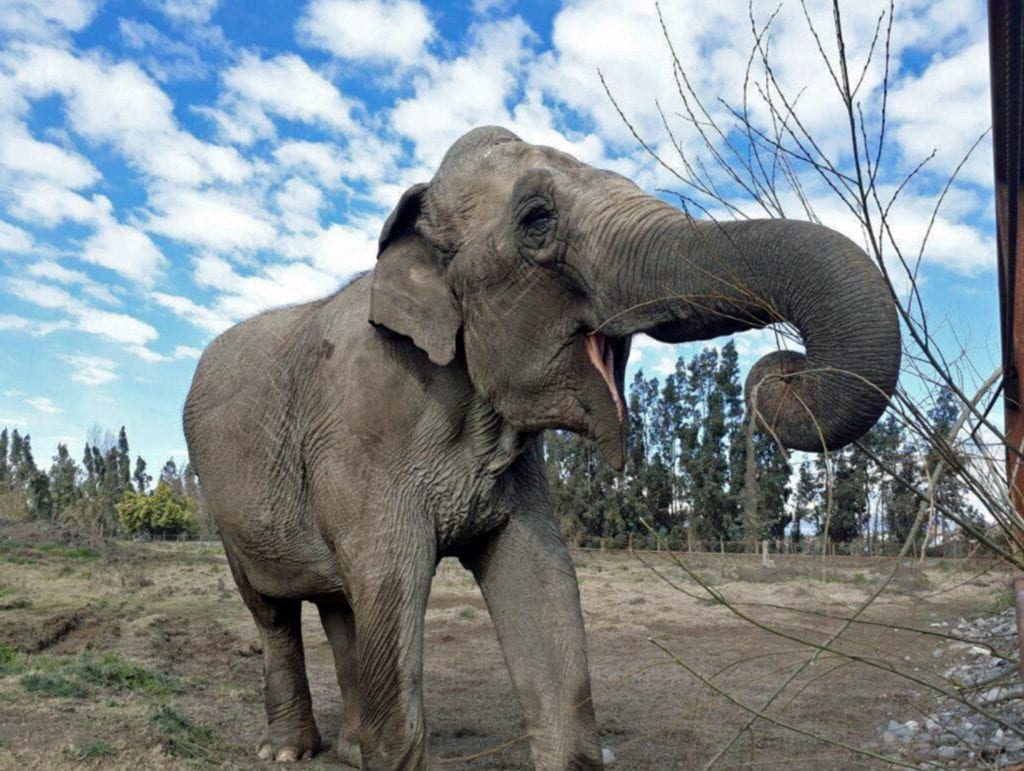
With the help of GSE and Dr. Joyce Poole of ElephantVoices, the 2,800-acre “Elephant Sanctuary Brazil” was built in the Brazilian municipality of Chapada dos Guimarães, which opened in 2016. Finally, after a journey that started almost eight years ago, Ramba was ready to move into her new home.
On October 16th, 2019, the elephant took a flight out of Santiago, Chile. Elephant welfare experts and several dedicated volunteers escorted her on the journey. Ramba flew over the Andes Mountains, then landed in Campinas, Brazil, at the Viracopos International Airport. From the airport, the elephant continued for three more days by a flatbed truck before reaching the sanctuary.
The Struggle To Find Alternatives
There are over 6,000 captive elephants throughout the world; among these, less than 250 have been offered life in sanctuaries. Thankfully, there is a growing amount of support internationally from individuals who sincerely care about the long-term health and welfare of these captive creatures.
So far, 5 South American countries passed national bans to prohibit the use of performing elephants. However, without a proper alternative, elephants are left to live a life of neglect and minimal care in rural farms or small zoos with little or no expertise with elephants.
South America isn’t the only place that struggles to find proper alternatives for elephant care. There have been independent efforts to establish elephant sanctuaries around the world, but all efforts stagnated at the beginning phase.
The Sanctuary
GSE president Scott Blais said, “We know that sanctuary life can make a profound difference in the health and well-being of captive elephants. Our objective is to develop an international collaboration to ensure a safe, secure, and humane future for captive elephants through the creation of spacious, holistic, natural habitat elephant sanctuaries.”
At the sanctuary, Ramba now has three elephant friends, Rana, Maria, and Guida, who arrived back in 2016. Maia and Guia were also rescued from the circus and then lived in chains on a private farm for five years, waiting for the sanctuary life.
Thanks to many caring individuals working for years and hundreds of donors who supported her, Ramba gets to spend the rest of her life in tranquility at the Elephant Sanctuary Brazil. Scott Blais hopes that the sanctuary will be comfortable for Ramba and a place where she feels peace and happiness. Sanctuaries give rescued animals a second chance—just as Noah’s Ark Animal Sanctuary did for the famous bear, tiger, and lion who formed an unbreakable bond after being rescued together.


