
The climate crisis is escalating, and people are starting to demand that businesses take environmental concerns more seriously. Everyone realizes that the throwaway society must end. So now, some companies in the fashion industry are tackling the challenge by renting clothes out.
While the practice of leasing clothing for weddings is an established business, doing so for everyday wear is relatively unheard of. One of the first fashion rental companies to spring up was New York-based Rent the Runway back in 2009, established to lease designer clothes. Since then, others have popped up around the US, Europe, and China. However, the service never made it into the mainstream.
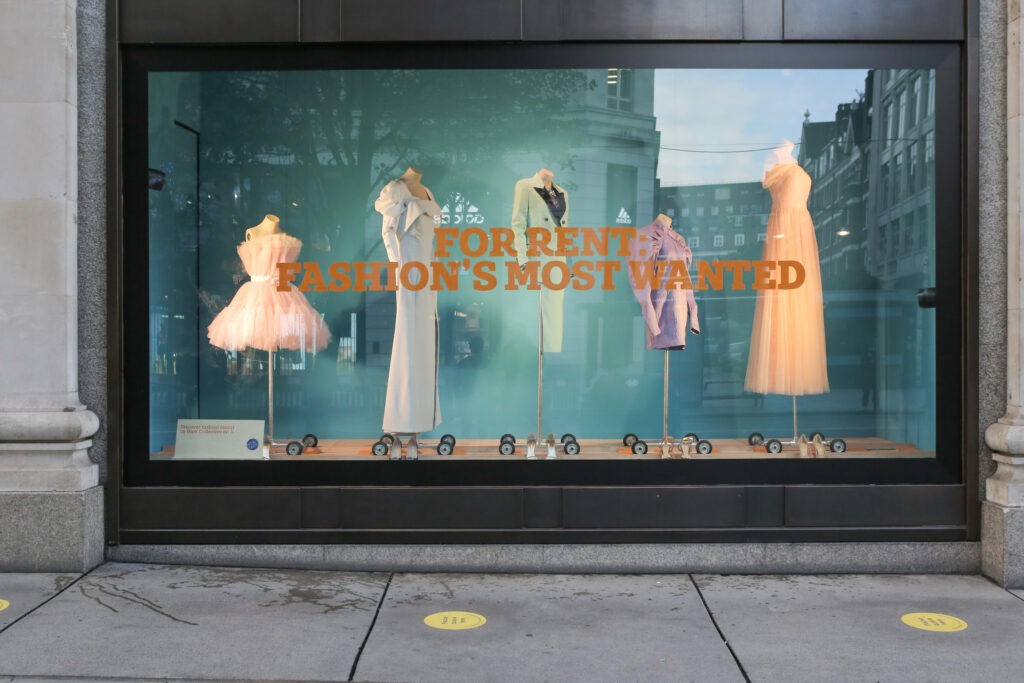
Selfridges & Co. want to change that. The high-end department store chain has paired up with Hurr Collective – an online clothing rental company – to attract ecologically minded customers with rentals. It is one of many moves to brand itself as a company providing sustainable fashion.
Hurr Collective writes on its online platform:
As one of the world’s most polluting industries, fashion needs to change. We’re on a mission to make fashion circular, one rental at a time. Traditionally, the fashion industry works on a linear model of make > use > dispose. The circular economy is restorative and regenerative by design. With the help of our fabulous renters and lenders, we’re making fashion accessible and sustainable.
Customers can visit the online fashion rental platform and choose from 100 items from 40 brands and hire outfits for 4, 8, 10, or 20 days.
Other plans by Selfridges include selling second-hand vintage clothes and allowing shoppers to sell used accessories and designer wear to the store for store credits from mid-October. Another eco-friendly move in the works is establishing a “repair concierge service” in stores – a section where people can hand items (clothes, bags, jewelry, and shoes) in to be mended for a fee. For example, a resewn button could cost £2-£5 depending on if you lost the fastener, and a hem repair £20.
Selfridges’ mission is to have the rent, repair, re-sell, and recycle initiatives make itself “synonymous with circularity.” Its plans also include a commitment to become carbon-neutral by 2050.


