
North Carolina State University scientists have broken new ground in the 3D-printing world with the development of a pioneering gel that enables the production of metal objects at room temperature. Though various methods currently exist for the 3D printing of metal objects, they all require heat, making it challenging to produce particular heat-sensitive electronics. This novel gel overcomes such constraints, paving the way for a range of applications in science and technology.
Unique Gel for 3D Printing
Up till now, creating metal objects via 3D printing necessitated the use of heat, making it inappropriate for certain sensitive electronic components. A team of forward-thinking scientists at North Carolina State University has proved this no longer has to be the case. Their invention, a distinctive gel material, can 3D print metal objects under normal room temperatures.

This innovative material begins as a solution composed of copper microparticles suspended in water. Subsequently, microparticles of a metal known as eutectic gallium indium alloy (EGaIn) and hydrochloric acid are introduced into the mix. The latter reduces the water’s pH to 1.0 while eliminating oxides from the EGaIn, momentarily rendering it a liquid metal. The EGaIn globules then stick to the harder copper particles, constructing a network of copper particles linked by EGaIn bridges. A substance called methylcellulose is integrated to enhance the density of the mixture.
3D Printing at Room Temperature
The engineered gel, thick in texture, is squeezed out from a regular 3D printer at room temperature, forming an object layer by layer. The final drying process, also conducted at the same temperature, allows the water and hydrochloric acid to vanish, leaving behind a hard, highly electrically conductive 3D object comprising up to 97.5% metal.
Incredibly, the resulting object possesses the ability to transform its shape in a calculated manner. This occurs if heat is applied during the drying process and is based on how the particles were positioned during printing. Such a unique feature could facilitate the production of complex-shaped items which were simpler to print in a flat pattern. A remarkable example of this involves a 3D-printed spider that elevates its legs as it dries while heated.
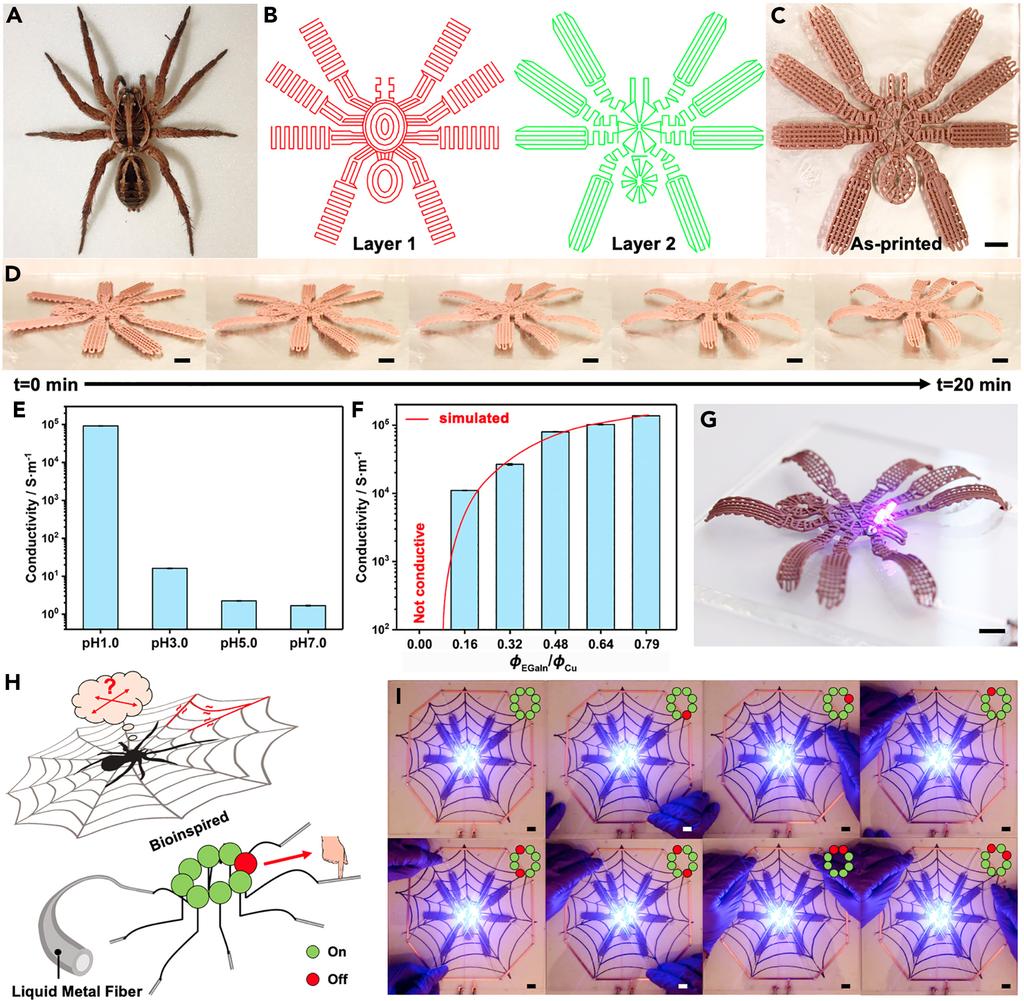
Major Leap in 3D and 4D Printing
“3D printing has revolutionized manufacturing, but we’re not aware of previous technologies that allowed you to print 3D metal objects at room temperature in a single step,” said lead researcher Dickey, highlighting the importance of this development. The findings were shared in the published paper in Matter journal, adding to the existing pool of innovative research at the university.
This discovery champions a major leap in 3D and 4D printing, allowing room-temperature printing of electronic components and devices. The ground-breaking work carried out by the North Carolina State University team brings science and technology one step closer to more sustainable and efficient manufacturing methods. This innovation illuminates a new path in the renewable energy, sustainability, and technological advancement arenas.


