
What if mushrooms could advance our building technology? The thought might seem outlandish, but science is pushing the boundaries of imagination with a unique substance, mycocrete, a robust material borne out of those commonly overlooked fungi we call mushrooms. A team of scientists from Newcastle University in the United Kingdom is looking into how this moldable matter could transform our approach to construction.
Mycelium Takes Root
Mushrooms, often only celebrated when on pizza or in salads, are part of a massive underground web of root-like structures called hyphae. When collectively considered, these roots form a network named mycelium. With the optimal conditions, mycelium can morph into an impressively resilient substance, suitable for uses as diverse as vegan leather, soundproofing material, or packing foam. This flexible and diverse applicability led the scientists right to the door of mycocrete.
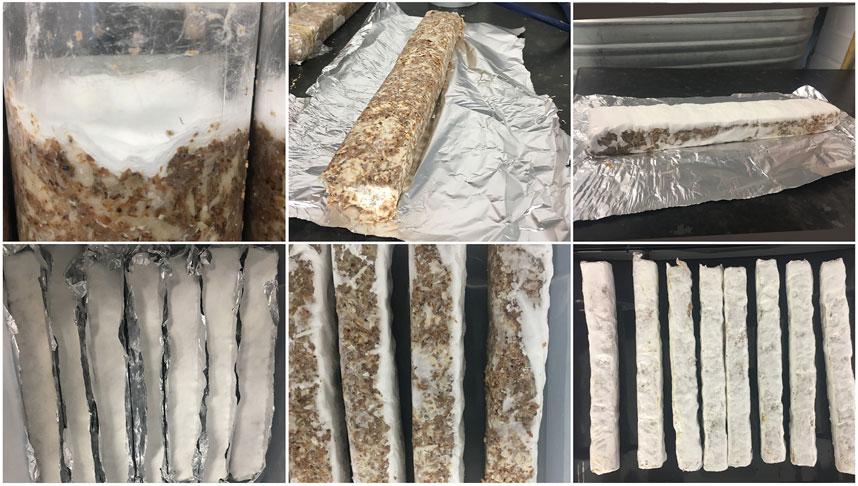
How Mycocrete is Born from Fungus
Mycocrete is a carefully concocted paste of mycelium spores, grains, paper powder, paper fiber clumps, water, glycerin, and xanthan gum, designed to boost the bulk of the paste. The consistency allows for the substance to fill an oxygen-permeable knitted textile mold, then nurtured in a warm, humid, dark environment. This environment induces mycelium spore growth, whereupon they generate a dense network of hyphae. The result: the paste morphs into a stiff 3D matrix that takes the shape of the mold.
After sufficient growth within the mold, the mycocrete structures are removed and dried, curtailing the growth cycle before the creation of mushrooms. The outcome is a robust, innovative construction material – mycocrete.
The practicality of this biological wonder was evidenced through the successful creation of a freestanding dome labeled “BioKnit”. Remarkably, BioKnit was forged from a single, solid piece of mycocrete with strength surpassing other attempted mycelium-infused materials, shrinking less upon drying as well.
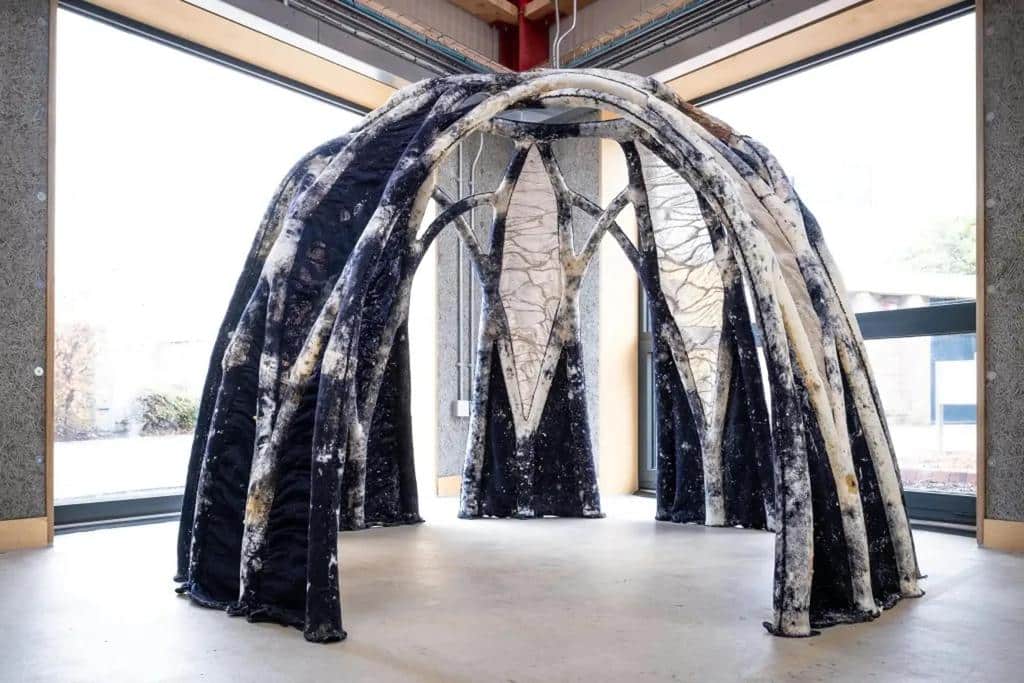
Fungus-Based Structures: The Future
Dr. Jane Scott, the lead scientist of the project, has high hopes for the prospect of mycocrete in construction. She said, “The mechanical performance of the mycocrete used in combination with permanent knitted formwork is a significant result, and a step towards the use of mycelium and textile biohybrids within construction.”
This new take on fungi, one of nature’s humble organisms, is proving science’s commitment to sustainable solutions and renewable energy. The potential of mycocrete in shaping the future of building and construction underscores the endless bounds of science and technology in seeking advanced yet eco-friendly practices.


