
In recent years we’ve heard a lot about synthetic skins for robotic hands, which would give the gadgets a more human-like appearance. However, scientists in Japan have recently taken it a step further by wrapping a robotic finger in a self-healing skin produced from live human cells.
A team at the University of Tokyo, led by Prof. Shoji Takeuchi, began by creating an articulated motor-driven robotic finger that could bend and straighten like a human finger. The finger was then immersed in a cylinder containing collagen and human dermal fibroblast cell solution, the major components of our skin’s connective tissues.
The solution shrank and conformed to the shape of the finger due to its natural characteristics, resulting in a smooth hydrogel coating. The researchers then added a layer of human epidermal keratinocyte cells, which comprise 90% of our epidermis (the outermost layer of skin). These created a moisture-retention/water-resistance barrier on top of the gel, giving the finger a more natural texture.
When the robotic gadget was tested, it was revealed that the skin was sturdy and elastic enough to extend and bend with the finger without breaking. Furthermore, when the skin was cut and subsequently wrapped with a collagen bandage, the bandage began to morph into the surrounding skin, allowing the wound to heal.
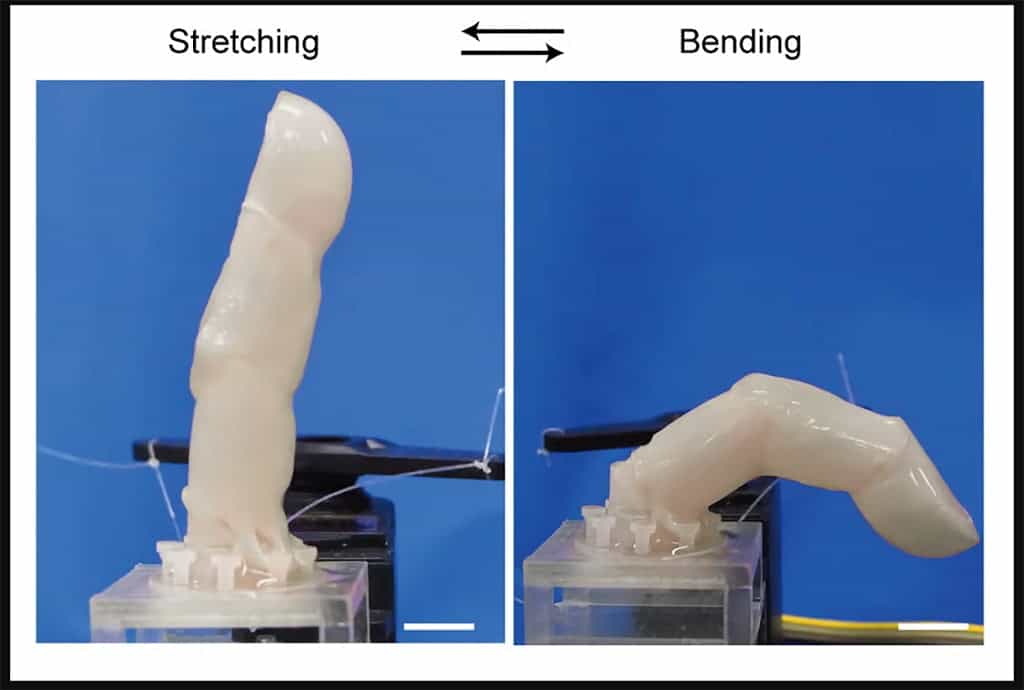
However, this synthetic skin is still considerably weaker than natural human skin and requires continual nutrient replenishment to survive. The researchers intend to remedy these flaws by incorporating elements such as sweat glands, hair follicles, fingernails, and even sensory neurons to create a sense of touch.
The skin could eventually be used to make humanoid robots that are more lifelike and relatable to people. The technology would also be suitable for tasks requiring a soft but durable touch and conducting skin research without needing to use animals.

Takeuchi concluded:
“We are surprised by how well the skin tissue conforms to the robot’s surface. But this work is just the first step toward creating robots covered with living skin. I think living skin is the ultimate solution to give robots the look and touch of living creatures since it is exactly the same material that covers animal bodies.”
The study was published in the journal Matter on June 09, 2022.


