
Elite manufacturing operations in 2026 recognize that scaling extends far beyond sheer volume. It involves expanding output without creating bottlenecks, inefficiencies, or operational chaos. Modern manufacturing tech offers powerful levers for expansion, yet these tools often introduce layers of friction that strain existing systems if not managed with precision. Scaling manufacturing without complexity requires a strategic shift in how digital and physical assets are integrated into the shop floor.
The paradox many manufacturers face is that technology enables growth, but excessive or fragmented systems can weigh an enterprise down. Adopting tools that drive scale while simplifying execution is the key to sustainable production. In today’s high-stakes environment, the smartest manufacturers are those who prioritize a clean scale over mere speed, ensuring their digital transformation supports long-term production efficiency.
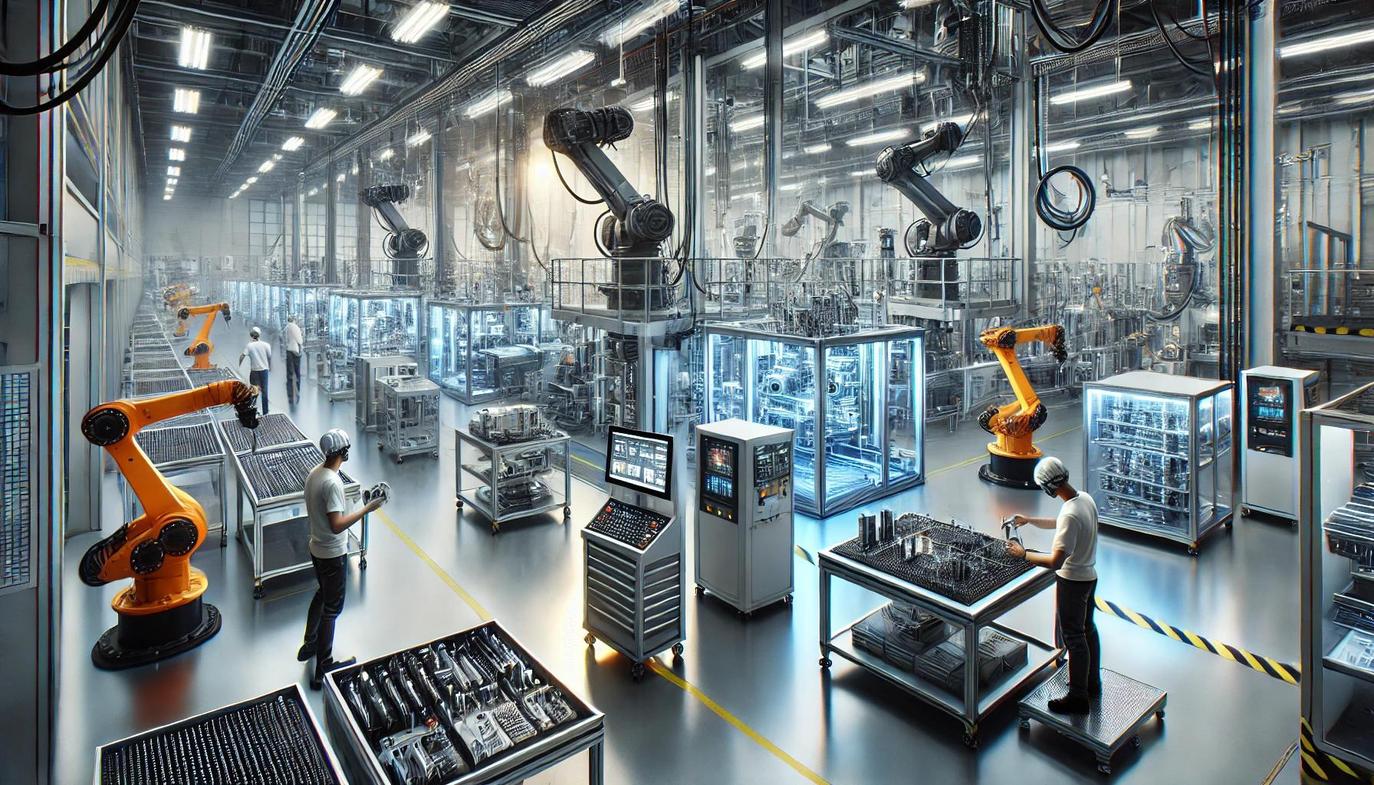
Leveraging Modular Equipment for Production Efficiency
Strategic scaling necessitates a shift toward modular equipment and reconfigurable components to prevent system saturation. Manufacturers are shifting away from fixed infrastructure designed for a single process. Instead, teams are adopting interchangeable assets that reconfigure quickly for diverse tasks.
Modular manufacturing equipment offers a clear path toward production efficiency without the friction of traditional upgrades. By integrating flexible assets, businesses can maintain agility throughout the scaling process:
- Real-time capacity adjustments based on shifting demand.
- Rapid product iterations using advanced 3D prototyping assets.
- Reduced financial commitment to full-scale tooling in early stages.
- Faster deployment of new product lines with lower entry barriers.
Enhancing Production Agility With Interchangeable Assets
Adopting flexible systems ensures production remains agile throughout the industrial equipment lifecycle. Such structural adaptability effectively prevents technical debt from accumulating as the enterprise expands.
Human-Centric Manufacturing Automation and Robotic Integration
Automation remains a cornerstone of scalable manufacturing, yet not every technological addition reduces complexity. Integrating robotic systems without prioritizing human interaction triggers operational friction instead of the intended efficiency gains.
High-performance scaling requires automation to complement human workflows by prioritizing robotics that are easy to integrate, program, and maintain. Modern platforms prioritize accessibility by featuring simplified cable routing and intuitive interfaces.
Streamlining Technical Deployment With Standardized Hardware
Integrating specialized hardware further streamlines the setup process:
- Pre-assembled cable assemblies for robotics systems reduce installation time.
- Standardized wiring solutions minimize human error during setup.
- Plug-and-play components ensure strict safety compliance.
- Reduced maintenance requirements lower the total cost of ownership.
Ready-to-install solutions make scaling less of a technical burden for onsite teams. By removing friction at the physical layer, manufacturers can accelerate their deployment cycles.

Cloud-Based Visualization Keeps Complexity Contained
Managing information flow becomes a critical concern as factories scale and production data increases. Fragmented data structures often overwhelm teams, leading to delayed decisions and overlooked risks.
Manufacturers overcome data fatigue by deploying lightweight, cloud-based visualization platforms that deliver targeted insights while filtering out production noise. These systems allow operators, engineers, and managers to see only what’s relevant to their role—without being distracted by noise.
In electronics manufacturing, for example, designers and QA teams now use real-time Gerber file viewers to verify board layouts and detect inconsistencies early. Direct access to visual data cuts down review cycles and allows distributed teams to stay aligned without heavy software stacks.
Standardization Creates Repeatable Processes
Standardizing core processes remains a highly effective method for scaling operations cleanly. Consistent practices allow new sites to onboard rapidly while maintaining operational excellence across several domains:
Core Pillars of Scalable Manufacturing Processes
- Unified equipment interfaces for cross-machine compatibility.
- Standardized training procedures for faster employee onboarding.
- Digital playbooks that formalize tribal knowledge.
- Role-based SOPs that ensure consistent product quality.
Codifying these protocols ensures that rapid growth reinforces rather than dilutes operational discipline. Repeatable processes transform expansion into a predictable trajectory, eliminating the risks of uncoordinated scaling. Enterprises are also digitizing internal communication and task management using tools like custom workflow design platforms that help formalize collaboration between engineering, production, and quality teams.

Integrating Industrial IoT and Self-Regulating Systems
Data-rich environments frequently lead to over-customized logic that compromises system stability. Transitioning to self-regulating edge intelligence simplifies troubleshooting and forms the foundation for advanced predictive maintenance.
Preventing this requires manufacturers to embed intelligence at the edge through sensors, programmable logic, and rule-based automation. These systems are designed to detect anomalies, adjust settings, and alert operators automatically—without needing manual intervention for every deviation.
Real-Time Intelligence in Electronic Assembly Operations
PCB assembly lines, for instance, are starting to integrate smart flexible boards that can interface with both old and new machines, facilitating real-time data transfer without constant code rewrites. Plug-and-play intelligence allows companies to scale their digital infrastructure gradually without a full tech reset.
Workforce Resilience and Cross-Skilling Strategies for Growth
One overlooked source of complexity during scaling is the workforce itself. When only a few individuals understand a system or process, dependency and risk increase. As teams grow, knowledge gaps can lead to inefficiencies, errors, and higher support demands.
Resilient manufacturers prioritize cross-skilling strategies to eliminate knowledge silos and reduce operational risk. Training employees to operate multiple machines and interpret dashboards builds resilience into operations while reducing pressure on individual technicians. Forward-thinking enterprises integrate digital twins and immersive simulations to accelerate onboarding and enhance workforce engagement.

Strategic Growth and Operational Control
Sustainable manufacturing scale thrives on simplicity rather than competing with it. When implemented thoughtfully, technology serves as an enabler of clarity rather than a source of confusion. The most resilient systems are not necessarily those with the most features, but those where every modular component and automated process serves a clear, integrated purpose within the broader smart factory integration.
Manufacturers who embrace modularity, real-time data visualization, and intelligent automation are proving that it is possible to grow output without losing control. Success in 2026 is determined by how clearly a business can build its infrastructure, rather than just how fast it can produce. By focusing on repeatable processes and human-centric automation, leaders can ensure their expansion remains both manageable and highly profitable.
Manufacturing Scalability Insights
How can modular equipment improve production efficiency?
Modular components allow for rapid reconfiguration of assembly lines, enabling teams to adjust capacity based on real-time demand without total system overhauls.
Why is human-centric manufacturing automation preferred?
This approach ensures that robotic systems complement worker movements and intuition, reducing training time and preventing technical bottlenecks during expansion.
What role does industrial IoT play in reducing complexity?
Embedded sensors and edge intelligence help systems self-regulate, detecting anomalies and adjusting settings automatically to maintain operational discipline.
How do Gerber file viewers assist electronics manufacturing?
Tools like real-time Gerber file viewers allow distributed teams to verify board layouts instantly, cutting down review cycles and alignment errors.
What are the benefits of cloud-based factory visualization?
Lightweight visualization platforms filter production noise, providing operators and managers with role-specific data that facilitates faster, more accurate decision-making.


