
Your email is more than just a communication tool – it can be the gateway to sensitive information and a prime target for cybercriminals. Today, cyber threats are more advanced and pervasive than ever, which makes it crucial not to overlook email security in your company’s protection strategy.
By fortifying your email defenses, you ensure that this essential channel doesn’t become the weak link in your cybersecurity strategy. Let’s look at the measures you need to secure your email from looming threats.
Implement Multi-Factor Authentication
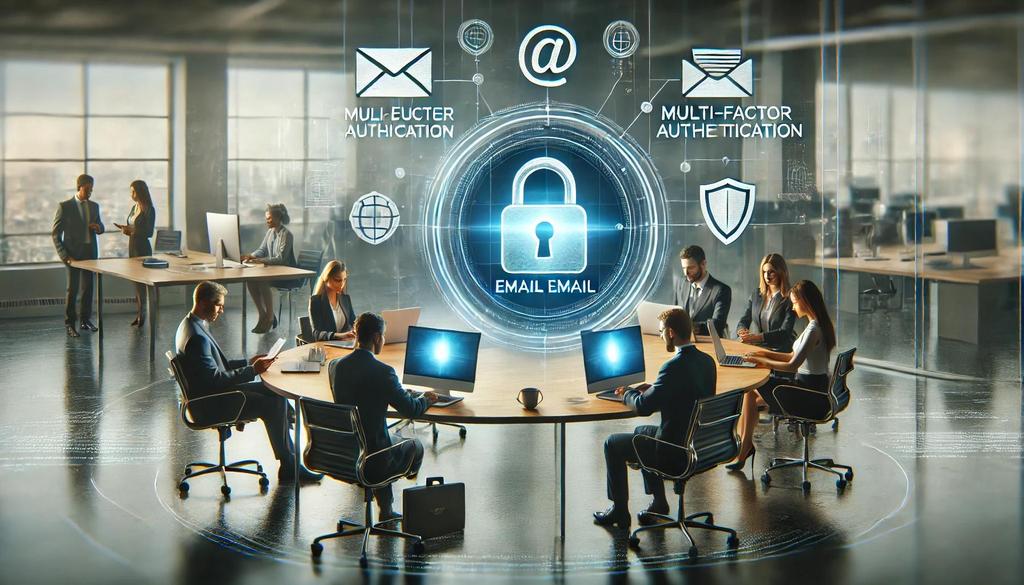
Implementing multi-factor authentication (MFA) is a straightforward method to enhance your email security right away. This added layer of protection requires users to verify their identity through multiple forms, making unauthorized access much more difficult.
With MFA, you require multiple forms of verification, like a password and a fingerprint scan, before granting access. This way, even if cybercriminals steal your password, they can’t access your email without other authentication factors.
Think of MFA as a strong digital barrier, which is critical whether you are looking at strengthening your personal emails, securing your email marketing, or improving your business’s security.
Regularly Update Your Security Software
Security software needs regular updates to remain effective against emerging and changing cyber threats. In fact, hackers frequently exploit vulnerabilities in outdated software, hoping that users forget to update. A simple way to protect yourself from this risk is to simply schedule automatic updates for your antivirus programs, firewalls, and security patches.
Utilize end-to-end Encryption
End-to-end encryption ensures only you and your recipient can read the emails you send. This type of encryption encodes your message, making it unreadable to anyone who intercepts it. To implement this, use encryption tools specifically designed for your email service.
The easiest way to think of encryption is as a lockbox. Many modern systems now support this feature, making it easier to protect sensitive information.

Monitor for Unusual Activity
Regularly monitoring your email can help you better detect and respond to potential threats quickly. Look for signs like unfamiliar login locations, a sudden spike in emails sent, or new rules set up in your account. If any unusual activity is found, change your passwords and secure your account immediately.
Moreover, you can utilize specialized tools to test your email and check how your email address stands through a spam detection system. Continuous monitoring acts as a watchful eye, helping you catch suspicious behavior before it grows into a significant breach.
Educate Your Team on Phishing Scams
Although AI-driven cyberattacks and sophisticated hackers often make the news, human error is responsible for over 80% of cybersecurity incidents. It is essential to educate your team about phishing scams.
Conducting regular training sessions can help employees learn to identify suspicious emails. These sessions will also teach them how to avoid clicking on unfamiliar links and how to recognize spoofed websites. This gives them an active role in keeping you and your business safe.
Employ AI-Powered Threat Detection
AI-powered threat detection systems can significantly enhance your email security. These systems analyze patterns in email traffic, identifying anomalies that could indicate potential threats. Advanced algorithms can detect phishing attempts, malware, and other suspicious activities that humans might miss.
Some newer emerging systems use machine learning to adapt and learn from new threats, providing robust, real-time protection. Be sure to stay up to date with the latest innovations!

Backup Regularly and Automatically
Regular and automatic backups are essential for safeguarding your email data. A recent backup ensures you can quickly recover your information in case of a cyberattack or system failure. Set up automated backup schedules to minimize the risk of data loss and human oversight for an extra layer of security and peace of mind.
Collaborate with Cybersecurity Experts
Collaborating with cybersecurity experts can provide specialized knowledge and skills that your in-house team might lack. Experts can conduct thorough security audits, identify vulnerabilities, and recommend effective security measures tailored to your organization. Regular consultations with cybersecurity experts can help you stay informed about the latest trends and threats in the field. This proactive approach ensures that you have the necessary knowledge to protect your organization effectively.

Prepare for Tomorrow’s Cyber Threats
Preparing for tomorrow’s cyber threats in a rapidly evolving cyber landscape is essential. Stay up to date with emerging threats and technologies and proactively adapt your security protocol.
Think of this as future-proofing your organization. While no system is entirely foolproof, a proactive and adaptive approach ensures you’re as prepared as possible. If you are unsure where to start, seeking the help of an expert and investing in the right platforms and services can help you build a strong defense against email cyber attacks.


