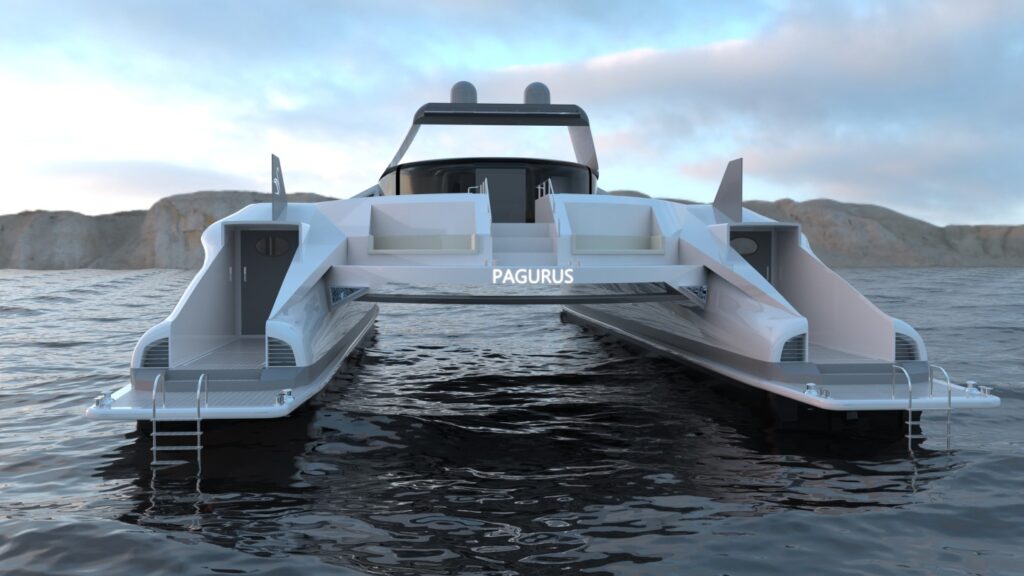
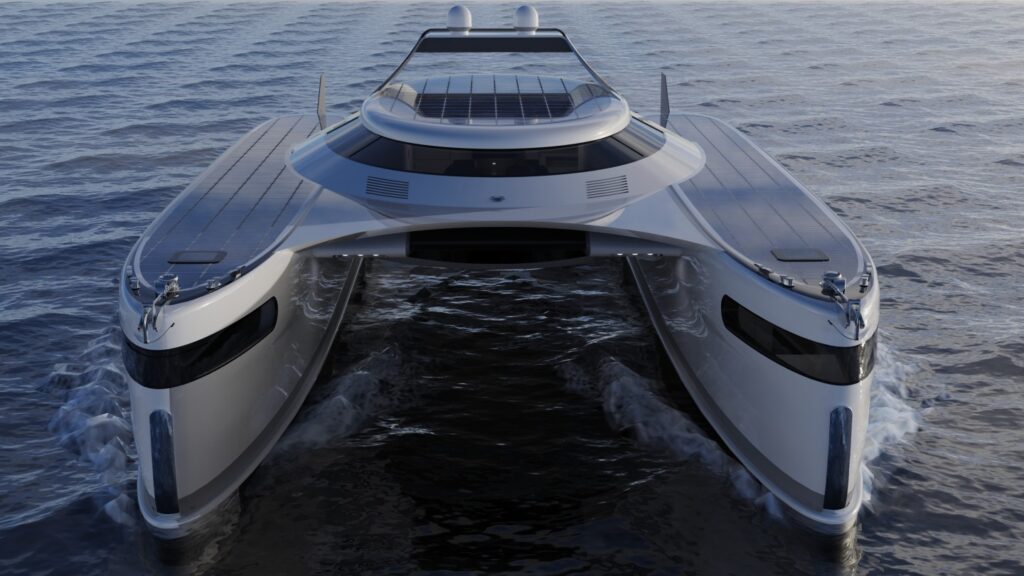
Italian-based Lazzarini Design studio has unveiled designs for a solar-powered amphibious “crabmaran” dubbed Pagurus, which the studio claim will be the world’s first.
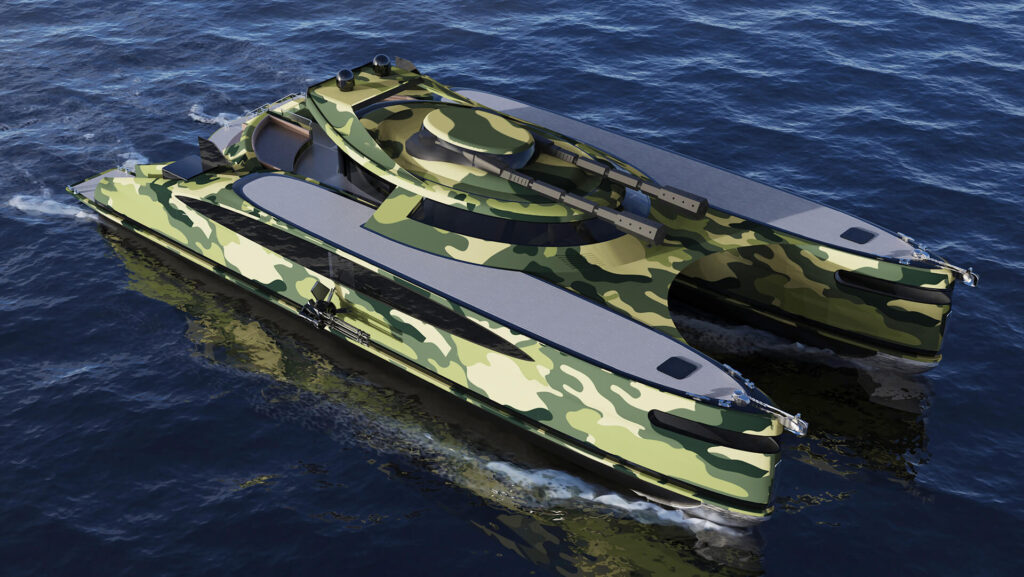
The term crabmaran combines the words “crab” and “catamaran,” which is appropriate since it moves on the sand, like a crab. This unique vessel was initially conceived for military use, but now it’s being offered to the private sector at a high cost.
Lazzarini design studio said:
We decided later to call it Pagurus: the Latin word for crab. Pagurus is our third project inspired by the crab, highlighted not only in its catamaran forms but also in its functions; the fact it can move on the sand just like the crab.

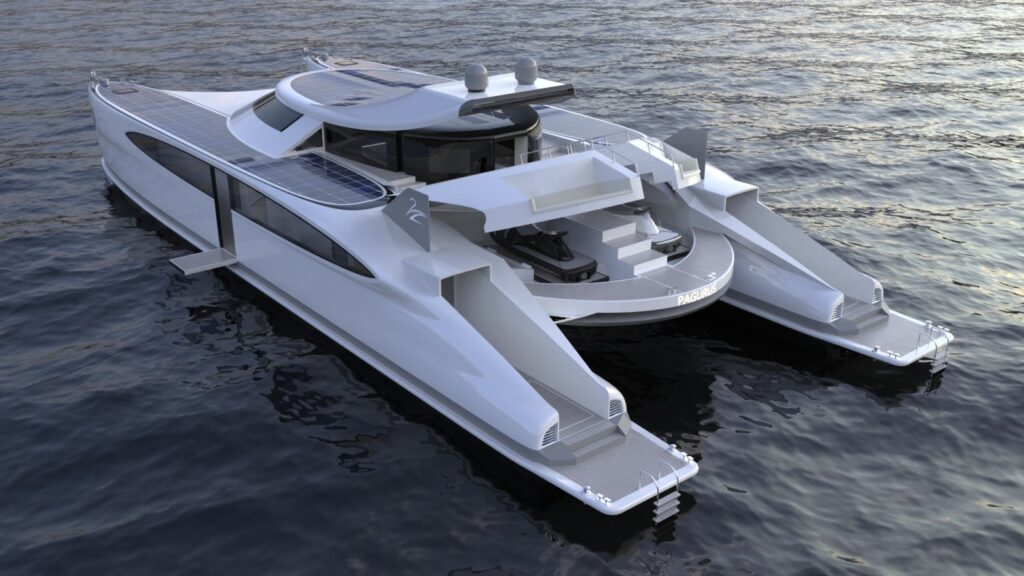
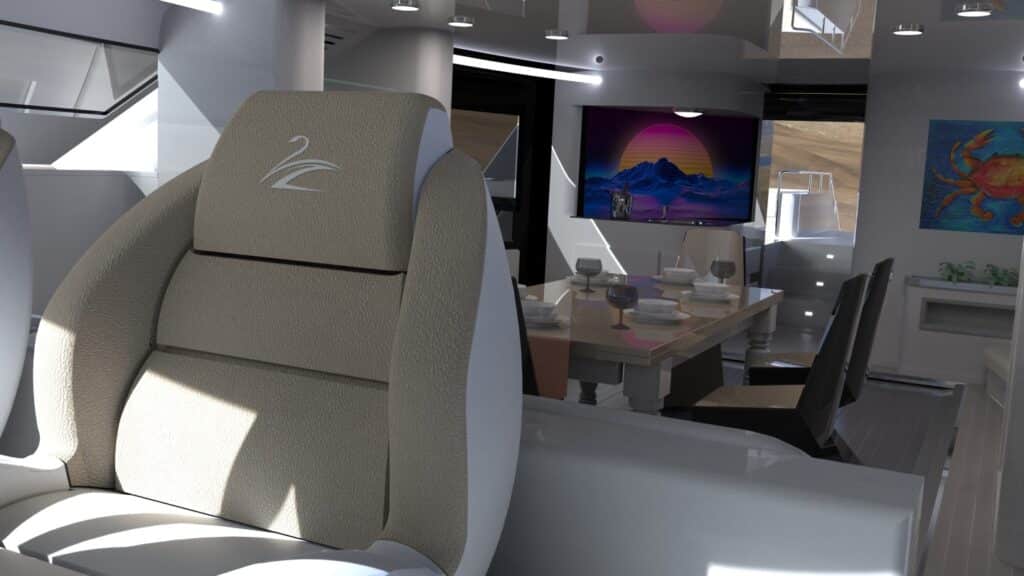
Pagurus combines solar technology, with innovative and luxurious design. It can lodge up to eight guests and four crew members, featuring a lounge, kitchen, three bedrooms, and bathroom facilities. The 82-ft (25-m) superyacht is built with twin steel hulls, which can be configured to different interiors according to the owner’s liking. Its living quarters are split across the two hulls, connected by a steel bridge and tower deck. The steel bridge strengthens and reinforces the main body of the vessel.
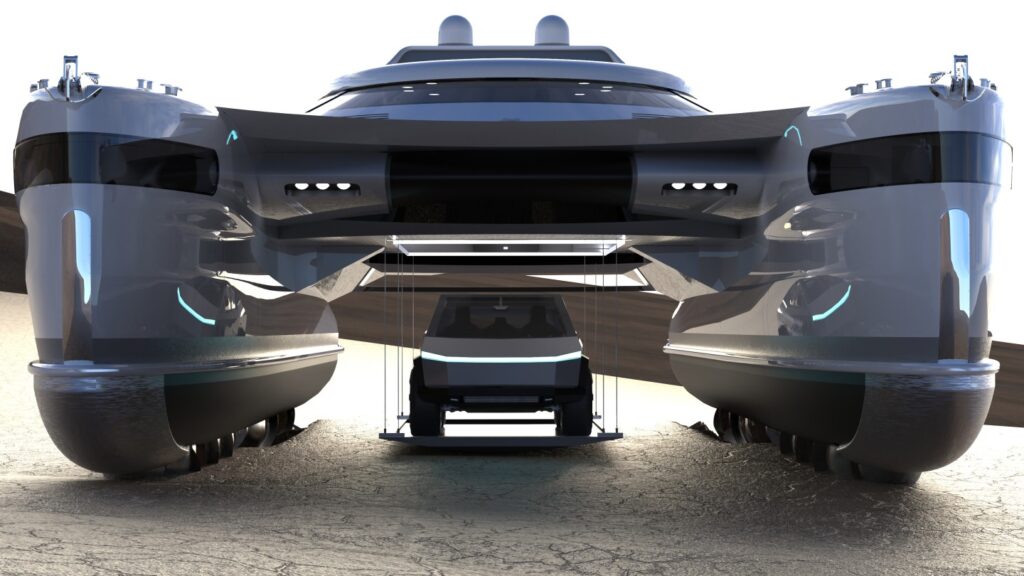
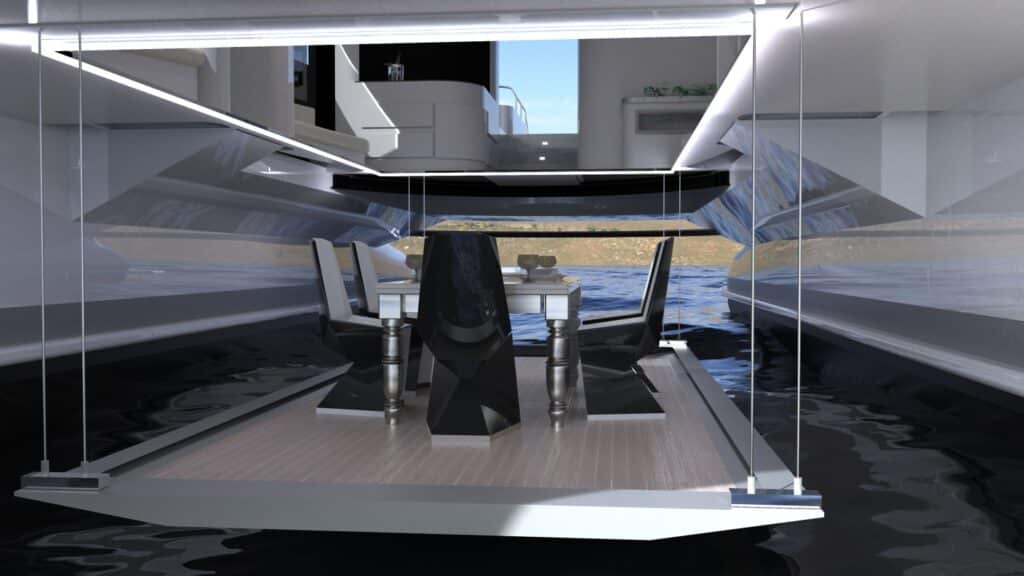
A crane platform attached to four electric winches is incorporated at the yacht’s center. This platform can transform into a dining area, an outdoor lounge, or it could be used as a loading and unloading dock for various items, such as an off-road vehicle or a smaller boat.


The vessel is equipped with a dual-propeller stern drive and twin 890-hp diesel engines, providing a maximum speed of around 24 knots (28 mph or 44 km/h). Twin steel screw cylinders measuring 3.9 ft (1.2 meters) in diameter and 21.3 ft (6.5 meters) in length are located at the bottom of the hulls. These rotating steel cylinders are connected to a transfluid transmission and generate energy to recharge the yacht’s batteries while cruising. “The cylinders are able to generate motion in water (5 knots) and simultaneously energy,” said Lazzarini.
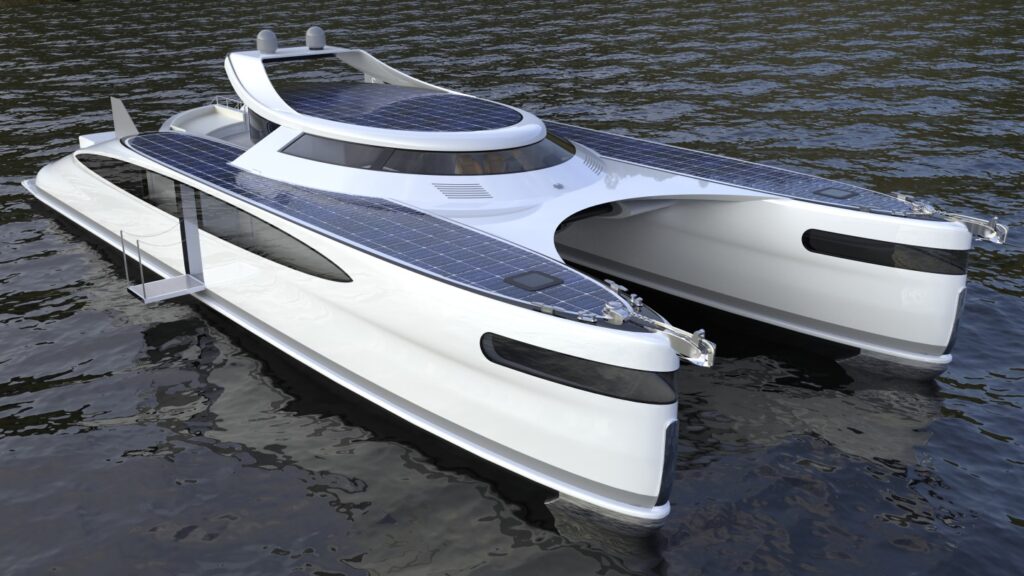
Pagurus is fitted with solar panels across most of the yacht’s top surfaces and paired with six 360V batteries – each with a 40 kWh capacity – providing around six to seven hours at 4 knots (5 mph or 7 km/h) in full electric mode.


The studio explained:
We are also considering a sail version with some weight reduction improvements. At the moment, solar systems can guarantee good autonomy on extremely light vessels; however, to achieve good performance, we need to have a higher tonnage, and we are therefore still reliant on fuel powered engines.
Nevertheless, engines available on the market today offer some interesting possibilities for hybridization; for every eight hours of diesel navigation, we can generate two hours of electric cruising.
When the crabmaran reaches land, the rotating cylinders are lowered down by around 23.6 inches (60 cm), transforming it into an amphibious vehicle able to move across sand or mud at top speeds of 35 km (22 mph). Additionally, the yacht’s steel shield protection bumper prevents damage to the hulls while on land.
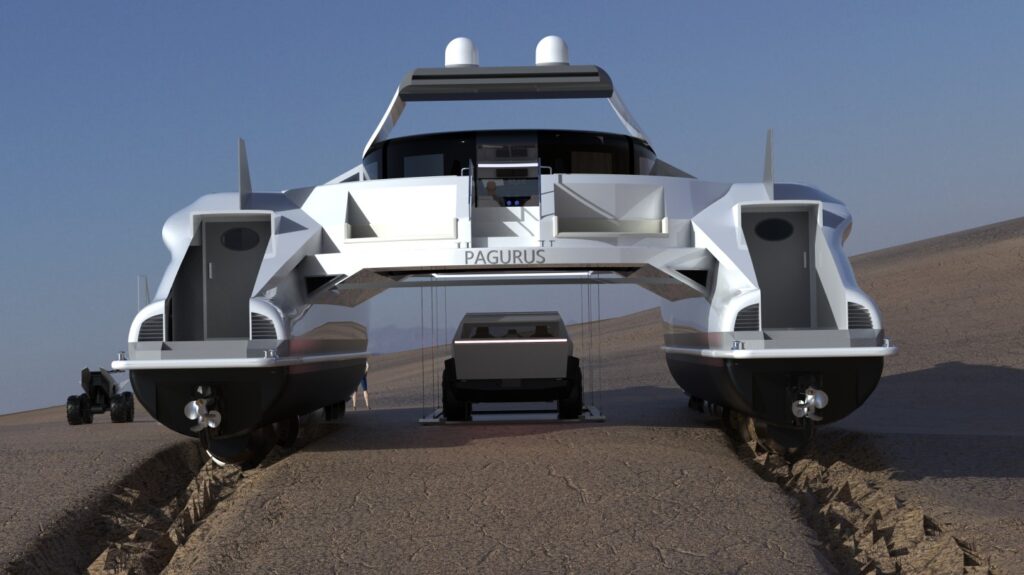

Lazzarini said:
Pagurus merges innovative automotive design with nautical design to create the very first amphibious catamaran in history. We like the idea of being able to navigate and arrive in front of a beach, with the possibility to land ashore for the night.

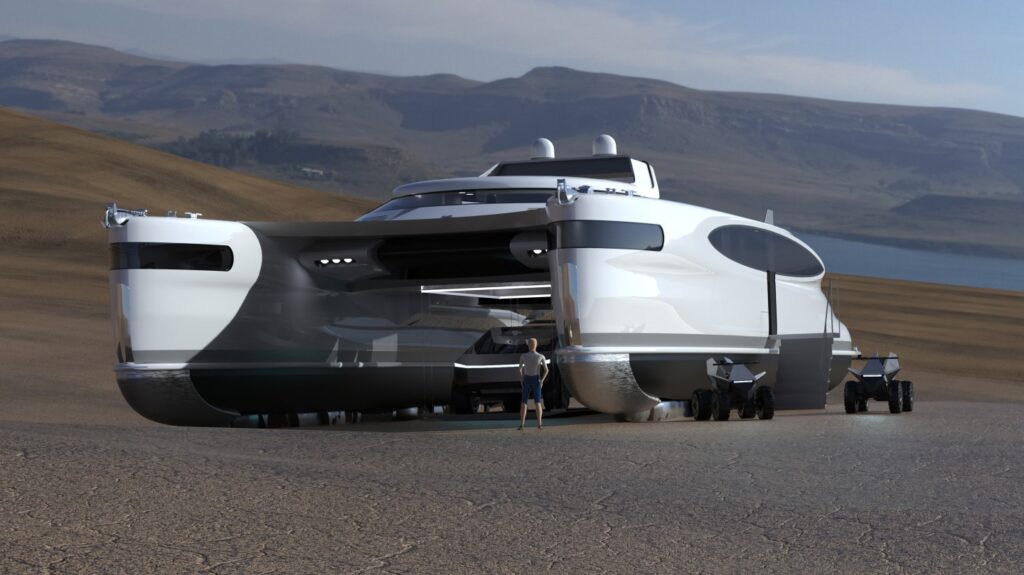
Pagurus Specs include:
- Material: 31% painted carbon fiber, 69% forged steel
- Height: 5.2 meters (16.5 ft)
- Weight: 52,999 kg (116,842 lb)
- Max speed (water): 25 knots
- Cruising speed (water): 18 knots
- Max speed (on land): 35 km/h (22 mph)
- Cruising speed (on land): 20 km/h (12.5 mph)
Should you be interested (and wealthy), the Pagurus can be built on demand for around $7,987,791 (€6,580,000) for the carbon version with twin jet drive and $29,134,800 (€24,000,000) for the amphibious Crabmaran version. See more photos of the stunning amphibious superyacht below.