
In a remote French Polynesian outpost, the Tatakoto lagoon radiates a deep, improbable vibrance against the vast Pacific. Beneath shallow waters that can approach 35°C, branching corals sway in clear light. Their pigments remain intact even in conditions that would bleach most reefs bone-white. Divers descending into these lagoons often expect muted tones after a heatwave, yet Tatakoto greets them with living, colourful architecture.
The phenomenon transcends poetic flair; it is a measurable biological miracle. UNESCO-supported expeditions reveal that Tatakoto’s semi-enclosed lagoon experiences daily temperature swings of roughly 3–4 °C, with minimal water exchange with the open ocean. Under these extreme and fluctuating conditions, dozens of coral species have been observed thriving, sometimes just a metre below the surface. In a year when the planet entered its fourth global coral bleaching event, confirmed by NOAA Coral Reef Watch, this lagoon stands as a living anomaly. On other reefs, including during unprecedented heat stress on the Great Barrier Reef, rising temperatures can erase colour in a matter of days. Much of that stress arrives with marine heatwaves, prolonged spells of warm water that can linger for weeks.
Reefs function as the sea’s rainforests, anchoring extraordinary biodiversity, from fish nurseries to intricate food webs that knit coastlines together. Yet unlike forests, reefs cannot move away from heat. What makes Tatakoto’s corals so resilient is now the focus of international research. Scientists are investigating a precise question. Are these corals temporarily acclimated to the heat? Or have they developed a deeper, heritable tolerance that could revolutionise reef restoration worldwide?
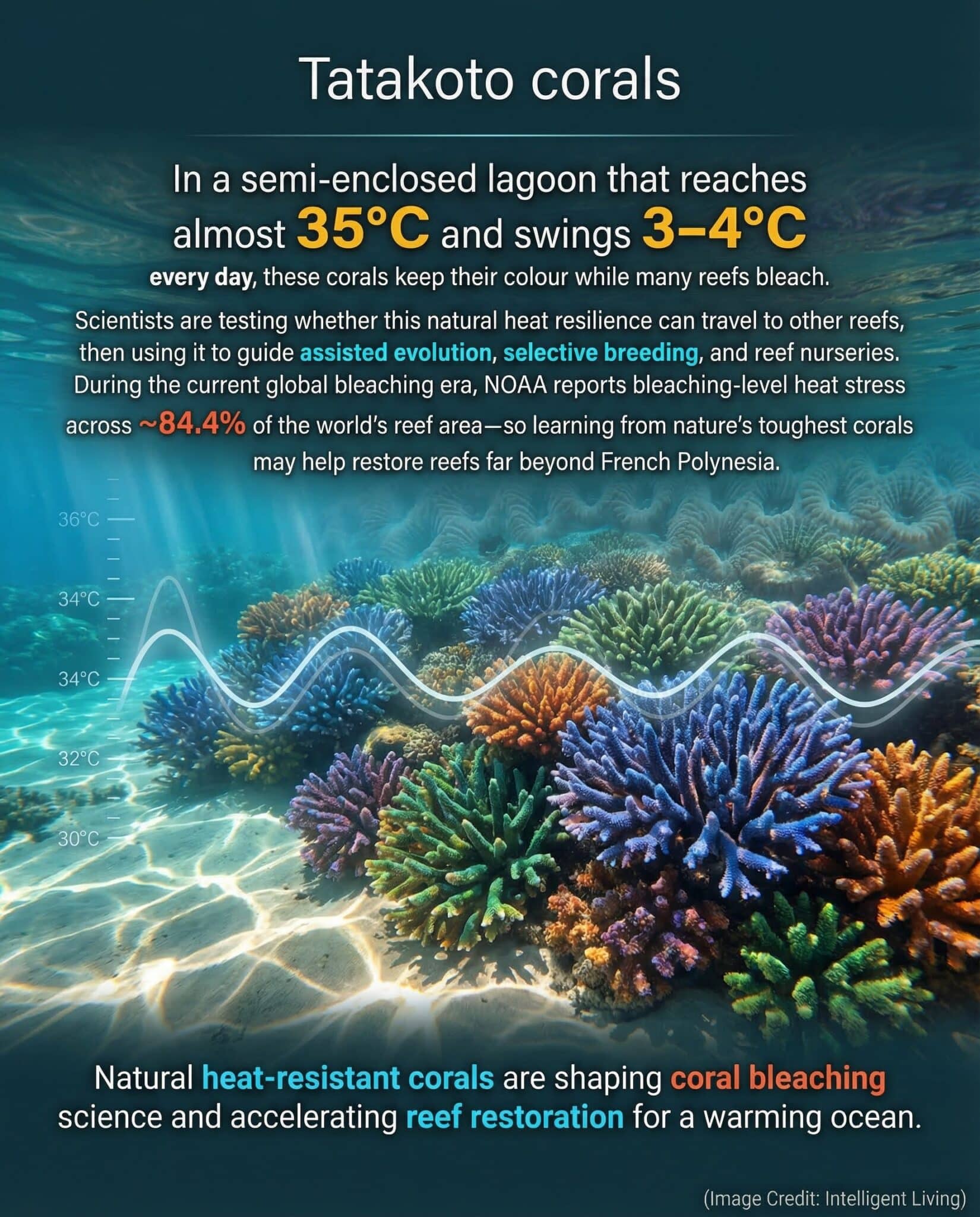
Tatakoto Atoll Resilience Data: Super Coral Quick Facts and Field Observations
- Location: Tatakoto Atoll, French Polynesia, approximately 1,100 kilometres from Tahiti
- Environment: Semi-enclosed lagoon with limited ocean mixing
- Temperature Profile: Daily swings of approximately 3–4 °C; peak temperatures near 35 °C
- Observation: Dozens of coral species thriving in shallow, high-heat waters
- Global Context: Fourth global coral bleaching event confirmed by NOAA in 2024
- Heatwave Driver: Intense marine heatwaves can keep ocean temperatures unusually high for days or longer, raising bleaching risk
- Heat Metric: 4 Degree Heating Weeks indicates bleaching risk; 8 Degree Heating Weeks signals likely widespread bleaching and mortality
- Research Focus: Testing whether heat tolerance is portable and heritable through transplant experiments to Moorea
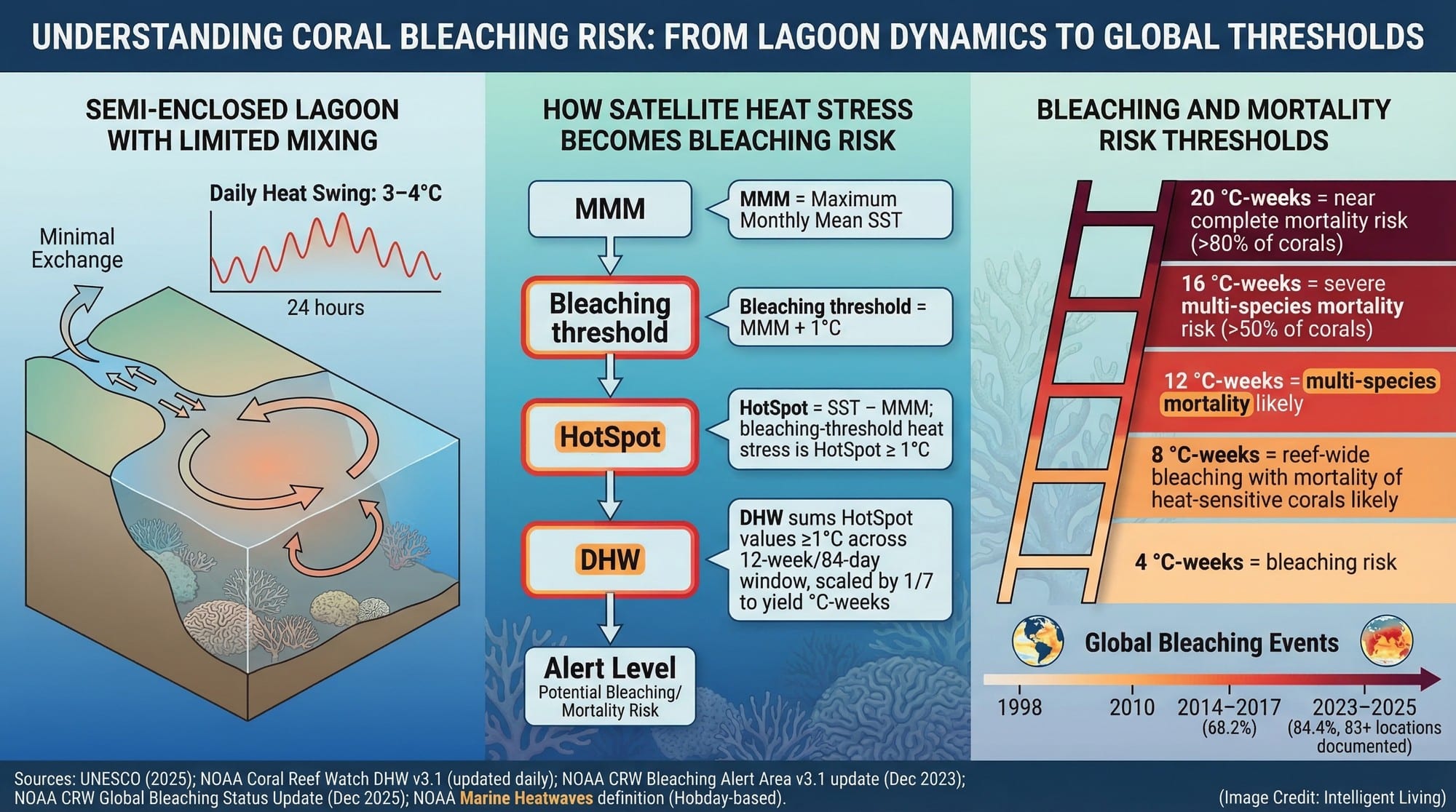
Inside Tatakoto’s Heat-Swing Lagoon: Heat, Water Flow, and Bleaching Risk
The Lagoon that Turns Heat into a Daily Ritual
Tatakoto’s lagoon behaves differently from open-ocean reef systems. Because it is semi-enclosed and exchanges less water with cooler surrounding seas, heat can accumulate more easily. Instead of a steady thermal baseline, the lagoon delivers what scientists describe as high-frequency temperature variability. Water temperatures can rise sharply during the day under tropical sun and cool slightly at night, creating a daily cycle of thermal stress.
Standard reef systems often suffer when sustained temperatures exceed seasonal norms, triggering widespread bleaching. Yet in Tatakoto, this fluctuation appears to be part of a long-term environmental rhythm. Scientists have documented that corals in the lagoon endure these swings repeatedly, sometimes at peak temperatures near 35°C, without the mass paling typically seen during extended periods of oceanic warming, when unusually warm ocean temperatures persist long enough to overwhelm many reefs.
Stepping into a shallow tidal pool at midday reveals just how quickly tropical waters can warm. This sensation repeats daily for Tatakoto’s reefs, year after year. These corals are not avoiding heat; they are thriving inside it.
What Bleaching Really Means and Why Heat Hits So Hard
Coral bleaching occurs when corals expel the microscopic algae called zooxanthellae that live within their tissues. Zooxanthellae generate critical energy through photosynthesis, granting corals their distinct vibrance. When water temperatures remain too high for too long, corals become stressed and push the algae out, turning white.
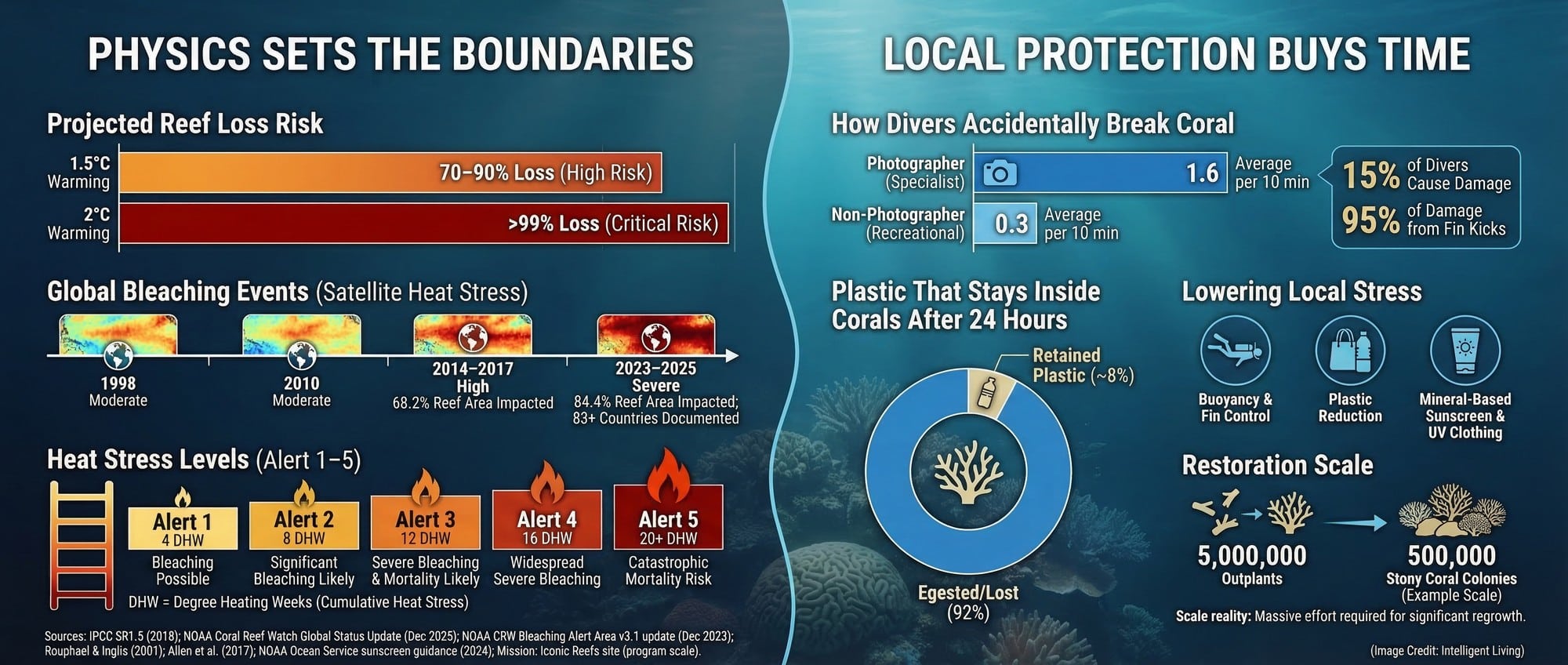
NOAA’s coral bleaching overview notes that bleaching is not immediate death, and recovery remains possible when heat stress fades quickly. But when thermal stress accumulates, measured by NOAA Coral Reef Watch using Degree Heating Weeks, mortality rises sharply. Four degrees Celsius heating weeks signal significant bleaching risk. Eight-degree heating weeks indicate likely reef-wide bleaching with substantial mortality among heat-sensitive species.
Recent data shows that bleaching-level heat stress reached about 84.4 percent of global reef area. Search queries like ‘why are coral reefs bleaching’ reflect the same sobering reality those figures describe.
The stark contrast in Tatakoto’s resilience is what makes the lagoon so scientifically significant.
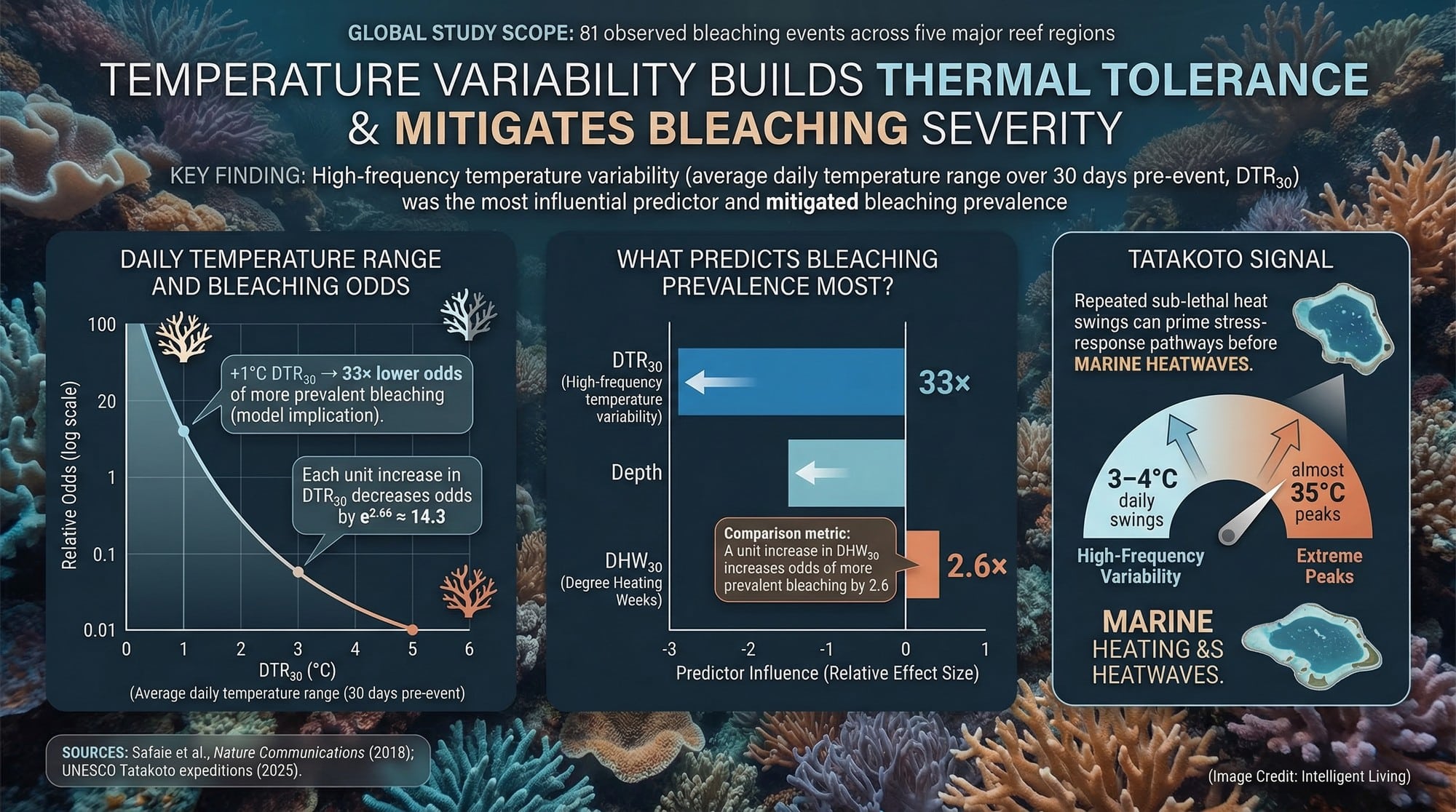
Why Tatakoto’s Corals Stay Colourful: Thermotolerance and Temperature Variability
A Reef that Teaches by Surviving
Since 2021, research missions have sought to determine whether Tatakoto’s thermotolerance is temporary acclimatisation or deeper adaptation. Coral fragments from the lagoon have been transplanted to reefs near Moorea to test whether resilience persists in a different thermal environment.
Transplanting coral fragments is a pivotal experiment in understanding portable resilience. Research suggests that bleaching-resistant corals can retain heat resilience after relocation, which is why the Moorea test results remain so critical.
Selective breeding programmes, such as the Australian Institute of Marine Science efforts, already test larvae by exposing them to elevated temperatures. A recent study of genetic heritability found that selective breeding can increase adult offspring heat tolerance.
Moderate potential exists for passing resilience to the next generation according to heritability estimates. However, the same research emphasises that even enhanced corals cannot compensate for unchecked global warming. Tatakoto serves as a living genetic archive, offering the very traits restoration programmes hope to replicate in laboratory settings.
Nature’s Heatwave Bootcamp: Why Variability Might Build Strength
A 2018 study published in Nature Communications research suggests that high-frequency daily temperature variability may reduce bleaching severity during marine heatwaves. These thermal rhythms, rather than constant heat, likely enable corals to build significant physiological tolerance.
Heat variability mimics athletic conditioning: biological systems grow stronger under controlled stress. Remove stress entirely, and adaptation stalls. For corals, repeated daily exposure to sublethal heat may prime stress response systems, increasing survival during extreme events.
Tatakoto’s lagoon fits this pattern. Rather than being a static hot bath, it is a dynamic thermal environment. That rhythm may be part of what enables its corals to retain colour under conditions that would devastate other reefs.
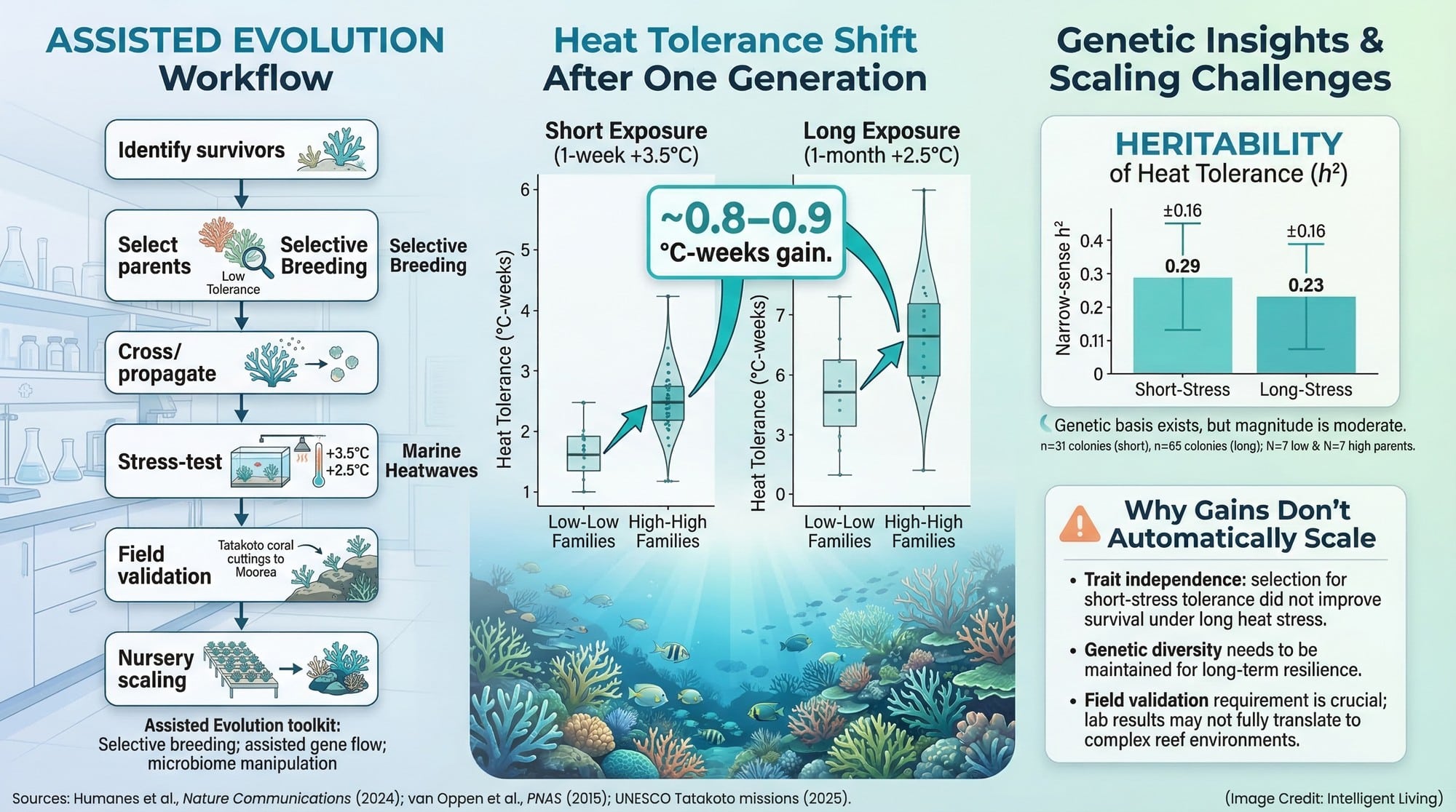
Scaling Reef Restoration: Applying Assisted Evolution Lessons from Tatakoto
What Assisted Evolution Programmes Hope to Learn From Tatakoto
Assisted evolution encompasses several scientific strategies aimed at accelerating natural adaptation in the wild.
Researchers are currently exploring these primary methods:
- Selective breeding to enhance thermal resilience.
- Assisted gene flow to move beneficial traits between populations.
- Microbiome manipulation to support coral health through symbiotic bacteria.
The foundational framework for assisted evolution suggests that these carefully guided interventions could enhance coral tolerance more rapidly than natural selection alone.
In practice, programmes identify corals that survive heat stress, cross them, and test offspring under elevated temperatures. If resilience traits prove heritable, they can flow into coral aquaculture and reef nurseries, alongside techniques like micro-fragmenting that speed coral growth for outplanting.
Tatakoto’s corals provide a real-world test case. If their resilience is portable and heritable, they could inform broodstock selection for restoration projects. However, conservation scientists caution that assisted gene flow carries ecological uncertainties, and even selective breeding must be balanced against maintaining genetic diversity and ecosystem integrity. That means moving carefully, keeping local adaptation, genetic diversity, and ecosystem fit in view.
Tatakoto offers measured optimism for those questioning if science can save our reefs, providing evidence through careful experimentation.
Climate Optimism Grounded in Physics
Climate optimism must be grounded in the hard realities of physics. The IPCC projects coral reef declines of 70 to 90 per cent at 1.5°C, as even heat-tolerant corals cannot indefinitely withstand rising baselines. Compounding threats from warming and acidification continue to narrow the margin for natural recovery.
Innovative restoration tools cannot replace the urgent need for global emissions reductions. On the Great Barrier Reef, coral cover has declined by over fifty per cent since the mid-nineties. The loss of breeding colonies significantly shrinks the pool required for reefs to rebound after intense heat events.
A diver once described returning to a favourite reef only to find it pale after a prolonged heatwave. That experience is increasingly common worldwide. Tatakoto does not erase that reality. It offers insight within it.
Beauty You Can Help Protect
Reef resilience is not only a scientific story. It is also behavioural. You can influence ocean health through daily habits by focusing on a few key areas.
Consider these impactful habits:
- Reducing plastic pollution to prevent ingestion by marine life.
- Limiting nutrient runoff that can lead to harmful algae blooms.
- Supporting sustainable seafood practices to maintain ecosystem balance.
These actions contribute directly to the long-term health of our oceans. sustainable snorkeling and diving practices matter.
Individual actions during underwater activities are critical for long-term reef survival. Specific protocols for responsible diving and snorkelling include the following:
- Maintaining perfect buoyancy to avoid accidental contact with the sea floor.
- Avoiding all physical contact with the reef structure.
- Using mineral-based sunscreens to protect fragile organisms already living near thermal limits.
Research-backed marine conservation training can reduce accidental reef damage and support monitoring and restoration work, extending the window in which places like Tatakoto can continue teaching the world about resilience.

Future-Proofing Reefs: What Tatakoto Super Corals Teach Us About Thermal Resilience
Tatakoto’s lagoon isn’t a miracle immune to warming seas. Across the tropics, repeated bleaching seasons are steadily reshaping what divers and coastal communities expect after a hot summer. It is a reminder that life adapts in unexpected places. In waters that approach 35°C and fluctuate daily, corals persist where many would not.
Research teams are evaluating this persistence to determine if resilience can travel, testing if thoughtful intervention can strengthen these traits in other reef systems. The story isn’t one of blind hope or quiet resignation; it’s a call for precision: adaptation exists, but it has limits.
Tatakoto serves as a vital reminder that life adapts even in the most improbable environments.
Essential Insights: Tatakoto Super Corals and Global Bleaching FAQ
Are Tatakoto’s corals bleach-proof?
No. Tatakoto’s corals exhibit elite thermal resilience even under extreme and variable conditions, but intense heat stress can still trigger the loss of symbiotic algae from coral tissue.
What are Degree Heating Weeks in simple terms?
The metric measures the duration and intensity of ocean heat. Four units indicate significant bleaching risk; eight signals likely widespread reef mortality.
Can these corals be moved to save other reefs?
Researchers are investigating this through transplant experiments and selective breeding to see if heat tolerance is portable and heritable.
Does assisted evolution replace climate action?
No. Scientific literature confirms that assisted evolution tools complement but cannot replace large-scale emissions reductions and climate mitigation.
Why do coral reefs matter so much?
Coral reefs anchor marine biodiversity, coastal protection, fisheries, and tourism economies. Their health is vital for both oceanic ecosystems and global livelihoods.


