
Sushi is already one of the healthier food choices, but a futuristic restaurant in Tokyo, Japan, called Sushi Singularity is making it a whole new level of healthy. Brought to you by the company Open Meals, this place provides a dining experience unlike any other. Each piece of sushi is 3D-printed and tailor-made to your health requirements.
When you make a reservation to eat at Sushi Singularity, they send you a sample collection kit including everything you need to send them your DNA, urine and intestinal tests. Once they receive and process your biodata, they’ll make your ‘Health ID,’ which will be used to make your meal.

Open Meals told Dezeen:
One company examines a sample of urine to figure out the nutrition status of your body, and the other tests gut flora and figures out which food would improve your gut conditions.
The promotional video suggests that you send a photo of yourself too. There are facial recognition cameras that will alert the kitchen you’ve arrived. Next, you take a seat, and your biometric data is fed into a computer that tells the 3D printer how to formulate your food.
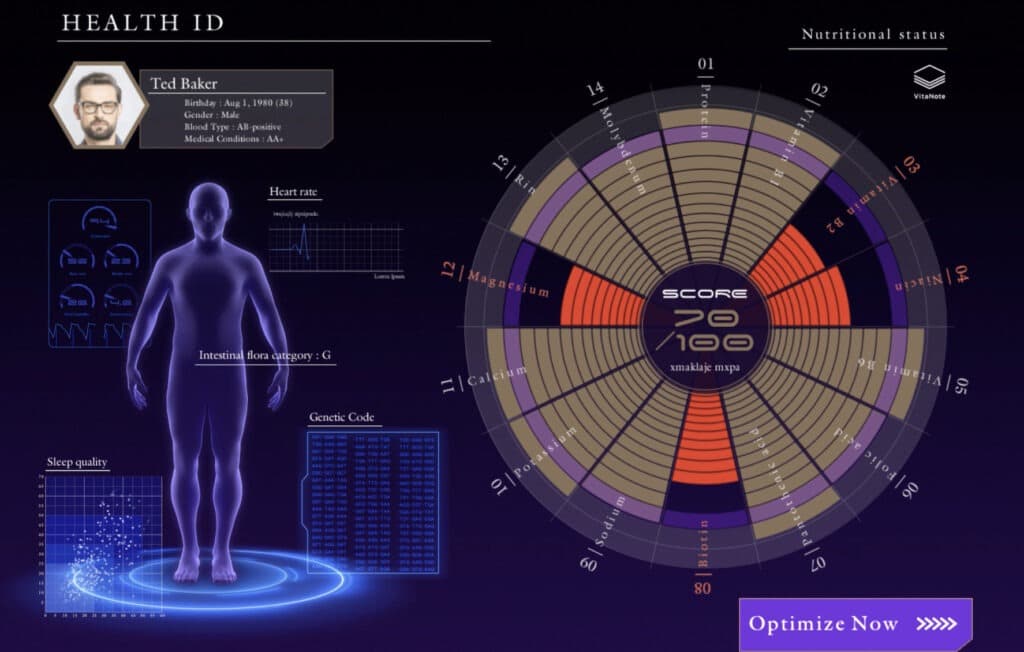
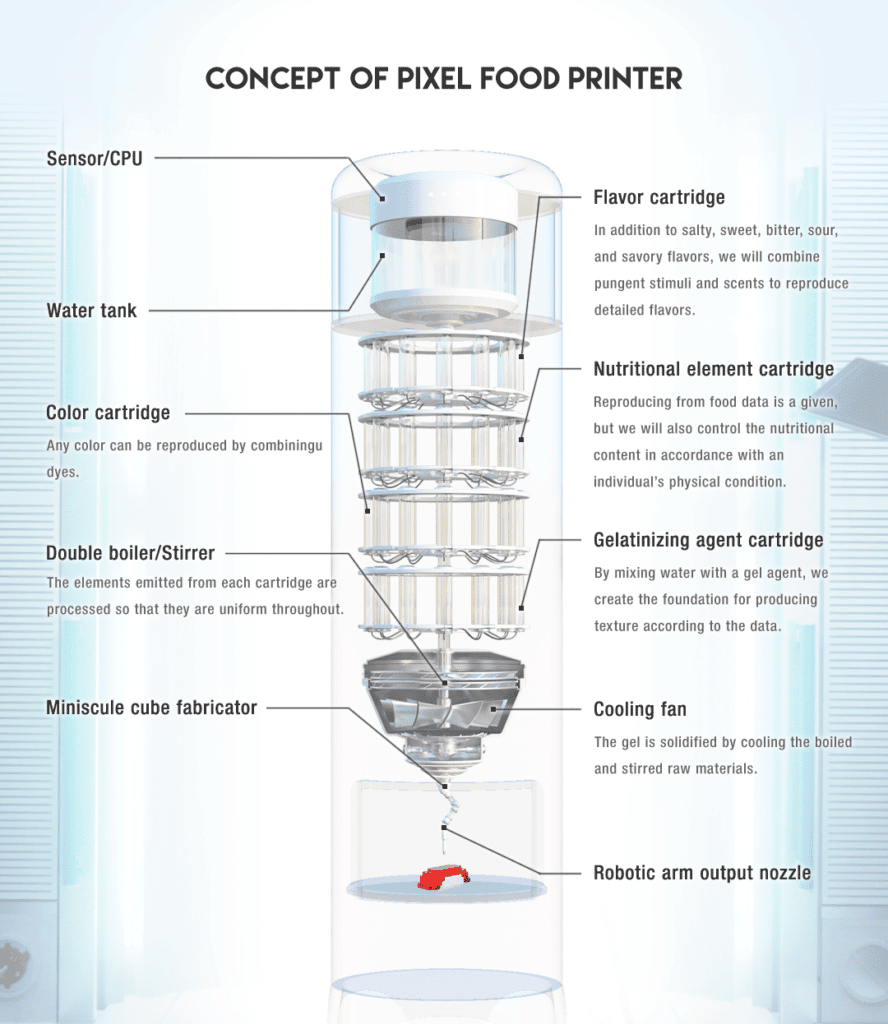
Raw vitamins and other ingredients that benefit your body specifically will be infused into the sushi. Giant robotic arms make the sushi, and the “chef” is more just the mediator between you and the machine.
Open Meals said:
There will be 14 cylinders with different nutrients attached to the food-fabrication machine, and when it 3D prints a dish of sushi, for example, some nutrients that are necessary for the customer will be added automatically.
Hyper-personalization will become common for future foods. Based on DNA, urine, and intestinal tests, people will each have individual health IDs. This identity is analyzed, and nutritional matching is performed to match nourishment needs with biometrics; thus, the person is automatically provided with the optical diet.
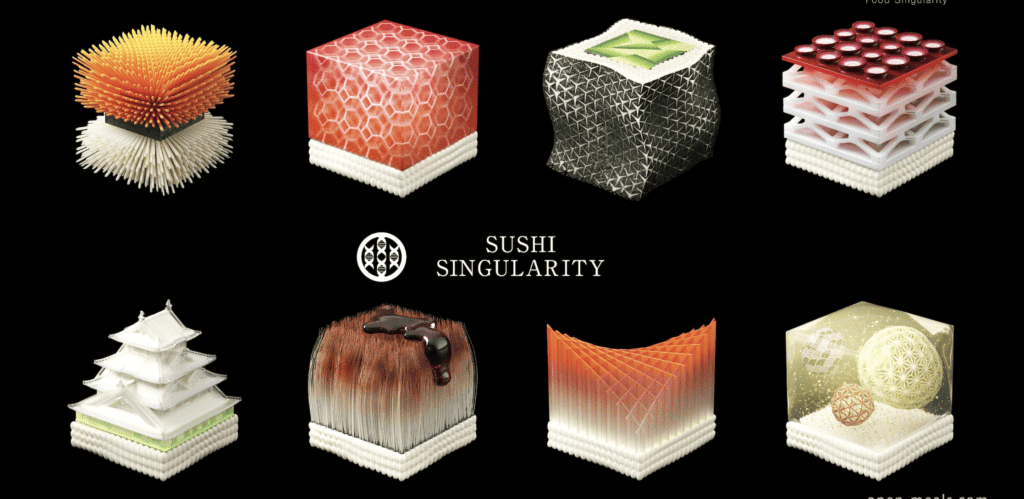
The sushi you’ll eat isn’t like conventional offerings. The perfect post-modern cubes are elaborate micro-architecture.
The items on the menu include:
- Micro Pillar Saltwater Eel: This sushi consisting of thousands of ‘hairs’ that feel fluffy in your mouth is made using ultra-fine 3D-printing methods.
- Oze Tick Kappa Roll: The seaweed wrapped around the rice and cucumber is shaped into an Oze Tick using a laser.
- Powdered Sintered Uni: A CO2 laser is used to achieve a unique shape and texture, resembling the shell of a sea urchin. The laser hardens the Uni powder into that form.
- Negative Stiffness Honeycomb Octopus: Biting into this sushi will be a bouncy sensation – as if the food disappears when you bite then bounces back when you release. This feeling is achieved with a design that promotes negative rigidity.
- Cell Cultured Tuna: The internal honeycomb-like structure of this sushi cube is meant to mimic the sensation and texture of tuna muscle.
- Anisotropic Stiffness Steamed Shrimp: Using the concept of anisotropy – the changing of hardness depending on your chewing direction – the steamed shrimp’s waffle structure is soft on the sides but firm on top.
- Squid Castle: A six-axis computer-controlled router carves out this intricately detailed castle made of flash-frozen squid. The “stonewall” it sits on is rice.
- Dashi Soup Universe: Soup encased in a cube mold made of an alginic acid and calcium lactate membrane.
The sushi is only possible crafted by a machine because there’s no way such intricate pieces could be made otherwise. But the futuristic elements don’t stop there. Open Meals has developed an online platform for uploading 3D-printed food recipes.
The company said:
This is a futuristic restaurant in which sushi is digitized and connected to the internet.
Open House built a prototype “Food Base” – a platform that records food data from all over the world. When a recipe is logged in, it saves the exact measurements relating to shape, texture, color, flavor, fragrance, and nutrients.
The program is being described as the “iTunes of printed food.” The vision is that data food chefs worldwide will upload their recipes, creating a “social food network service.” Anyone that has a 3D food printer in their home and is part of the network would be able to print the meals that have been uploaded.


