
Imagine standing in front of a glass tower, its curves reflecting the sky, or a centuries-old cathedral, its stonework whispering its story. Capturing these moments through photography is both an art and a technical challenge. Architectural photography is more than just taking pictures of buildings; it’s about telling their story through light, perspective, and timing.
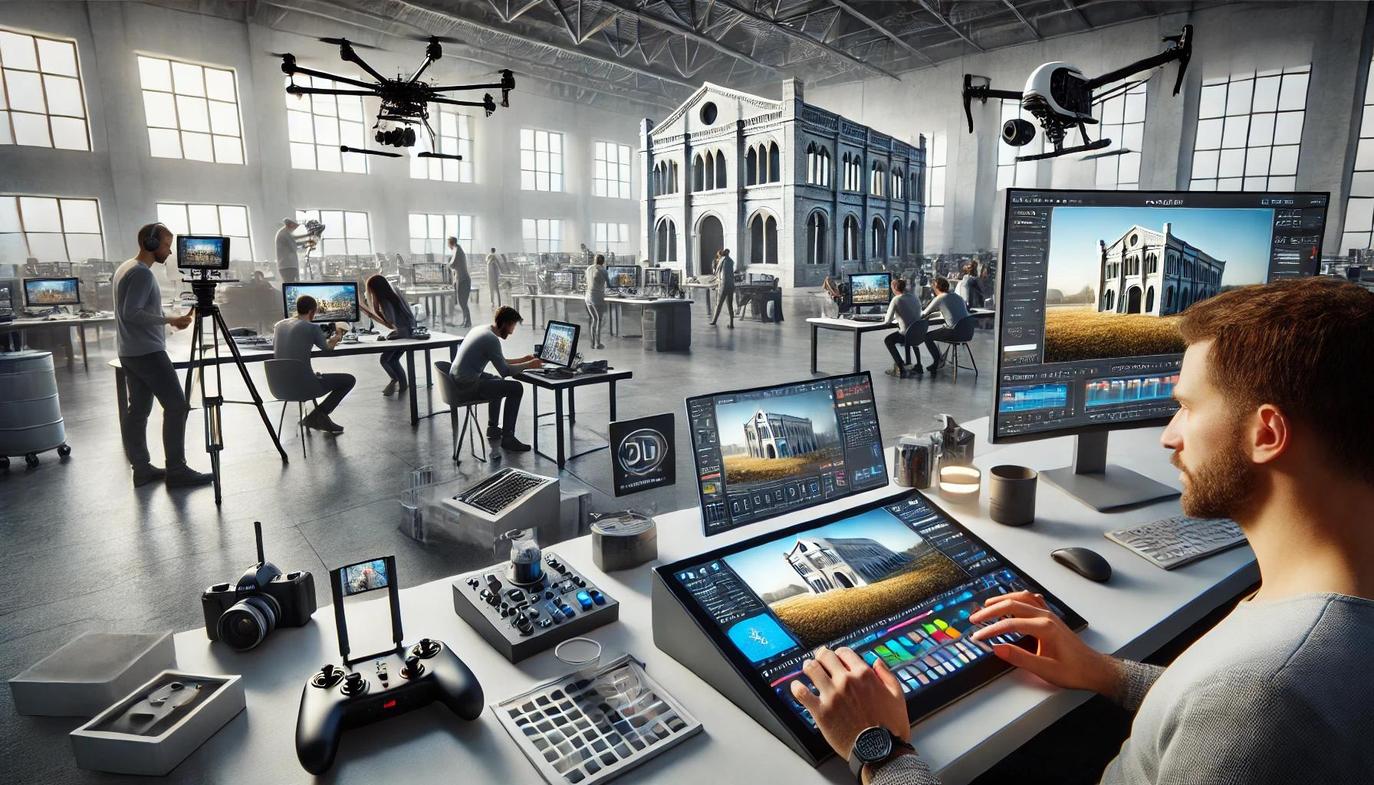
Recent technological advances have transformed the field, providing photographers with powerful new tools for creative expression. Each innovation highlights form, texture, and detail in ways previously unimaginable. These advancements aren’t just practical—they open new perspectives.

Must-Have Tools for Modern Architectural Photography
Here are some of the technologies that are changing architectural photography:
- High-res cameras: Capture architectural detail for publication and exhibition.
- Tilt-shift lenses: Keep verticals straight and reduce distortion in wide frames.
- Drones: Get aerials and enhance composition.
- AI editing tools: Automate enhancements and streamline post-processing.
- Photogrammetry software: Convert 2D images into 3D digital models.
- HDR imaging: Blend exposures to reveal light, shadow, and texture.
These technologies not only simplify the process but also create new creative possibilities and methods of interpretation and expression that expand creative boundaries.
Mastering Detail: Cameras and Lenses in Architectural Photography
At the heart of architectural photography is the camera. The leading models available today, from full-frame DSLRs to mirrorless systems, feature sensors that provide incredible detail—from the delicate patterns of terracotta tiles to the glinting glass of contemporary facades. They offer a wide dynamic range, retaining the depth of shadows in an entranceway and the glow of sunlit spires above.
Lenses play an equally vital role. Tilt-shift lenses enable photographers to correct perspective distortion, keeping vertical lines straight—a must-have when photographing tall structures. Meanwhile, wide-angle lenses can capture expansive buildings in a single frame, allowing architecture photographers to create compelling compositions that convey scale without overwhelming the viewer. With the right camera, architecture is portrayed not just as a structure but as a narrative.

Elevated Perspectives: The Role of Drones in Architecture Imagery
Aerial photography traditionally involved aircraft or scaffolding. Now, drones have made such achievements not just possible but effortless. These small, nimble devices provide high-resolution photography from the air, enabling photographers to present buildings in the context of their surroundings—whether a skyscraper punched into a city skyline or a heritage villa situated within surrounding gardens.
Aside from spectacle, drones also offer pragmatic advantages. They are used by photographers to reconnoitre sites, evaluate angles, and see how a structure engages with surrounding features. With stabilisation technologies, image sharpness is maintained even in windy conditions. Essentially, drones grant a pair of wings—allowing for compositions previously confined to imagination.
Enhancing the Story: AI and Editing in Architecture Photos
Photography can start with a shutter click, but it’s refined in post-production. Computer programs like Adobe Photoshop and Lightroom give photographers surgical control over exposure, colour balance, and clarity. These image editing programs enable improvement without compromise—drawing out the textures of weathered stone or balancing shadows in expansive facades.
The latest additions to this toolkit are AI-driven editing tools. With intelligent adjustments, photographers can eliminate visual distractions such as scaffolding or moving cars with one command. Noise reduction algorithms maintain quality in low light, and content-aware suggestions work to optimise workflows. These tools operate like a digital assistant, helping photographers by:
- Streamlining editing processes
- Accelerating overall workflow
- Enhancing the image’s clarity and fidelity
AI Editing Tools That Elevate Architectural Imagery
What is particularly interesting about AI tools is their ability to meld accuracy with ease. Some of the main advantages of using them are:
- Auto adjustments and smart filters.
- Distraction removal that keeps the structure intact.
- Texture enhancement to reveal design details without masking.
- Low light optimisation for clarity in dusk or interior shots.
By combining creativity with computational power, AI post-processing has become a new layer in architectural photography—clearer storytelling and richer narratives.

Bringing Depth to Light: 3D Scanning in Architectural Photography
Architectural photography is moving beyond 2D. 3D scanning and photogrammetry allow us to create digital models from photographic data. Detailed renderings can be built by capturing multiple angles that architects and clients can explore virtually.
This is especially useful in heritage conservation. Historical buildings prone to erosion or collapse can be preserved digitally with incredible accuracy. Photogrammetry documents not just the structure but also its imperfections—cracks, curves, and craftsmanship—resulting in digital preservation that is both artistic and highly detailed.
Lighting Techniques That Shape Architectural Mood
Light can make or break an architectural image, and current technology gives control over how to apply it. Portable LED kits allow fine-tuning of the light, focusing on details or casting mood-enhancing shadows on modern materials. They’re perfect for location work.
Outdoor shoots often rely on natural light. The golden hour, in particular, bathes the structure in soft, warm tones that elevate its visual impact.
Virtual Reality and Immersive Building Exploration
Virtual reality (VR) is changing how to tell photographic stories by providing immersive viewing. With panoramic stitching, images can be turned into interactive tours that convey spatial depth and design intent. VR allows for exploration of buildings, especially interior spaces, in ways that traditional photographs cannot.
Architects, property developers, and cultural institutions are using VR to share environments with a wider audience. This gives more context and emotional connection, as well as technology and storytelling in equal measure.
Smartphones and Apps: Mobile Innovation in Architectural Photography
Smartphone technology has advanced significantly, enabling you to carry powerful photographic tools in your pocket. Smartphones today are more than convenient—they’re capable. With manual controls, computational enhancement, and distortion correction, smartphones can handle architectural photography with ease.
Professional-grade apps let you fine-tune settings with precision, and built-in AI enhances images in real time. This has made the discipline more accessible, empowering users from hobbyists to professionals to explore and share architectural imagery across digital platforms.
Why the Future of Architectural Photography Is Already Here
Architectural photography is situated at the intersection of technology and art. These tools help showcase architectural design in all its complexity. Yet what defines a magnificent photograph is the thoughtful use of those tools—guided by a deep understanding of structure, light, and story.
From your smartphone to the sky above, every tool now expands the boundaries of creativity. Whether documenting a historic landmark or envisioning future architecture, photographers are better equipped than ever to translate design into emotion and light into legacy.
Frequently Asked Questions About Technology in Architectural Photography
What is the best camera for architectural photography today?
High-resolution mirrorless and full-frame DSLR cameras like the Canon EOS R5 or Nikon Z7 II offer superb detail, dynamic range, and lens compatibility.
How do drones help architectural photographers?
Drones offer elevated vantage points, site context, and unique composition options that traditional ground photography cannot achieve.
Is AI photo editing reliable for professional use?
Yes, AI tools now streamline workflows, enhance image quality, and intelligently remove distractions—all while preserving the photographer’s creative intent.
What role does VR play in architectural storytelling?
VR transforms still photography into immersive spatial experiences, allowing audiences to virtually “walk through” designs and interiors.
Can smartphones be used for serious architectural photography?
Modern smartphones with advanced lenses and manual controls can produce professional-grade results, especially with apps that allow RAW capture and AI correction.


