
The piles of plastic waste building up in the ocean are a major problem. It’s estimated that each day around 8 million pieces of plastic enter the oceans globally. That’s a lot of plastic!
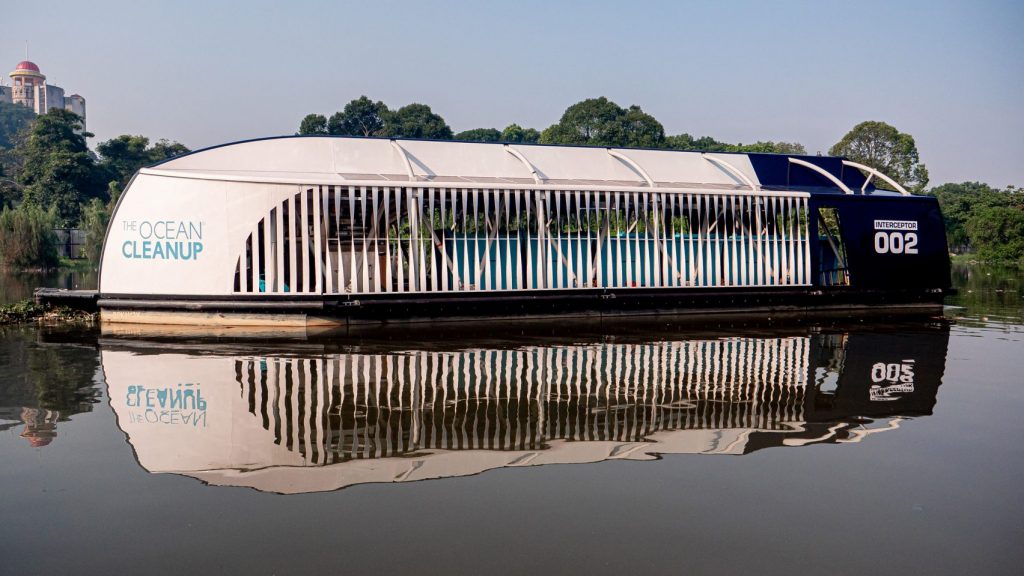
However, one of the main ways trash travels from land into the ocean is via rivers. That’s why the Ocean Cleanup Project has decided to tackle the issue by heading straight towards the source: the rivers. The company built “The Interceptor” to remove debris from the rivers before it can actually reach the ocean. There are already two of these systems up and running in the waterways of Asia. The Ocean Cleanup CEO Boyan Slat describes rivers as “the arteries that carry waste from land to the ocean.”
Global Ocean Plastic Pollution Research
In 2015, The Ocean Cleanup Project undertook a study that analyzed over 40,000 ocean-bound rivers. What they discovered was that the majority of the plastic waste that entered the seas could be traced back to just 20 rivers, most of which were from Asia.
Not long after, the company began working on a side project to further their research and knowledge. Now, the organization estimates that approximately 1,000 of the world’s most heavily polluted rivers are responsible for 80% of ocean plastics. With that knowledge, the Interceptor was built specifically to divert plastic from these rivers, where it can work around the clock removing the piles of trash.
On Oct. 26, 2019, Slat revealed his organization’s new innovation’ “The Interceptor,” at a launch event on a river in the Netherlands. The company built a stage on the water so that the audience could actually see how the Interceptor works.
How Does The Interceptor Work?
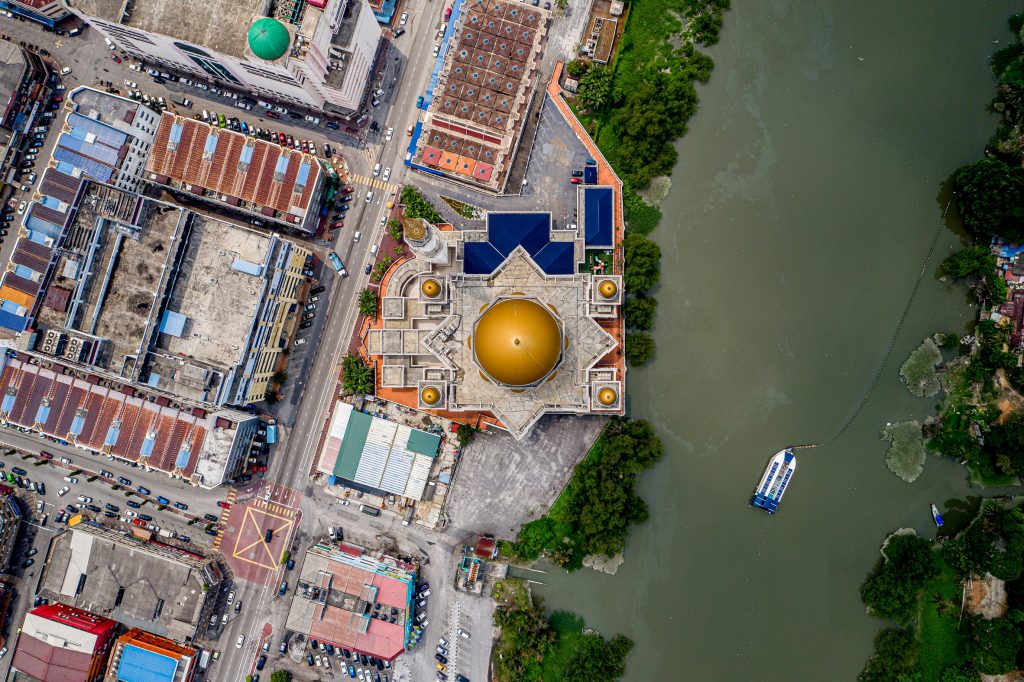
The Interceptor is basically a catamaran that has a long floating barrier to guide trash into its opening. This barrier doesn’t interfere with other vessels or marine life as it only takes up a part of the river. It’s anchored to the riverbed in a position that allows the natural current of the waterway to push debris towards the opening of The Interceptor, where it then piles onto a netted conveyor belt.
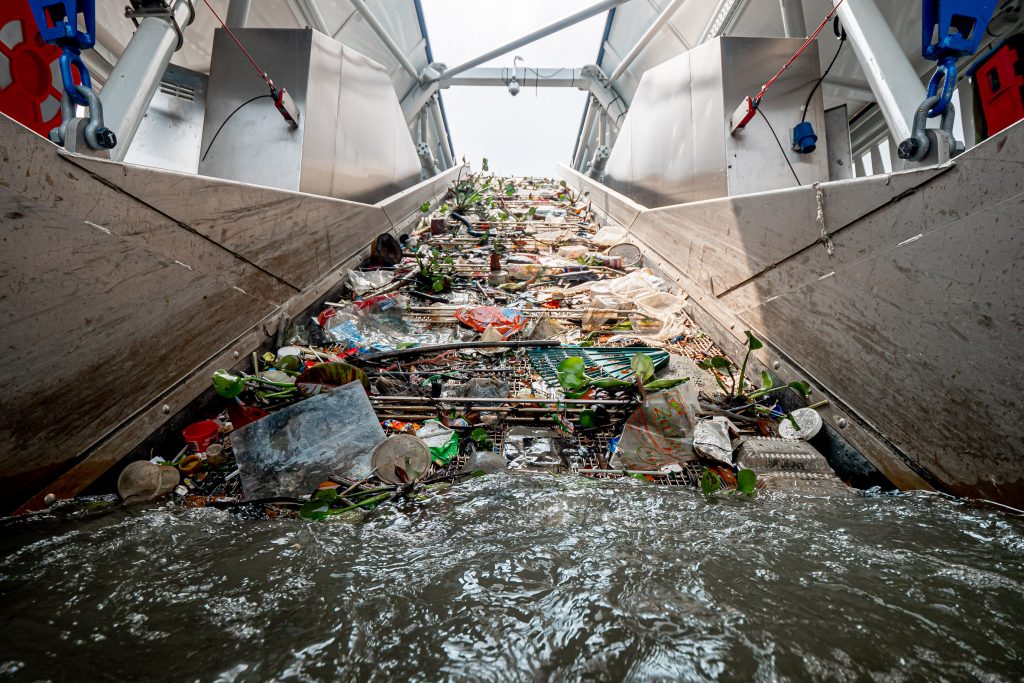
The conveyor belt then filters out the trash, feeding the rubbish into the shuttle and allows the water to filter through and back into the river. The shuttle then pours the waste into six on-board dumpsters, which have a capacity to hold 50 cubic meters of trash. That means it’s capable of collecting between 50,000 kg and 100,000 kg of trash per day. Once the dumpsters are nearly at capacity, an automated text message is sent to local operators, who then collect the barge, empty the dumpsters to a waste management facility, and then return the barge back to the Interceptor.
Additionally, the system is entirely solar-powered, equipped with lithium-ion batteries, free of exhaust fumes, quiet, and it can run autonomously 24/7.

Slat said:
To truly rid the oceans of plastic, we need to both clean up the legacy and close the tap, preventing more plastic from reaching the oceans in the first place. Combining our ocean cleanup technology with the Interceptor, the solutions now exist to address both sides of the equation.
Future Plans
The Ocean Cleanup has already built four Interceptors, two of which are installed in Indonesia and Malaysia. The other two will be used in Vietnam and the Dominican Republic. Plus, there are two more that are currently being built, which will be installed in Thailand, and California.
Furthermore, the company aims to install an Interceptor in each of the 1,000 world’s most polluting rivers by 2025. This will make a massive difference in protecting our oceans and the sea creatures that inhabit it.
If you’re interested in “The Interceptor,” check out Mr. Trashwheel. By the looks of it, we are on the right path to a cleaner ocean and a cleaner future.


