
In the future, humans may possibly be able to pack up their bags, shoot off on a spaceship and move into their new home on either Mars or the Moon. But first, we need to find out whether it’s a self-sufficient habitat, if there’s the production of water, the potential dangers of cosmic rays and if food can be harvested. Dutch researchers have been hard at work to figure out these questions so that one day we actually could just pack up and leave earth.
Researchers led by Wieger Wamelink at the Wageningen University & Research Centre in the Netherlands managed to grow crops on Martian and lunar soil simulants developed by NASA. Their experiment showed that it is possible to grow food for future astronauts or residents directly in the soil of either the Moon or Mars. Those crops grown can then produce viable seeds that can be replanted. The scientists describe their experiment in the journal Open Agriculture.
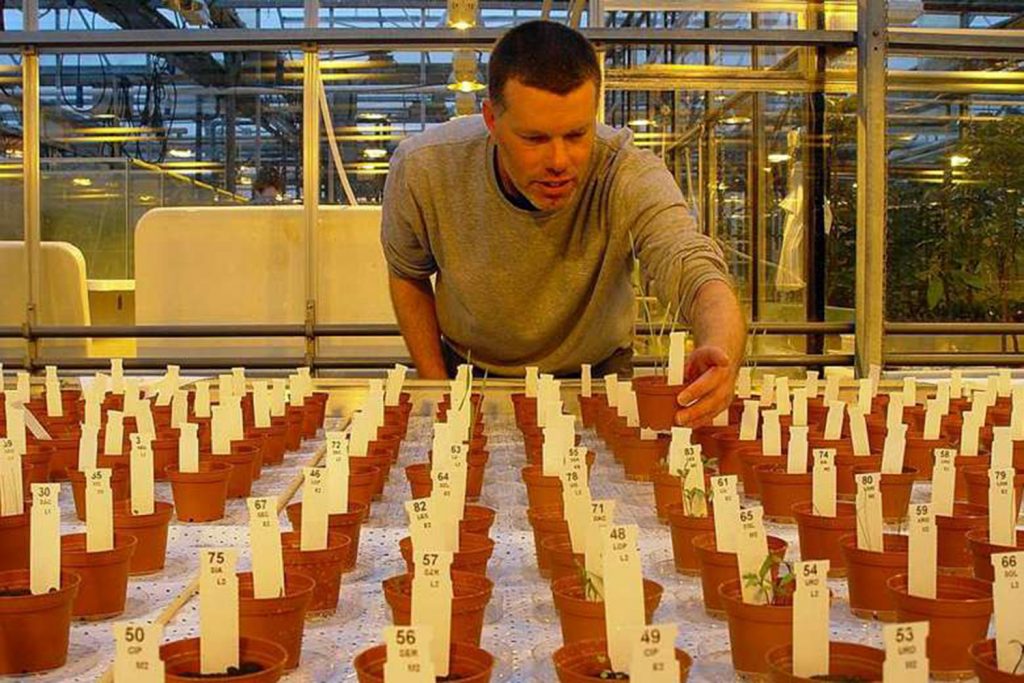
Wamelink and his colleagues said:
A human settlement on Mars or the Moon is becoming more realistic. Several countries and private companies are preparing for this journey.
Although, one of the major issues will be ensuring food availability and safety for a permanent stay. Production of crops on Mars or the Moon will be necessary to supply the total food demand.

For their experiment, the scientists mixed the simulated soils with organic matter to provide nutrients for the crops and standard Earth soil was used as a control sample. The team attempted to cultivate a variety of crops including garden cress, rocket, tomato, radish, rye, quinoa, spinach, chives, peas, and leek. The results showed that all the crops grew well except for spinach. Spinach was the only crop that didn’t reach a point where the scientists could harvest edible parts.
The researchers wrote:
The addition of organic matter to both the Mars and moon regolith simulants resulted in the germination and growth of all ten crop species. Several crops produced fruits and seeds on both Mars and Moon simulants.
Since Mars regolith (soil) is not available on Earth, the team used NASA’s Mars regolith simulant JSC 1A instead. As for the Moon regolith, it has been brought to Earth however it’s not available at sufficient quantities for growing plants. Therefore, the team used the JSC 1A Moon simulant provided by NASA instead of the actual Moon regolith.

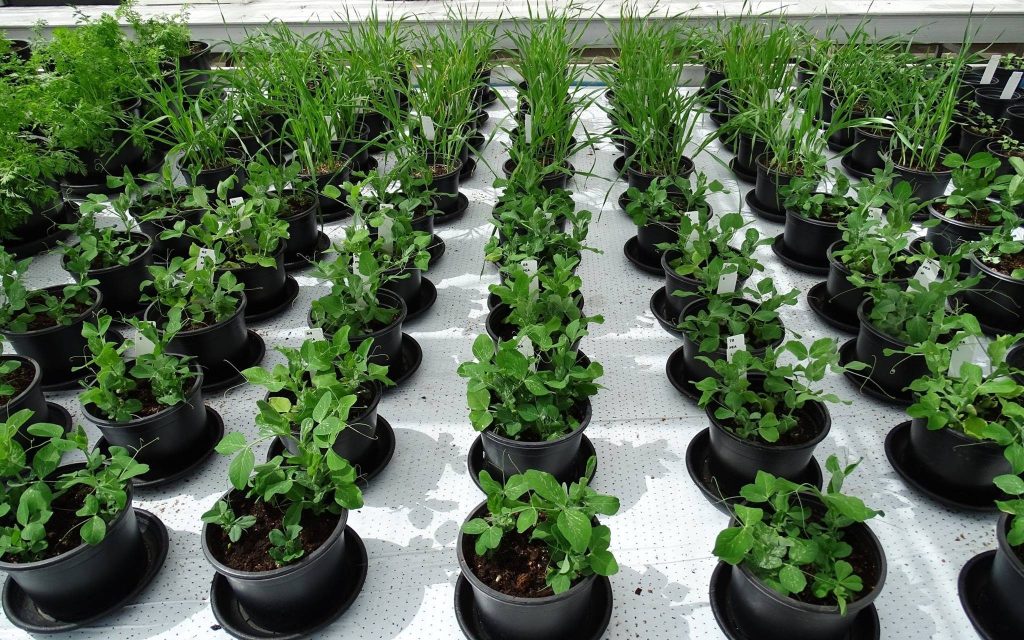
The Earth soil was the winner of crop production, it produced the most plant biomass. The mock Martian soil was runner up, the data suggests that the soil has similar productivity to Earth soil. The soil from the Moon, however, was the least productive of them all. While flowering plants have previously been tested in extraterrestrial soil simulants, the researchers believe this is the first time that fruits have actually been harvested from such experiments.
Wamelink said:
We were thrilled when we saw the first tomatoes ever grown on Mars soil simulant turning red. It meant that the next step towards a sustainable closed agricultural ecosystem had been taken.
The seeds produced by 3 out of 10 species planted (radish, rye and garden cress) were tested successfully for germination, and no germinating plants died during the 20 days of the experiment. The radishes were found to germinate better in the Martian and Earth soil than the Moon soil.
This experiment may be vital for our future. If space agencies are serious about settlements, we need to know what can be grown beyond Earth so nobody has to starve.


