
Japanese automaker Toyota plans to construct a model ‘city of the future’ from the ground up at the base of Japan’s Mount Fuji. The project – called “Woven City,” will be a “living laboratory” and serve as the company’s testing grounds for new technologies. It will be where designers, engineers, researchers, and technicians work together on self-driving systems, smart homes, robotics, and artificial intelligence (AI).
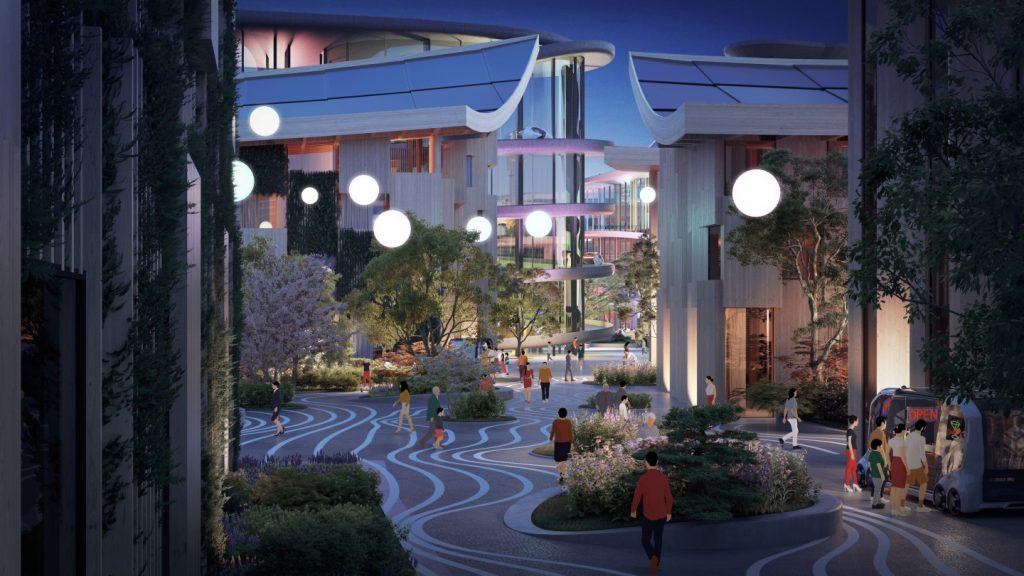
Toyota’s Woven City will be a model for creating “smart cities” worldwide. A smart city is an area developed with systems, connected by high-speed internet and powered by data and sensors, that can improve the living conditions (such as energy, transportation, and health) of its inhabitants. Smart cities eliminate the causes of human induced pollution, reduce traffic and mobility issues, and create new ways for internet technology to enhance everyday life.
The site covers around 70 hectares (175-acre) of land and is designed to accommodate approximately 2,000 people. Toyota employees, as well as visiting researchers, would be among the residents. The city will even have its own fire and emergency services, police officers, and schools.

And of course, renewable power will generate all of the city’s electrical needs. Hydrogen fuel technology and solar panels on every rooftop will feed electricity into the city’s primary grid. Woven City is designed to be fully sustainable. All the buildings will be made of wood, with traditional Japanese wood joinery.
The president of Toyota Motor Corporation, Akio Toyoda, said in a press release that the city’s mission would be to connect buildings, people, and vehicles in a way that improves everyone’s lives. Researchers will be conducting necessary testing of “connected AI technology,” which will involve the collaboration of residents.
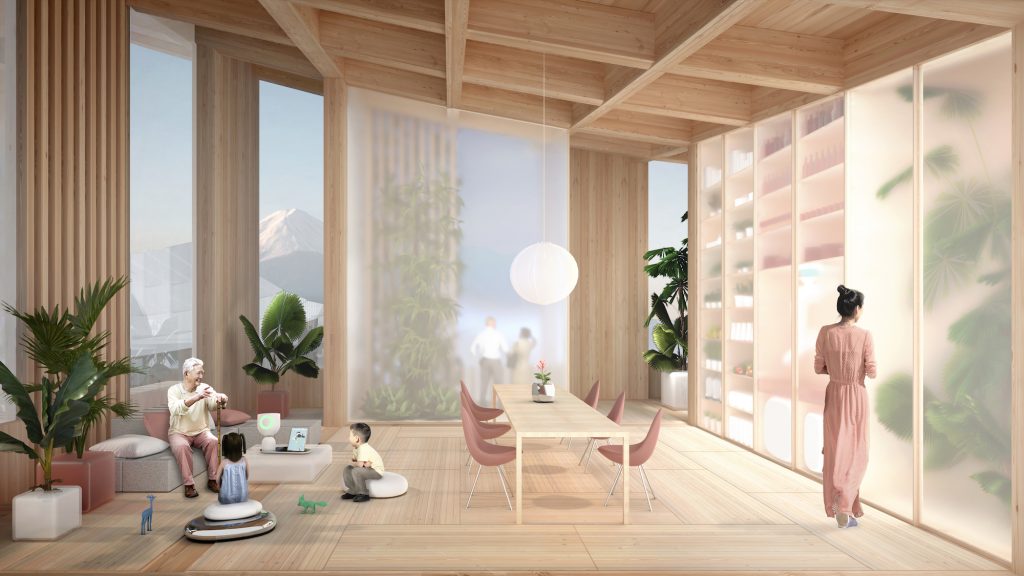
Homes in the city of the future will be built with “the latest human support technologies.” Meaning, there will be robots in every residence to facilitate daily living, as well as sensors and systems designed to observe and improve peoples’ mental and physical health.
Toyota said:
Residences will be equipped with the latest in human support technologies, such as in-home robotics to assist with daily living. The homes will use sensor-based AI to check occupants’ health, take care of basic needs and enhance daily life, creating an opportunity to deploy connected technology with integrity and trust, securely and positively.
Streets will be divided into three different channels, each designating a specific purpose. The first will be for faster vehicle traffic, the second will be for people riding scooters or bicycles, and the third will be for walking. Only fully-autonomous zero-emission vehicles are allowed to drive in the Woven City. They will be using Toyota e-Palettes for deliveries, transportation, and changeable mobile retail.
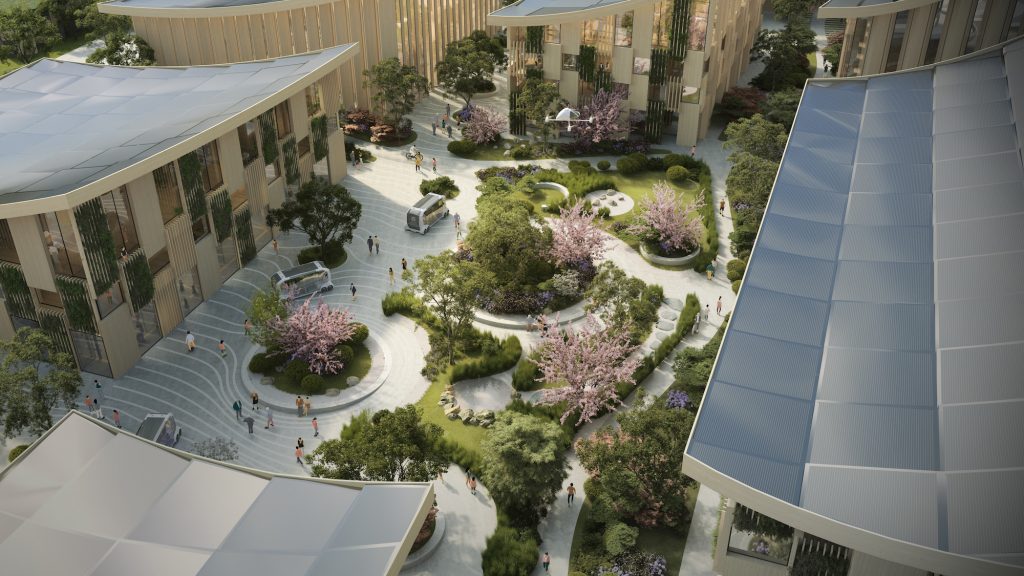
Woven City will have plenty of public spaces. Toyota envisions them drawing people out of their living units to interact with each other. The areas will be safe and clean with plenty of seating. There will even be hydroponic gardens where people can go to get fresh local produce.
Toyota said:
Both neighborhood parks and a large central park for recreation, as well as a central plaza for social gatherings, are designed to bring the community together. Toyota believes that encouraging human connection will be an equally important aspect of this experience.
All in all, this city of the future will be a great experiment and analysis for rethinking how the world can transform into a future that relies more on multi-modal transportation, electrification, mass transit, and shared rides. It will also reveal through trial and testing how to use AI to improve our quality of life without interfering too much in our personal space.


