The indigenous people of Brazil are planning strategies to protect the Amazon from the threats and destruction that the government has caused. Now, Brazilian president Jair Bolsonaro is pushing to open their reservations for commercial agriculture and mining. According to environmentalists, this move would clear out the Amazon jungle, which is considered vital for slowing global climate change. The Amazon jungle is the largest tropical rainforest in the world.
Since Bolsonaro became president, protected tribal lands have had an increasing number of illegal loggers and miners, leading to deforestation, fires, and deadly clashes on several reservations. Bolsonaro aims to integrate Brazil’s 900,000 indigenous people into the broader economy and society while using the potential of mineral riches and commercial farming from their 462 reservations.

The tribe leader of Kayapó, Megaron Txucarramãe, said:
The riches Bolsonaro speaks of are white man’s riches, to buy cars and planes and ranches. Our riches are in the forest and the rivers here.
Recently the chief of Kayapó, Raoni Metuktire, hosted a four-day tribal gathering in a village in the Xingu indigenous park. The main goal of the meeting was to establish some plans to protect their lands. The ceremony started with indigenous leaders performing ritual dances wearing ceremonial body paint and exotic bird feathered headdresses. In the 1980s, Raoni became a global reference for his environmental campaigning with musician Sting by his side.
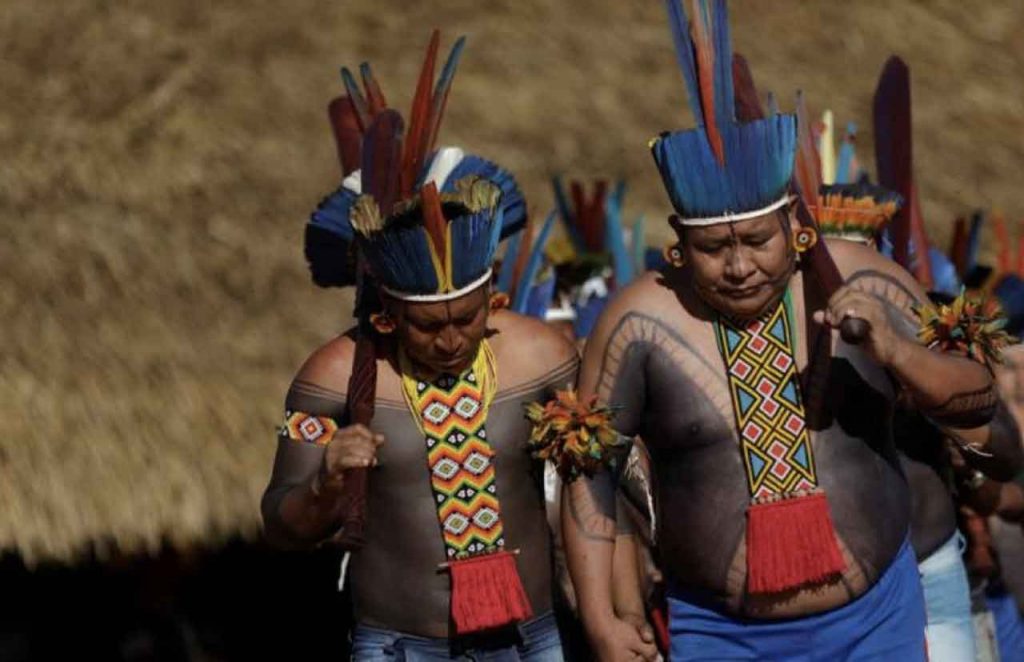
Sonia Guajajara, from the Articulation of the Indigenous Peoples of Brazil, said:
The year begins with this big meeting called by Raoni to draw up strategies to protect the Amazon from the threats, the criticism and the destruction that the Bolsonaro government is causing.
According to Brazilian newspaper O Globo, legislation enrolled by the government wouldn’t just open reservations to mining and commercial farming, but also oil and gas exploration and building hydroelectric dams. The indigenous communities would be consulted on projects, as required by Brazil’s Constitution, but they would not have the power to prohibit projects decided by the government.
The Bolsonaro government claims it’s attending to tribal leaders who are seeking economic development and are otherwise ignored by high-profile indigenous advocates. Guajajara believes the majority of the tribes oppose mining on their lands, but some may favor the easing of environmental restrictions.