
There will soon be a new recycling and reprocessing plant in Avonmouth, near Bristol in the United Kingdom unlike any facility on the planet. The announcement about this ground-breaking project – which will harness the electricity created from non-recyclable waste – was made recently by Pennon Group, the parent company of Viridor, the UK’s biggest recycling company.
“The world is changing. Once there was ‘waste’. Now society recognizes that there are potentially valuable resources that we must all challenge ourselves to recover. By transforming domestic and commercial waste and recyclables into high quality raw materials and renewable energy we’re making a big contribution to improving the UK’s resource efficiency.” – VIRIDOR
The plant is an early sign of Viridor’s continuing commitment to UK plastics conversion. It is coming within months of the Government’s Resources and Waste strategy and a year on from the UK Plastics Pact, of which Viridor was a founding member. The world-class facility creates a recycling powerhouse in the South West, where Viridor and Pennon have their headquarters. Its £252 million energy recovery facility will power a new £65 million plastic recycling plant.
Pennon’s Chief Executive Officer Chris Loughlin said in a press release:
Pennon is dedicated to working in ever-more sustainable ways and we are extremely excited to be announcing this first-of-its-kind investment in plastics recycling. By using waste which cannot be recycled as the fuel to create low carbon electricity which will power plastics recycling we are creating a truly resource and energy-efficient waste management solution.
There is a clear ambition from both UK consumers and politicians to improve recycling rates and reduce the amount of waste which is sent to export. Our research shows that 80% of people believe the UK should find a way to deal with its own recycling without having to ship it to other countries.
Unless action is taken now and investment in infrastructure is made, a plastic recycling capacity gap will undermine UK ambitions and the sustainability targets of retailers and the big consumer brands. We are, therefore, delighted to be leading the way.
Sarah Heald, Pennon’s Director of Corporate Affairs and Investor Relations added:
This is an extremely important investment for the South West. It will create a center of excellence for UK recycling right here in the region, showcasing leading edge innovation and technology, and bringing knock-on benefits to the regional economy.
As one of the South West’s largest private sector investors and employers we are delighted to be able to invest in a South West recycling powerhouse which will significantly reduce the amount of plastic sent to landfill and help to protect the environment.
This plant is to be the UK’s biggest multi-polymer plant. In its first year running it will produce 60 Kilo-Tonnes Per Annum (KTPA) of recycled plastic a year from 81KTPA feedstock (1.6 billion bottles, pots, tubs, and trays), rising to 89KTPA (1.7 billion bottles, pots, tubs, and trays) in year three, producing 63KTPA of recycled material.
The project will put 60,000 tons of recycled plastic from bottles, pots, tubs, and trays in PET, HDPE, and PP flake and pellet form) back in the economy every year as a viable and sustainable solution to virgin plastic. It will be powered by diverting 320,000 tons of waste from landfills to generating 32 Megawatts of electricity – the equivalent energy used to power around 44,000 homes.
The energy to power the new plastic recycling plant is generated onsite by using non-recyclable waste as fuel. Such a system creates a truly circular economy energy park. This co-location of a plastic reprocessing plant with an energy recovery facility is a real industry first. It creates a great opportunity for even greater sustainability and environmental efficiency.
Recycled plastic is much better for the environment. It uses 50% less electricity than virgin plastic. Furthermore, sourcing power from non-recyclable waste takes energy efficiency one step further and gives this material a real purpose.
In addition to waste treatment and plastic recycling, the project also adds to its green credentials with the addition of a £2 million water treatment plant, which has benefited from the input and expertise of another Pennon company, South West Water Business.
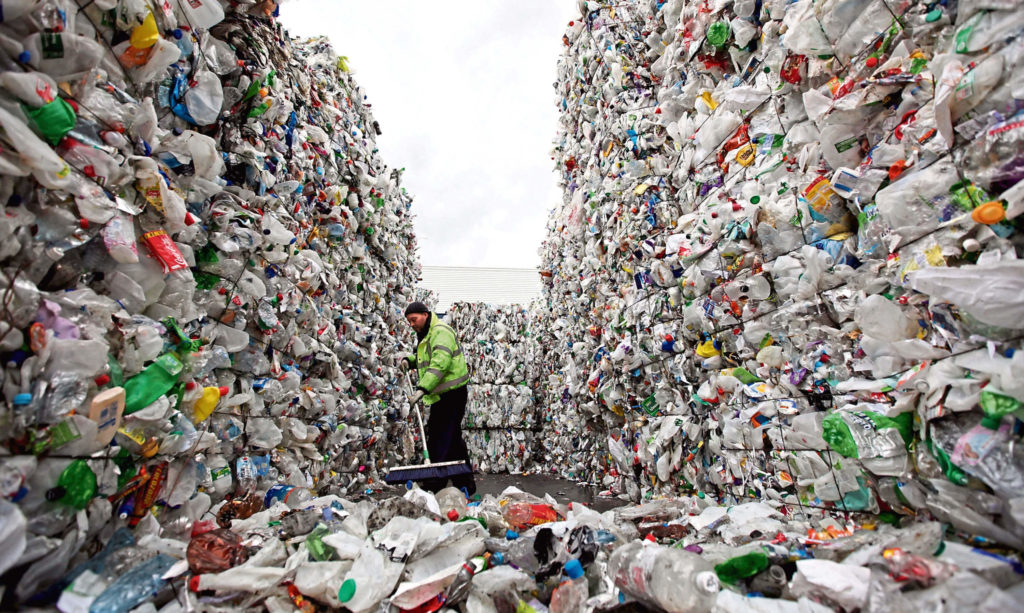
Two-thirds of plastic collected for recycling in the UK is currently exported, which is something that really needs to change. More and more countries are denying the plastic waste. The UK is going to have to figure out what to do with all its waste locally sooner or later. At the moment, only 46% of plastic packaging is currently recycled against a target of 75%. Hopefully, this facility will be able to help them reach and surpass their target as soon as possible.
It’s estimated that the plant will be constructed and ready to start recycling by summer 2020.


