
The Waorani indigenous people of Pastaza Province, a place in the middle of the Amazon rainforest, have impressed the world with their bravery and determination. These simple people, at one with nature, have defended themselves and their land against big oil companies coming to drill for oil with permission from the government who had never received consent from the indigenous people of the land. The people stood up to the Ecuadorian government’s fraudulent actions in court and triumphed!

“We want to continue living a good life within the forest,” Patricia, one of the tribeswomen, told Yes Magazine. “We want to be respected, and we want to be a model that could be replicated.”
The Waorani have called the Amazon home for countless generations. They are the rightful owners, or carers, of the land and should have the final say on what happens on it, or to it. The tribe won their lawsuit against government corruption and big oil. The judges ordered the government to redo the consultation process and apply the standards set by the Inter-American Court of Human Rights prior to any sale related to extracting underground resources. This would take into consideration the environmental and cultural impacts that would affect the tribe.
In addition, the three-judge panel from the Pastaza Provincial Court sided with the Waorani, trashing the Ecuadorian government’s consultation process that began in 2012 and rendering the land sale null and void. (The tribe had unknowingly signed away their land to oil companies.) Such legal precedent is hugely important for other indigenous nations! It shows that people can fight back when scammed, even if it’s against government officials or billion dollar businesses. The victory has set a huge precedent for indigenous people’s land rights in the Amazonian country and beyond.

The ruling ensured protection for half-a-million acres of Waorani ancestral territory from mining or drilling. It also halted the potential auctioning off of a further 7 million acres of indigenous land to oil bids across 16 oil blocks. The act supports the Ecuadorian constitution, which guarantees the inalienable, unseizable, and indivisible rights of indigenous peoples to their ancestral lands, as well as their access to free adjudication.
Nemonte Nenquimo, the lawsuit plaintiff and president of the Waorani Pastaza Organization, stated:
“The government tried to sell our lands to the oil companies without our permission. Our rainforest is our life. We decide what happens in our lands. We will never sell our rainforest to the oil companies. Today, the courts recognized that the Waorani people, and all indigenous peoples have rights over our territories that must be respected. The government’s interests in oil is not more valuable than our rights, our forests, our lives.”
The people of Sarayaku are a rainforest community of just 1,200 Kichwa people, but they are a leading force in 21st-century indigenous resistance, engaging the western world politically, legally and philosophically. The tribe has successfully fended off oil companies and a government intent on exploiting their land for profit. In so doing, the community has become a beacon of hope to other indigenous groups and to global climate change activists as it mobilizes to stop a new round of oil exploration. They are a source of inspiration for anyone who may be afraid to stand up for what they believe in no matter how impossible it seems!
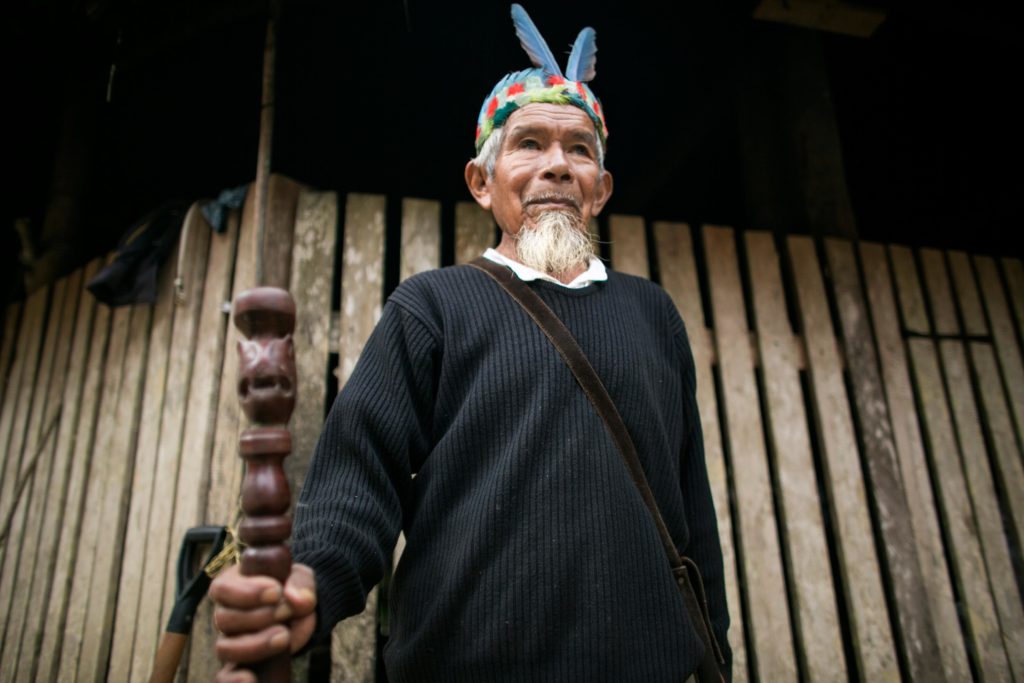
Sarayaku now wants to help indigenous people around the world resist and defend their way of life. They have a message for everyone:
“Our message that we are also taking to Asia, Africa, Brazil, and other countries that are discussing climate change, we propose an alternative development—the development of life. This is our economy for living—sumak kawsay—not just for us but for the Western world. They don’t have to be afraid of global warming if they support the life of the jungle.”
José Gualinga, one of the members of the tribe, says these struggles have bigger implications. “We are doing this to stop carbon emissions and global warming. This struggle of indigenous pueblos [communities] is a doorway to saving Pachamama [Mother Earth].”
“We are millionaires,” says Gerardo, another member of the tribe, motioning to the jungle that embraces us. “Everything we need we have here.” José peers into the fire. “We are a small pueblo [community], but we are a symbol of life. Everyone must come together to support the life of human beings and Earth.”


