
A compound made by gut bacteria from foods such as pomegranates, walnuts, and berries may help the intestine maintain a stronger barrier. New research suggests urolithin A can activate a precise set of cellular signals associated with mucus production, antimicrobial defenses, and tissue repair.
The result is promising, but it is not the same as saying that urolithin A repairs a damaged gut or treats Crohn’s disease or ulcerative colitis. Most of the intestinal-repair evidence comes from cells, mice, and human tissue samples exposed to urolithin A in a laboratory. Researchers have not yet completed a clinical trial showing that the compound reduces inflammatory bowel disease symptoms in people.
Here is what the study found, what it means for urolithin A gut health, and what remains unknown.
Urolithin A first attracted attention for its effects on mitochondria and muscle endurance. A separate line of research is now focused on how the metabolite may reinforce the intestinal lining.
What the new urolithin A gut study found
Researchers at the University of Louisville investigated how urolithin A, or UroA, affects intestinal epithelial cells. These cells form the inner lining of the gut and are continuously exposed to microbes, food, and digestive material. They must also allow water and nutrients to pass through while helping limit the movement of harmful substances into the body.
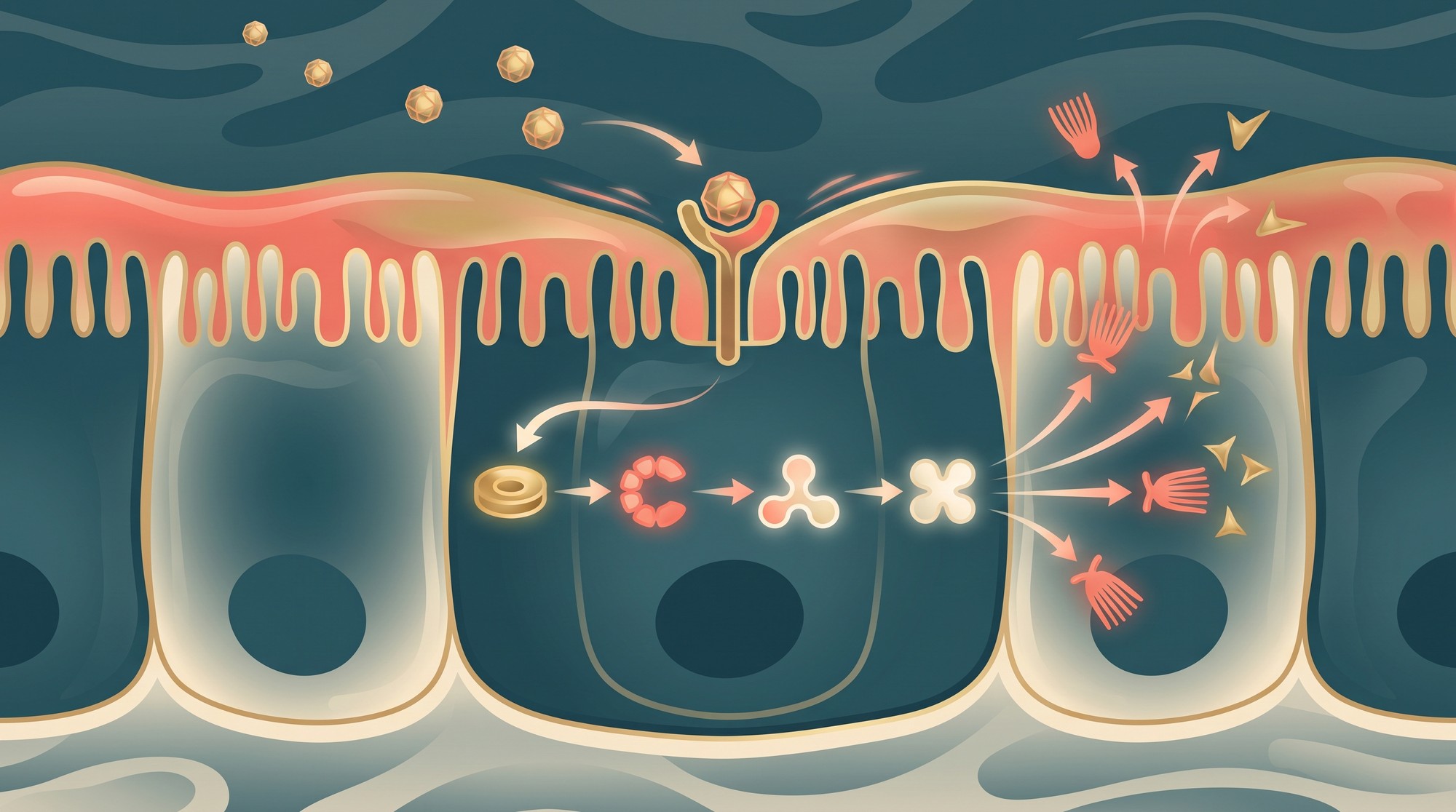
In their 2026 study published in Nature Communications, the team found that urolithin A activated the aryl hydrocarbon receptor, or AHR, in intestinal epithelial cells. That triggered the NLRP6 inflammasome, a cellular complex that released interleukin-18, or IL-18, without raising interleukin-1 beta, a cytokine more closely associated with inflammation in this experiment.
The researchers then traced a chain of signals that may help protect the intestinal lining:
- AHR acted as a sensor in intestinal epithelial cells.
- NLRP6 helped trigger a measured IL-18 response.
- IL-18 stimulated type 3 innate lymphoid cells to produce IL-22.
- IL-22 increased MUC2 mucus production and REG3γ, an antimicrobial peptide involved in intestinal defense.
Together, these responses may help strengthen barrier function, support tissue repair, and limit inflammation. Earlier human studies of urolithin A have focused largely on muscle endurance and mitochondrial biomarkers. That research found real biological activity but mixed functional results. The intestinal study adds a different mechanism to the compound’s evidence base.
What is urolithin A, and how do gut bacteria make it?
Urolithin A is a postbiotic metabolite. A postbiotic is a functional compound produced through microbial activity, rather than a living microbe added to food or a supplement.
People do not obtain urolithin A directly from pomegranates, walnuts, or berries. Those foods contain compounds including ellagic acid and ellagitannins, which are only poorly absorbed in the small intestine. Selected microbes in the colon transform these dietary precursors through a sequence of chemical reactions. The final products are urolithins, including urolithin A.
This distinction matters. Eating a pomegranate does not deliver the same controlled dose as taking a purified urolithin A supplement. Likewise, people do not all produce the same urolithin metabolites after eating the same food. The microbial community differs from person to person, and some people’s “urolithin metabotypes” are much better at making urolithin A than others.
Foods associated with ellagitannin intake include pomegranates, walnuts, strawberries, raspberries, and blackberries. A review of urolithin metabolism describes this multi-step microbial pathway. Intelligent Living’s earlier coverage of pomegranate-derived urolithin A explains how these compounds were linked to mitochondrial biology after microbial conversion.
How the proposed intestinal repair pathway works
The most important finding is that urolithin A did not simply turn inflammation on or off. Its effect depended on which cellular receptor it activated, how strongly that receptor was stimulated, and which downstream pathway responded.
The aryl hydrocarbon receptor, or AHR, responds to signals from diet, the environment, and gut microbes. It exists in many cell types, and different AHR ligands can have different effects. Urolithin A is described as a relatively low-affinity AHR ligand. In the new study, it selectively activated AHR in intestinal epithelial cells in the experimental models used.
That activated the NLRP6 inflammasome, which released IL-18 at a level the researchers interpreted as homeostatic rather than indiscriminately inflammatory. IL-18 then prompted type 3 innate lymphoid cells to release IL-22. IL-22 is a tissue-protective signal that can stimulate epithelial cells to produce mucus, antimicrobial peptides, and repair-related molecules.
When the researchers disabled AHR, NLRP6, IL-18, or IL-22 in mouse models, the protective effect disappeared or weakened. That strengthens the evidence that these molecules formed a connected pathway, rather than urolithin A producing an unrelated change in inflammation.
But pathway involvement is not the same as a proven treatment. Mouse models of chemically induced colitis do not reproduce every feature of Crohn’s disease or ulcerative colitis in people. Doses, metabolism, and disease context can differ substantially between species.
Why did intestinal cells from people with IBD respond?
To assess whether the pathway might be relevant to humans, researchers prepared single-cell suspensions from intestinal biopsies taken from people with inflammatory bowel disease. The samples included inflamed and non-inflamed intestinal areas, along with comparison samples from healthy participants.
When urolithin A was added in the laboratory, it increased IL-18 in epithelial cells and IL-22 in type 3 innate lymphoid cells. The response was stronger in samples from people with IBD than in healthy comparison samples. Blocking AHR prevented the IL-22 response.
This is useful evidence because the investigators observed the expected cellular response in human tissue. It is not equivalent to a treatment trial. The biopsies were removed from patients, processed in laboratory conditions, and exposed to a specified urolithin A concentration for 24 hours. No patient swallowed a supplement, and the study did not measure changes in pain, diarrhea, inflammation, hospitalizations, remission or quality of life.

Can eating more pomegranates, berries, and walnuts improve gut health?
Fruits, nuts and a varied fiber-rich diet can support general health, but the current study does not establish that eating more of these foods repairs the gut lining. It also does not define a daily serving of pomegranates or walnuts that produces a therapeutic level of urolithin A in the intestine.
There are two main reasons for that caution:
- Production varies between people. Microbial capacity and metabolism can differ substantially, so equal food intake does not necessarily produce equal urolithin exposure.
- The study used purified urolithin A. Researchers applied a defined compound in cells and animals, not a controlled serving of whole food.
A balanced dietary pattern that includes fruit, nuts, beans, vegetables, whole grains, and seeds remains a reasonable way to support microbial diversity and short-chain fatty acid production. Those broader gut-supportive habits can be discussed separately from the unproven promise of a single metabolite. People with IBD should be cautious about major dietary changes during flares because tolerated foods can vary widely.
Should you take a urolithin A supplement?
Human trials in generally healthy middle-aged and older adults have found purified urolithin A to be well tolerated over periods ranging from several weeks to four months. The current safety review summarizes these findings. A first-in-human study tested single doses from 250 to 2,000 milligrams and daily doses from 250 to 1,000 milligrams for 28 days. Later trials have also studied 500 and 1,000 milligrams per day for up to four months.
Those studies were designed around safety, metabolism, and muscle-related outcomes, not intestinal repair. The available short-term tolerability evidence is generally reassuring, but it cannot establish long-term safety for every population. Trials have been relatively small and have not adequately studied pregnant people, children, or many people with active gastrointestinal disease.
Supplements can also differ in purity, dose, and labeling. People taking medicines, managing a chronic illness, or dealing with Crohn’s disease or ulcerative colitis should discuss any supplement with a qualified clinician. A supplement should not replace prescribed medication, anti-inflammatory treatment, nutritional support, or other established IBD care.
Is urolithin A hard on the liver?
Urolithin A is metabolized and conjugated in the liver, but current human trials have not identified a consistent pattern of liver injury attributable to the compound. Clinical studies have generally reported no serious or treatment-related adverse events, and several trials found no meaningful changes in liver or kidney laboratory measures during the study periods.
That does not prove the compound is harmless for everyone or over every possible duration. Long-term safety data remain limited, supplement quality varies, and medication interactions have not been fully characterized. Anyone with existing liver disease, abnormal liver tests, or a history of drug-related liver injury should seek medical advice before supplementing.
Does urolithin A treat Crohn’s disease or ulcerative colitis?
No treatment has been established. The National Institute of Diabetes and Digestive and Kidney Diseases describes medicines, nutrition support, and, when necessary, surgery as the established approach to Crohn’s disease. Its ulcerative colitis guidance similarly emphasizes medicines to reduce inflammation and maintain remission.
The new study gives researchers a plausible pathway to investigate. It does not show that taking urolithin A reduces inflammation, produces clinical remission, prevents flares, or avoids surgery.
A future human study would need randomized treatment, a placebo group, validated outcome measures, and follow-up long enough to detect meaningful changes. It would also need to establish a safe dose and clarify whether different disease stages or microbiome types respond differently.
The evidence ladder for urolithin A and gut health
| Evidence type | What it shows | What it cannot show |
|---|---|---|
| Cell cultures and organoids | Urolithin A can activate AHR, NLRP6, IL-18, and IL-22-related signals in intestinal models. | Whether people experience fewer symptoms or better healing. |
| Mouse colitis models | Urolithin A reduced measures of intestinal damage and inflammation when the pathway was intact. | How the same dose or pathway will behave in human disease. |
| Human intestinal biopsies | Cells from people with IBD showed a laboratory response to urolithin A. | Whether oral treatment improves disease outcomes. |
| Human safety and muscle trials | Short-term doses have generally been well tolerated and changed some biological markers. | Gut repair in people, long-term safety, or IBD efficacy. |
What researchers need to prove next
The next stage is not simply to show that urolithin A changes a biomarker. Researchers need to determine whether activating the pathway in a living person can safely improve clinically meaningful outcomes.
Important unanswered questions include:
- What oral dose reaches the intestinal cells in different people?
- How much urolithin A does a person’s microbiome naturally produce after eating different foods?
- Do changes in IL-18 and IL-22 translate into better barrier function, less inflammation, or fewer symptoms?
- Which people with IBD are most likely to respond?
- Are effects sustained, and do they remain safe during long-term use?
Until those questions are answered, the most accurate conclusion is that urolithin A is a biologically active, generally well-tolerated metabolite with promising intestinal-barrier evidence. It is not a proven IBD therapy, and no food or supplement can yet promise to “repair” the gut in the way the study headlines can suggest.
Frequently asked questions
Does urolithin A help the gut?
It shows activity in intestinal cell, animal, and human biopsy models that may support barrier function, mucus and antimicrobial signaling. Human clinical evidence for improved gut health or IBD symptoms is not yet available.
How can I boost urolithin A naturally?
Ellagitannin-rich foods such as pomegranates, walnuts, and berries provide the microbial precursors used to make urolithins. There is no established food serving that reliably raises intestinal urolithin A to a therapeutic level, and people differ in how much they produce.
What is the best supplement for repairing the gut lining?
There is no single supplement proven to repair the gut lining for everyone. Treatment depends on the cause of symptoms. Colitis, infection, medication effects, and other conditions require different approaches, so persistent bleeding, severe pain, dehydration, or weight loss should be assessed medically.
Is urolithin A hard on the liver?
Short-term human studies have not shown a consistent signal of liver toxicity at tested doses, but long-term data are limited. Existing liver disease or abnormal liver tests warrant medical advice before supplementation.
Should someone with IBD take urolithin A?
The intestinal study does not justify self-treatment. A clinician can assess interactions, disease severity, medications, and whether a clinical trial is appropriate. Established IBD treatment should not be stopped in favor of a supplement.
Are pomegranates and berries enough to produce the same effects?
No such conclusion has been demonstrated. Whole foods provide variable precursor compounds and depend on a person’s microbial metabolism. The experiment used purified urolithin A under controlled laboratory conditions.


