
Someday soon, the body’s heat may be harnessed to provide energy. How? With a heat-to-electricity device that runs on ions. It is essentially a piece of wood that was transformed into a flexible membrane and it generates energy from the same type of electric current (ions) that the human body runs on.
The ingenious device was developed by a University of Maryland-led team of researchers, including, Liangbing Hu, Robert Briber and Tian Li of the department of materials science, and Siddhartha Das of mechanical engineering. They’ve published a paper all about it in the journal Nature Materials.
Wood’s natural nanostructures possess unique properties. The team took advantage of them to generate energy, for example using wood’s charged channel walls. The best part about their creation is that they can use a small temperature differential to efficiently generate an ionic voltage.
In other words, this new wood-based technology makes it possible to generate an electric charge between small temperature differences, which is an extremely difficult thing to do. On the other hand, two very different temperatures can easily generate electricity, for example, lightning, but that’s difficult to harness because it’s too big.
Now, neither of these issues are a problem because the University of Maryland team has successfully tackled this challenge. Hu said they now have “demonstrated their proof-of-concept device, to harvest low-grade heat using nanoionic behavior of processed wood nanostructures”.
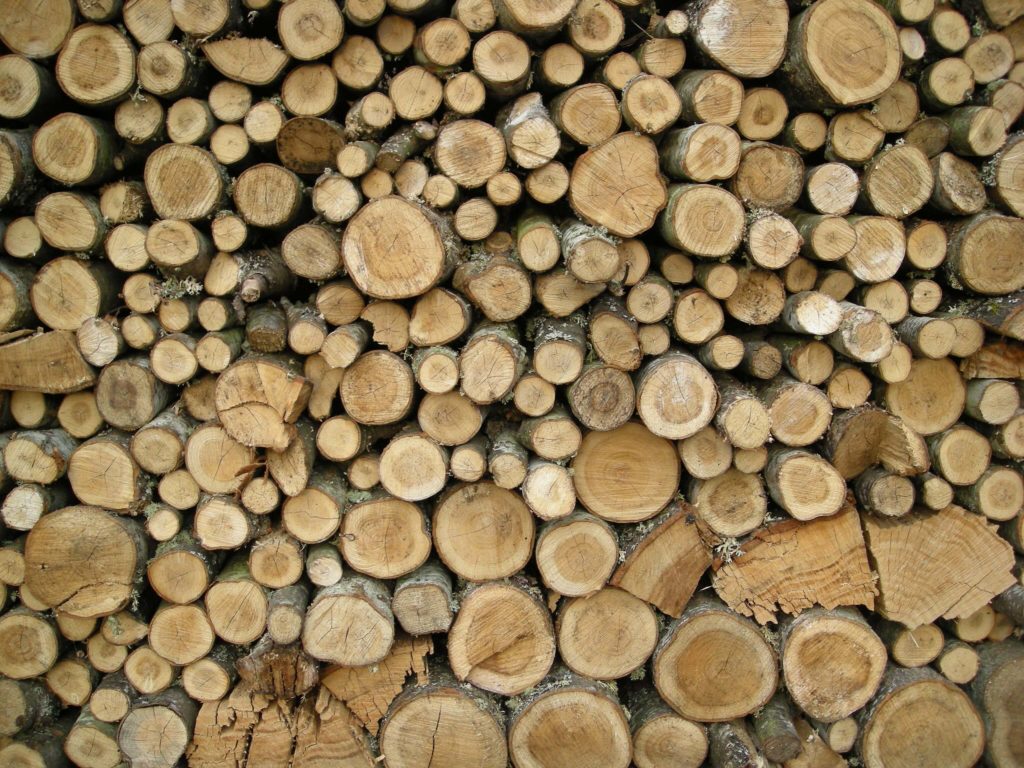
By utilizing the knowledge of plant anatomy they came up with an idea. See, trees grow channels that move water between the roots and the leaves; and those are made up of fractally-smaller channels. This carries on all the way to the level of a single cell where channels are just nanometers or less across. These tiniest channels are the ones the team harnessed to regulate ions.
How They Did It:
- A fast-growing tree with low environmental impact was closed for use called basswood.
- They took a thin slice of basswood and treated it by removing two components: lignin, that makes the wood brown and adds strength, and hemicellulose, which winds around the layers of cells binding them together. In so doing, it gave the remaining cellulose its signature flexibility. This process also converted the structure of the cellulose from type I to type II – a key to enhancing ion conductivity.
- Next, they took this membrane and bordered it with platinum electrodes, and infiltrated its cellulose with a sodium-based electrolyte.
- Then, they regulated the ion flow inside the tiny channels and generate an electrical signal.
Tian Li, the first author of the paper, said:
“The charged channel walls can establish an electrical field that appears on the nanofibers and thus help effectively regulate ion movement under a thermal gradient…The sodium ions in the electrolyte insert into the aligned channels, which is made possible by the crystal structure conversion of cellulose and by dissociation of the surface functional groups.”
Conclusion
Li was named as one of Forbes “30 Under 30” in Energy in 2018. As a conclusion to their paper Li said:
“We are the first to show that, this type of membrane, with its expansive arrays of aligned cellulose, can be used as a high-performance ion selective membrane by nanofluidics and molecular streaming and greatly extends the applications of sustainable cellulose into nanoionics.”
This work is but the latest in extensive previous University of Maryland research to develop novel and potentially high impact applications of modified wood. However, there are other very interesting technologies out there that also take advantage of woods unique characteristics. For instance, a different team of researchers created a reusable sponge made of wood that selectively absorbs oil. Tests revealed that these sponges could soak up anywhere between 16-41 times their weight in oil and be reused.


