
Western Sydney University researchers have recently been awarded $524,027 in research funding to figure out a way of predicting how dry Australia’s forests could be. The Australian Federal Government, who announced the winner of this Australian Research Council (ARC) Linkage grant, explained that the money is for the research team to develop a system for reliably forecasting the potential for bushfires. It hopes that such a skill would give firefighters a new bushfire early warning system, which would ultimately save money, wildlife, and lives.

The Minister for Education, Dan Tehan, said the research is of national interest. He said in the announcement regarding the funding:
Accurately forecasting the presence of dry forest fuels will help us better predict the likelihood of major bushfires, which will help greatly in bushfire prevention and mitigation, leading to saved lives and saved property.
Professor Deborah Sweeney, Deputy Vice-Chancellor & Vice President (Research & Innovation) added:
Through this Linkage Project, the research team will be able to develop long-term strategic research alliances and will be contributing to advancing knowledge on an issue that has the potential to provide significant national economic, commercial, environmental and social benefits.
The project – called “Forecasting live fuel moisture content, the on/off switch for forest fire” – will analyze and combine soil moisture forecasts, research on how plants respond to varying levels of water in the soil, and satellite data to build a forest dryness forecast. The result will hopefully lead to a method of predicting the areas of bushland most likely to be struck by fire. In so doing, it will help fire agencies better plan and prepare to fight the fires.
Dr. Rachael Nolan, co-leader of the project and an Early Career Researcher of the Fire Research Group within the Hawkesbury Institute for the Environment at Western Sydney University, said:
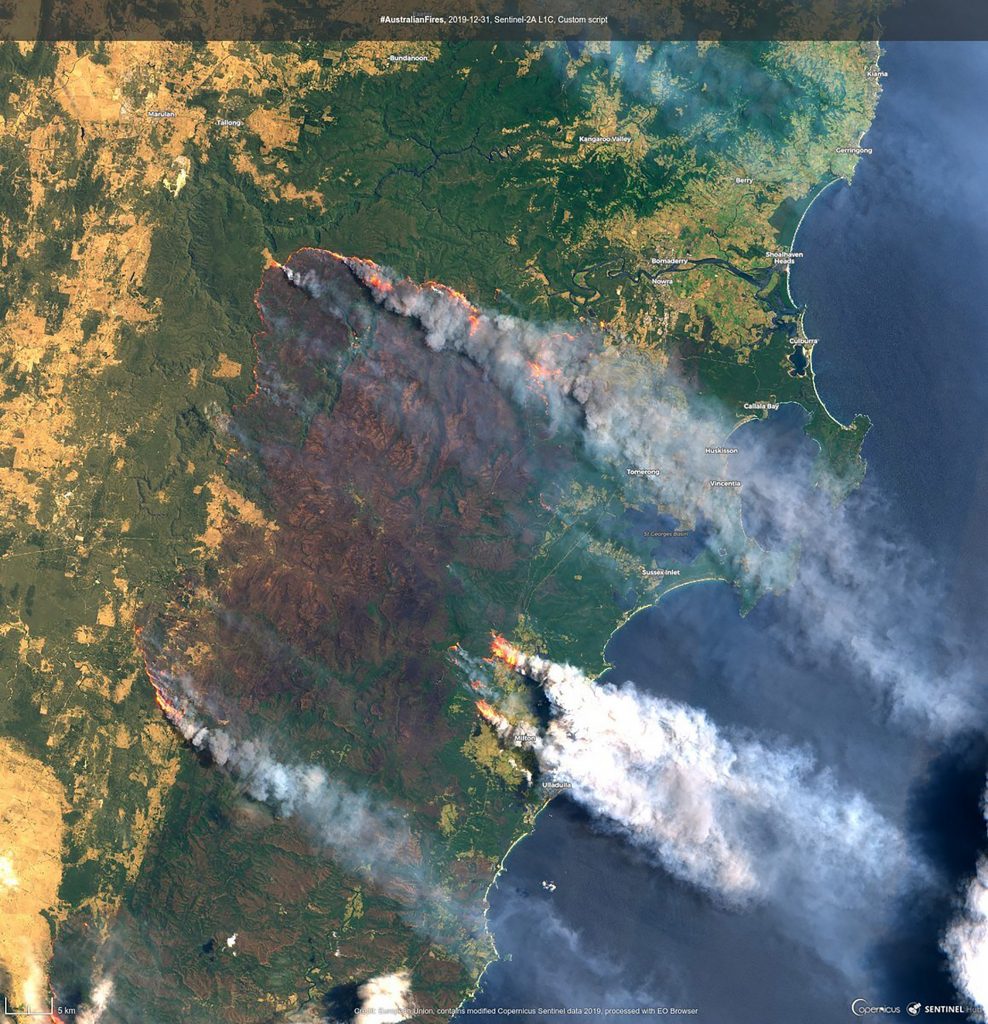
What we have developed so far is a methodology for monitoring whether the conditions in bushlands across the state are primed for large, catastrophic fires – of the level that Australia is currently experiencing.
However, until now, our models could, at best, show what the conditions in bushlands were a few days ago. With this new funding, we will be able to take a significant leap ahead and advance our research to the point where we will be able to combine near-real-time monitoring through remote sensing with physically-based models to provide medium-range forecasts of these conditions into the future.
The total money awarded to the project was $9.5 million, as the funding included other grants. The additional funding support was provided by the NSW Department of Planning, The NSW Rural Fire Service, the ACT Environment, Planning and Sustainable Development Directorate, and NSW Department of Planning, Industry, and Environment.
The project will form part of the NSW Bushfire Risk Management Research Hub and bring together a group of industry partners and experts from Australian National University, Western Sydney University, The University of Lleida (Spain), Department of Planning, Industry, and Environment, NSW Rural Fire Service, and ACT Parks and Conservation.


