
French automotive suppliers Faurecia and Michelin will begin construction of what will be Europe’s biggest factory for fuel cells in March near Lyon, France. The joint venture between the two companies – called Symbio – hopes to score a quarter of the world market by 2030. If they achieve this, it will be a €1.5 billion turnover!
The plans for the factory are being hailed as ambitious, although specific details and the exact location haven’t been revealed yet. Symbio has expressed interest in constructing two more factories in addition to this one – one in America and the other in Asia.
Faurecia and Michelin aim to become critical players in the area of fuel cell systems. Symbio’s Chief Executive, Fabio Ferrari, said:
We want SYMBIO to become one of the world leaders in fuel cell systems and consequently take part in speeding up the roll-out of « Zero-emission » mobility. Though at short-term the most relevant markets are commercial vehicles and trucks, passenger cars will be involved between 2025 and 2030. We expect to produce 200 000 hydrogen systems a year by 2030. We’ve come a long way since the creation of the company in 2010!
In the beginning, Michelin and Faurecia funneled €140 million into the development of a new generation of hydrogen fuel cells, and now their joint-venture Symbio (created in March 2019) employs around 200 people.
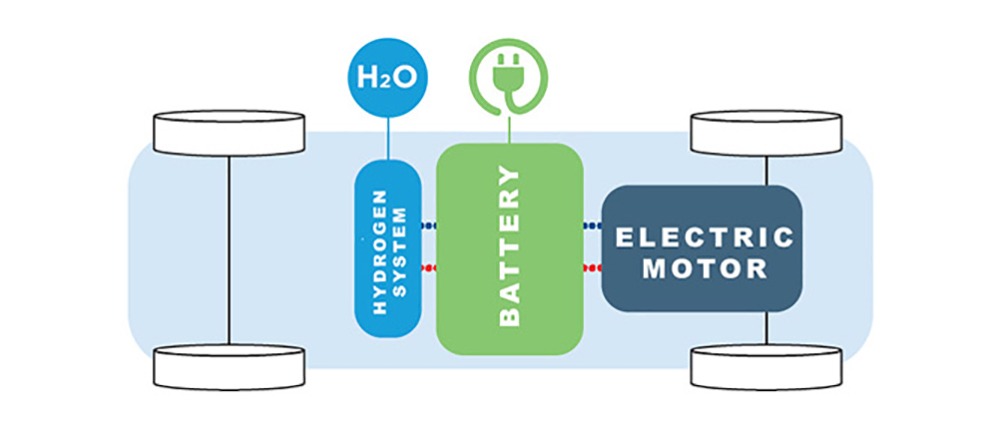
The new factory will focus on manufacturing fuel cell packs that can be integrated into existing electric vehicles. The pack would serve as a range extender in utility vehicles, increasing their range by 180 kilometers. However, eventually, it will move into the market of hydrogen cars as well.

How does it work? When the battery level reaches 80%, the fuel cell is automatically activated to charge while running or to gradually charge when idle as a trickle charger that keeps the battery level up. The driver has the option of engaging the range extender at will. When the vehicle’s battery level reaches below 2%, it will switch to driving on hydrogen only.
Michelin’s goals have long been to increase sustainable mobility and make it accessible to as many people as possible. The company states in a press release:
The transport sector is at the heart of three major challenges: improving air quality, reducing CO2 emissions and fostering energy transition. Today, hydrogen-powered mobility is an imperative solution to meet these three challenges simultaneously. Hydrogen technology will play a key role in the mass development of electric vehicles to reach Zero-emission mobility in the future. Hydrogen fuel cells are particularly suitable for intensive use and for those who need greater autonomy. Consequently, they are perfectly complementary to battery technology.
The world is currently working towards the mass development of electric vehicles to reach the target of zero-emission mobility. Hydrogen technology will play a crucial part in this transition. Hydrogen fuel cells are perfectly complementary to battery technology, and they are well suited for intensive.


