
Engineers at Stanford are developing a motorized exoskeleton dedicated to enhancing the running experience. There exists an exoskeleton to make skiing more comfortable, but that device focuses on relieving strain on the knees and thighs. This is different. The Stanford exoskeleton is strapped only to the user’s calves to make running less energy-intensive. The makers envision the final product being small, light, and portable – something people can use as a mode of transportation.
Guan Rong Tan, one of the engineers involved in the study, said:
You can almost think of it as a mode of transportation. You could get off a bus, slap on an exoskeleton, and cover the last one-to-two miles to work in five minutes without breaking a sweat.
The team also hopes it will motivate people to get active. While the benefits of running are many and well known, only 20% of the American population does it. The 80% that don’t likely find it too difficult and are turned off by it. The Stanford team wants to change this stark reality to help more people be healthy.
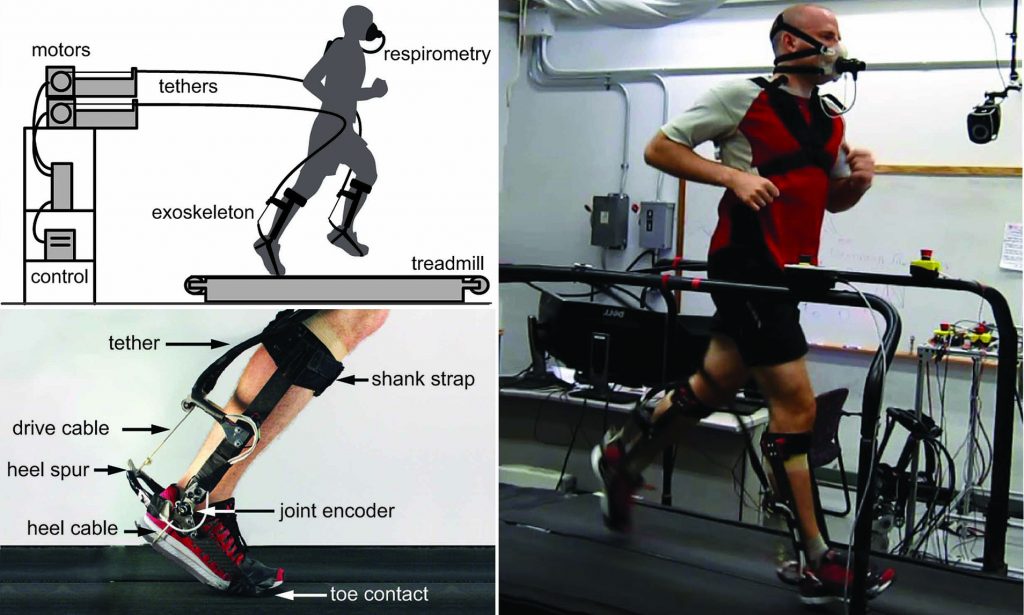
The team had 11 experienced runners engage in tests of their device on treadmills in the lab. The motor-powered mode made it 15% easier to run, and it boosted a runner’s speed by 10%.
Delaney Miller, another one of the researchers involved who tested the devices herself, said:
Powered assistance took off a lot of the energy burden of the calf muscles. It was very springy and very bouncy compared to normal running. Speaking from experience, that feels really good. When the device is providing that assistance, you feel like you could run forever.
But why run?
- Running is good for your brain. Just a half-hour improves the ability to process information better. It also enhances the ability to tune out distractions and focus, making it easier to switch between tasks and solve problems. It also reduces cognitive decline that causes dementia and Alzheimers by stimulating the release of a protein that encourages the growth and survival of neurons in the brain.
- You’ll live longer. Runners have about a 25-30% lower rate of all-cause mortality than non-runners. One study even found that runners gain about three years of extra life because the activity strengthens vital biological pathways – including better body composition, higher cardiovascular fitness, excellent glucose and insulin control, lower cholesterol, better hormone regulation, stronger bones, and positive neurological functioning.
- Running makes your immune system stronger. It improves your body’s surveillance against disease, enhances gut microbiota composition, lower inflammation, improves antibody response, and reduces the risk of upper respiratory infections and influenza.
- Running reduces your risk of cancer. And if you already have the disease, running can lower side effects and support you physically and emotionally. It even reduces the chance of you developing another type of cancer or dying.
- Running reduces depression and may serve as an alternative to costly medical treatments.
How often should you run?
The American College of Sports Medicine recommends 20 to 60-minute running sessions 3 to 5 days a week.


