
Australia could benefit from Japan’s ambition to become a leading adopter of hydrogen for an energy source by becoming its leading supplier. Above all, the nation’s coal sector wins because it remains the cheapest way to fuel the production of hydrogen. And although it sounds like they’re just canceling out the benefits of clean hydrogen, by making it with dirty fossil fuels, they’re not because there’s a plan for that. Any hydrogen making facility will be required to come equipped with a carbon capture system, so no emissions make their way into the atmosphere.

Now that Australia’s national hydrogen strategy is scheduled for completion by the end of 2020, Japan will be able to receive a safe, reliable, and much cheaper source of energy than they currently use. The island nation is home to 125 million people and has suffered one of the world’s worst nuclear meltdowns, so the allure of hydrogen energy has only inflated the government’s demand for the material.
The Tokyo Olympics next year will be the country’s demonstration of progress towards becoming a carbon-free hydrogen society based on next-generation technology. They will even be using buses running on hydrogen to shuttle people around.

The shocking part of the whole initiative is that the Japan-Australia brown coal-to-hydrogen project seems quite contradictory. In essence, the result is supplying a carbon-free fuel source that was made using brown coal, which is a carbon-emitting fuel source. So, although burning hydrogen emits only water and doesn’t contribute to climate change, making it does. The problem is that the process of electrolysis of water is highly energy-intensive, and coal is the cheapest form of energy still. To solve this issue, those preparing Australia’s hydrogen strategy are only considering options using coal if they come with carbon capture and storage (CCS).
Mark McCallum at Coal21, a group representing black coal producers pursuing CCS, wrote in a submission to this year’s hydrogen strategy consultation:
Importantly, CO2 [carbon dioxide] is a stable substance and, provided the well-established industrial safety protocols are followed, the injection process can be conducted without any threats to the health and safety of workers or the public.
Australia’s chief scientist Alan Finkel argued a combination was desirable, stating that:
Producing hydrogen from these [fossil fuel] sources, if done in conjunction with carbon capture and sequestration, is an attractive option because it increases the diversity of supply (so all our ‘eggs’ are not in any one energy ‘basket’)”
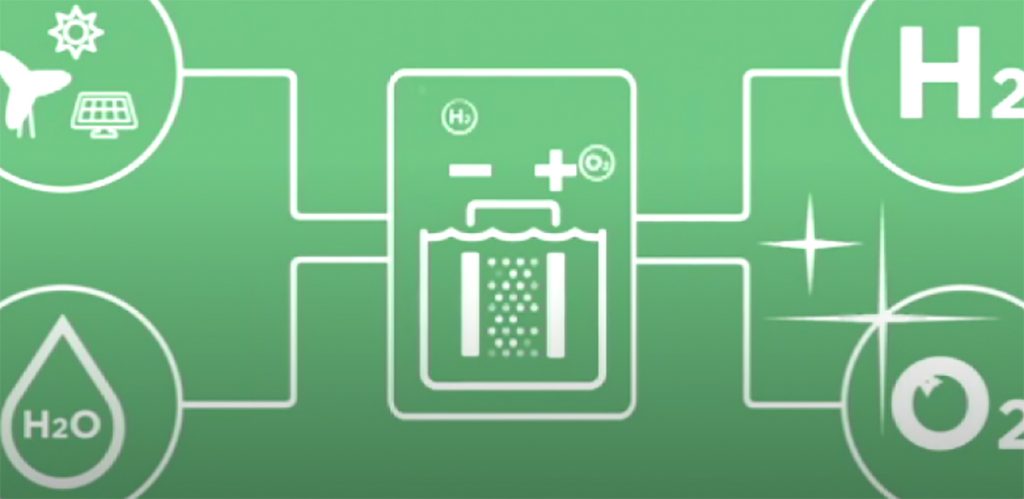
A lot of money could be made by the country exporting hydrogen gas, and a lot of jobs could arise for everyone, including workers in the coal industry transitioning to hydrogen. The big picture idea is that Australia can take advantage of hydrogen – with its abundant supply of sun and wind, as well as its vast reserves of coal and gas – and its access to Asian markets, starting with Japan.
The first issued paper for the National Hydrogen Strategy trumpets:
High-level economic modeling by ACIL Allen estimates that hydrogen exports could provide around $4 billion direct and indirect economic benefits to Australia by 2040 under medium demand growth settings.
In the coming decade, over 2,000 Australian workers will benefit from the burgeoning industry if ACIL’s estimates are correct. So not only is such an industry more sustainable, but it also presents a lot of opportunities for people.


