
Network Rail, the British infrastructure manager, published its Interim Business Case: Traction Decarbonization Network Strategy. The strategy was made in response to the UK government’s goals of achieving net-zero greenhouse gas emissions by 2050. The Department for Transport requested it. There is an aim to remove all diesel-only trains in Scotland by 2035 and England and Wales by 2040.
The report, released on September 10, sets out preliminary recommendations for how the rail network can be decarbonized, which includes a rolling program of electrification across 11,700 to 13,040 kilometers of track and the transition to battery and hydrogen trains. It also analyses the roles of overhead electrification and outlines reasons for decarbonizing the network.
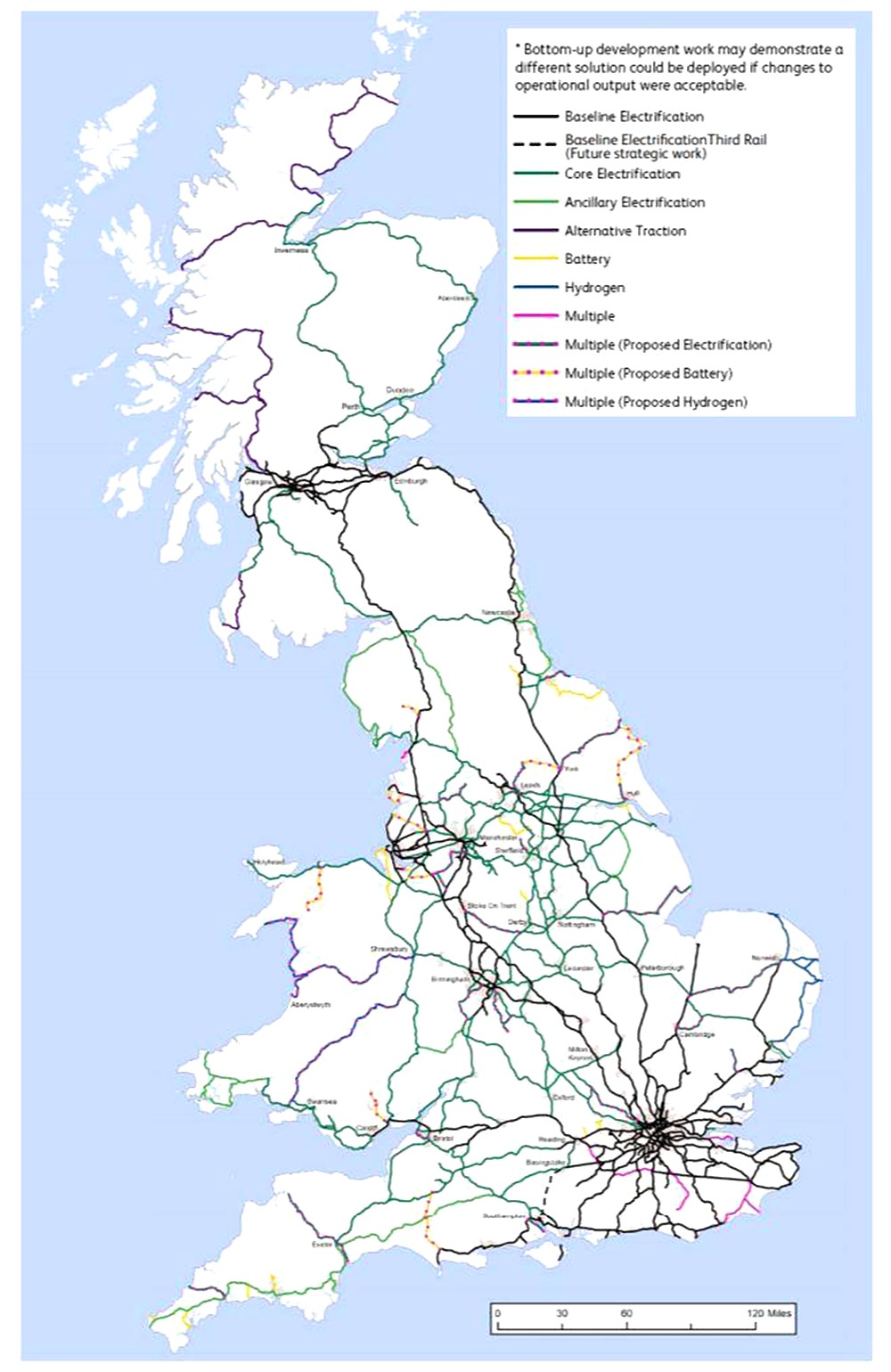
There are 15,400 track-km of non-electrified lines in Great Britain. The technical and cost factors of electrification, hydrogen fuel cells, and batteries were used to develop a decision tree to establish the best option for each line. For example, electrification may have a high capital cost, but hydrogen and batteries are unsuitable for freight services and long-distance high-speed commuting.
The decision tree resulted in proposing battery operation on 400 track-km, hydrogen on 900 km, and the electrification of 11,700 km. The remaining 2,400 km had no clear technical choice. Upon further economic and operational analysis, the recommendation was for an additional 400 km of battery, 400 km of hydrogen, and 1,340 km of electrification. That leaves 260 km of line with no clear decision made.

The best way to execute this would be through a stable and efficient, 30-year program of electrification. Mr. Paul McMahon, the Network Rail managing director system operator, said:
Carrying out this work in a way that is efficient and represents the best possible value for money is essential. This strategy shows that the best way of doing this includes a long-term, stable, and efficient program of electrification which will last for at least 30 years, alongside the introduction of new technology. If we can do this, I am confident that rail will play a vital role in helping build Britain back better and achieve the government’s commitment to achieving net-zero by 2050.
Installing 450 track-km of electrification yearly is within the means of the supply chain’s capability. Stability and commitment to the plan will be crucial to success and ensure that jobs are retained, and no additional training is needed.
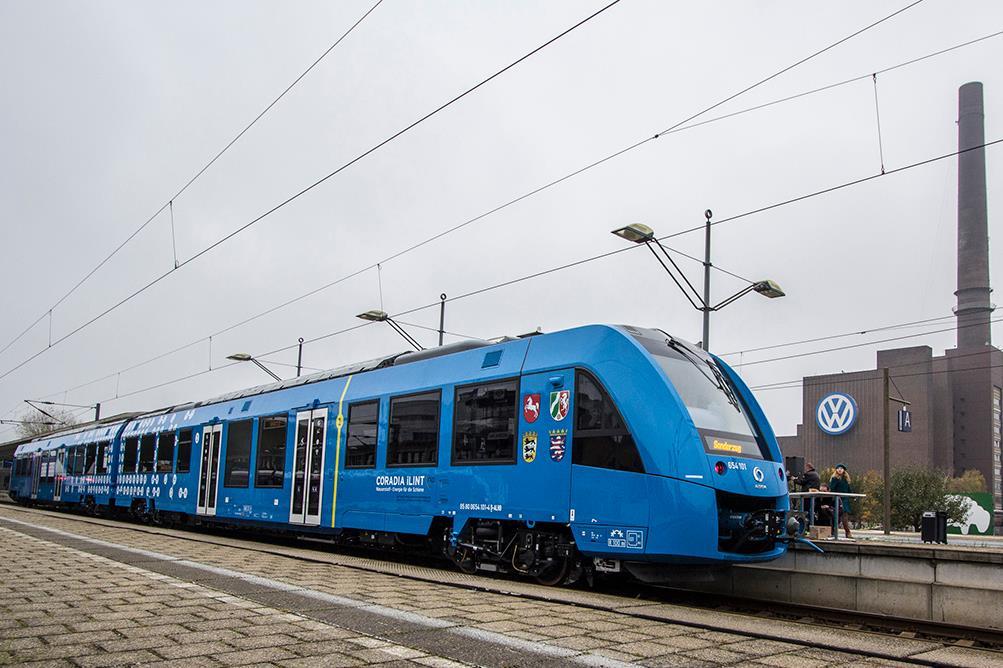
Between 3,600-3,800 new electric trains will be required, and between 150-200 new hydrogen and battery trains too. And around 650-700 new freight locomotives that are a mixture of electric and multi-mode vehicles. No new diesel-only trains should be purchased unless they can be converted to zero-carbon alternatives later on – or if there’s an apparent strategic and economic reason to do so.
David Clarke, Railway Industry Association Technical Director, said:
The strategy is very positive, setting out a clear case for the electrification of intensively-used passenger and most freight lines, with the decarbonization of other routes through zero-carbon technologies.
He called for government support to begin electrification and deploying low-carbon trains immediately – without waiting for the final strategy to be published.


