
Carbon dioxide is the fourth most abundant stable gas in the atmosphere after nitrogen, oxygen, and argon. Although, because of humanity’s reckless consumption, the carbon dioxide is becoming too abundant; plus, the fact that it is so stable makes it a bit complicated to work with.
There’s good news! A crew of researchers has discovered a new catalyst that can break carbon dioxide into useful chemicals cheaper, quicker, and more efficiently than the usual method used today. It could usher in a mode of economically converting carbon dioxide into fuels. The study has been published in PNAS.
Those fuels can then be used instead of dirty fossil fuels, which only create more carbon and are accelerating climate change. Fuels made of carbon dioxide extracted from the air fit into the idea of a circular economy where everything used is part of a closed-loop system. With this in mind, many chemists around the world are diligently working on ways to turn CO2 into useful products.
The only way to make it economical to suck it out of the air is if it can be put to use and sold as things people need. The part the chemists are having a hard time with is that the molecule CO2 is happy on its own and doesn’t react easily with anything else.
The best technique they’ve come up with so far is to electrochemically break CO2 into fragments that will then chemically react. However, this technique uses platinum as a catalyst, which is a costly and rare metal.
The new catalyst that has been discovered is not rare and can replace platinum, making the process incredibly less expensive. The team responsible for finding it was led by Yongtao Meng, a former University of Connecticut graduate student in the lab of Institute for Materials Science and now a researcher at Stanford University, and Director Steve Suib. They came up with a better way to do it too!
How They Did It
- The team forged an electrochemical cell which they filled with a porous, foamy catalyst made of iron and nickel – both metals are abundant and cheap.
How It Works
- When carbon dioxide gas penetrates the electrochemical cell, a voltage is applied.
- The catalyst within the cell aids the CO2 in breaking off one oxygen atom. What’s left is CO (carbon monoxide, which is one carbon atom with one oxygen atom) and a free oxygen atom.
- The carbon monoxide is separated and can be used for many things. It is a very reactive and useful precursor for making all sorts of chemicals, including fuels like gasoline and plastics.
The electrochemical cell that uses this new nickel-iron catalyst is not only cheaper, but it’s also more effective with an almost 100% efficiency rate! Suib said:
It’s almost unheard of. Typically, in a good system, you’ll get 90 to 95% efficiency, but it might not be stable, might not work at the same low voltage or might not be cheap. This process has all of that.
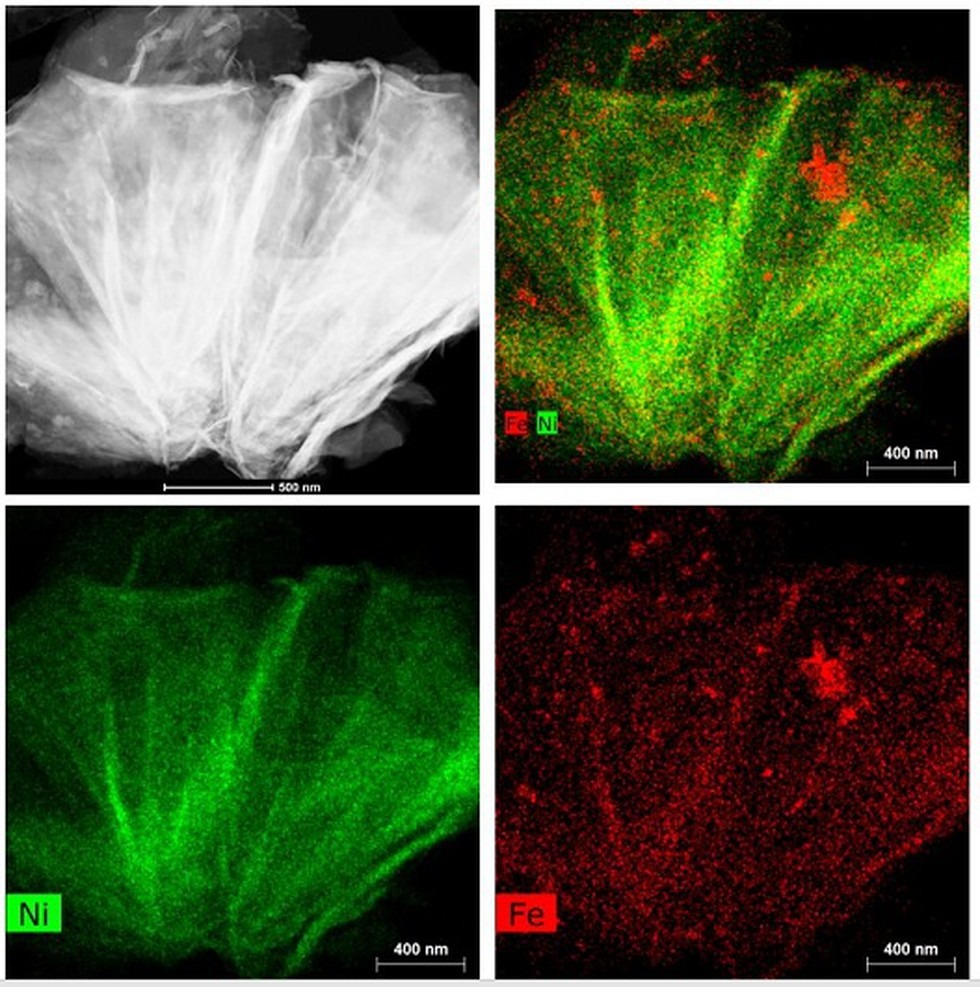
Furthermore, the lab analyzed the used nickel-iron catalyst to check on durability and see if it could be reused. They scanned it with transmission electron microscopy to map cross-sections and found the catalyst was intact and did not degrade from use.
The next phase of their study will be to see if they can scale up the process. If the catalyst can be made in bulk, the researchers will test it under industrial-like situations. For example, power plants that produce vast amounts of carbon dioxide as a waste product.


