
Across Africa and Latin America, millions of entrepreneurs manage profitable microbusinesses and maintain steady capital flows, yet they remain invisible to traditional credit systems. The issue is not a lack of income. It is a lack of visibility.
Documented financial channels serve as the foundation for growth, as global account usage data consistently demonstrates that verifiable money movement makes it easier to prove stability and qualify for services. Examples of this emerging visibility include:
- Market Vendors in Lusaka: Receiving daily mobile payments from repeat customers.
- Small Exporters in Mexico: Invoicing international buyers on a monthly schedule.
- Freelance Designers in São Paulo: Collecting immediate payments via instant transfer systems.
These entrepreneurs generate tangible economic value, yet without a formal credit history, they traditionally remain “thin file” or “no file” borrowers.
That gap is beginning to close. As digital payment systems expand, transaction trails are becoming verifiable financial records. As open finance frameworks mature, those records can be shared securely and with consent. And as cross-border payment rails reduce friction, informal trade becomes measurable and therefore financeable.
The result is a new model of credit building. Instead of relying solely on past loans, lenders can increasingly assess real cash flow activity.

The Reality of Financial Inclusion: Measuring Credit Access Without Traditional Scoring
Build Credit Without a Credit Score: Key Facts About Digital Payments, Open Finance, and SME Access
- Instant payment systems are gaining significant momentum, with recent transaction data revealing that Africa processed 64 billion transactions worth nearly $2 trillion in 2024 across 31 countries.
- Digital retail payment initiatives are actively reducing friction in regional trade, as seen in the pilot platform between Malawi and Zambia designed to support local-currency settlement.
- Strategic funding is accelerating digital adoption for small businesses, evidenced by a significant 2025 grant committed to improving micro-business payment implementation.
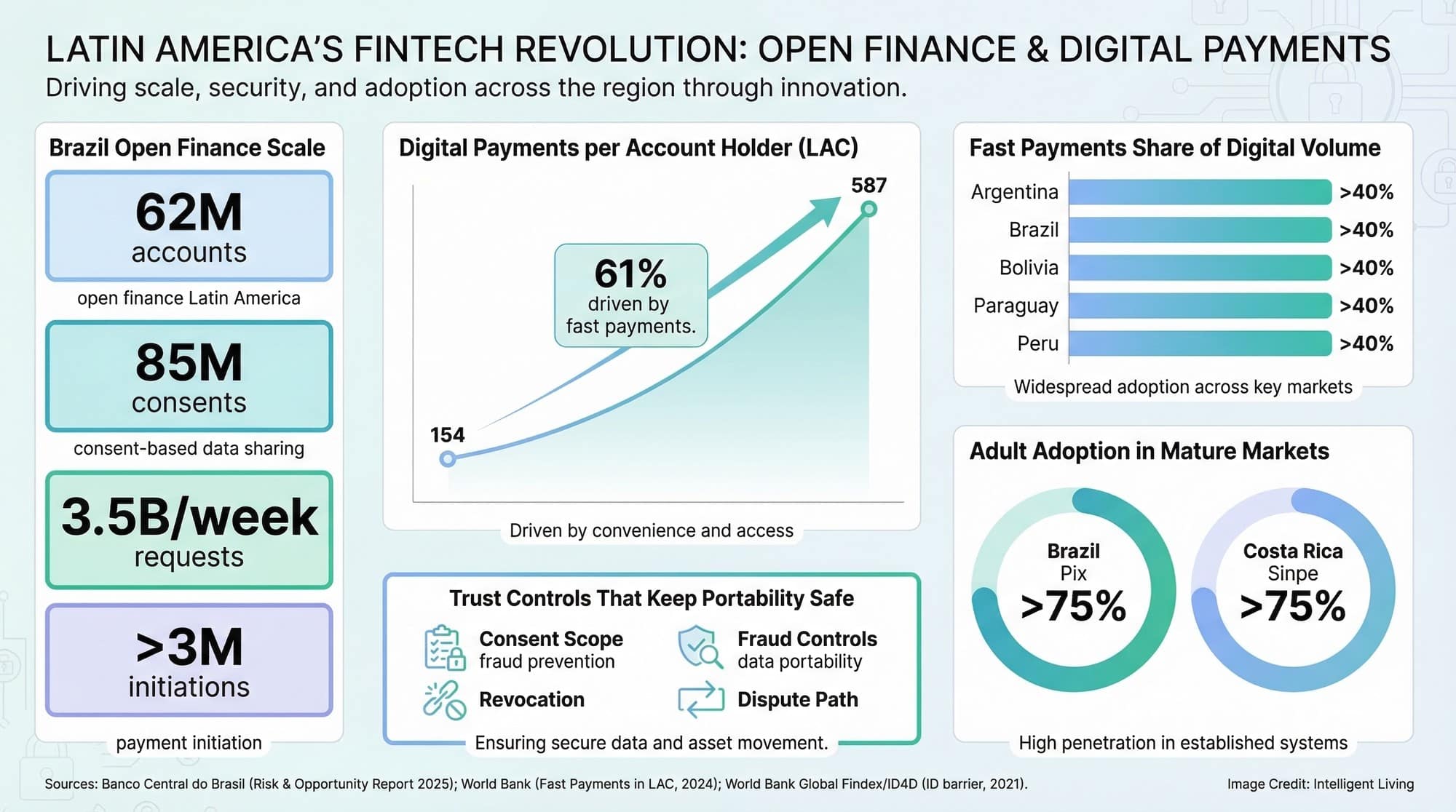
- Open finance ecosystems are scaling rapidly, with the brazil central bank’s 2025 financial stability report highlighting over 62 million authorised accounts and billions of weekly data requests.
- Addressing the IFC estimate of the SME finance gap remains a priority, as developing countries face an estimated $4.5 trillion shortfall in accessible capital.
These signals represent a fundamental structural shift, moving far beyond the scope of isolated pilot programmes.
The Credit Paradox: Real Cashflow, No Formal History
Conventional credit scoring relies heavily on historical borrowing. In regions dominated by cash-based or informal commerce, countless individuals never establish a formal profile, leaving them statistically invisible.
Structural data gaps often lead to exclusion, as research on credit-invisible consumers shows that individuals are marginalised not by unreliability but by a lack of recorded history. In a credit-score world, the impact of personal loans is part of the feedback loop between borrowing and scoring. In environments where borrowing itself is inaccessible, that loop never starts. The result is exclusion by absence.
When a shop owner in Nairobi pays rent, inventory suppliers, and utilities consistently for years, the activity remains invisible to lenders unless it is digitised. This creates a systemic gap where real-world financial discipline fails to leave a formal, documentable trace.

Converting Transaction Data into Underwriting Evidence: The Future of Digital Credit
The Credit Passport: How Digital Payments Become Underwriting Evidence
Digital payments fundamentally reshape credit access by establishing a permanent, verifiable history of economic activity. Every interaction within a digital ecosystem generates a distinct financial signal. Shifting away from cash allows business owners to create a verifiable transaction history through multiple channels:
- Mobile Money Transfers: Capturing high-frequency, peer-to-peer and business activity.
- Instant Bank Transfers: Providing real-time settlement data for larger commercial transactions.
- Digital Invoices: Offering granular details on supply chain relationships and buyer behaviour.
- Merchant Payments: Tracking daily revenue and customer retention patterns.
Digital footprints serve as the building blocks for alternative credit scoring, allowing lenders to see the health of a business without relying on paper statements.
Evaluating Creditworthiness with Alternative Data
Modern lenders utilise alternative-data lending models to assess creditworthiness through electronic invoices and transaction records, bypassing the need for traditional bureau files. Instead of asking whether someone repaid a previous loan, lenders can analyse whether revenue is steady, whether expenses are predictable, and whether incoming payments show repeat customer patterns.
Ownership of a formal account frequently facilitates formal saving and borrowing, providing a critical gateway to deeper financial services as digital payment adoption scales.
Expanding Visibility through Mobile Money Records
Specific business activities now provide the verifiable proof lenders require to expand their reach:
- Predictable Revenue Patterns: A tailor receiving digital payments from wholesale buyers every two weeks establishes a clear income cycle.
- Verifiable Payroll Footprints: A logistics operator paying drivers through instant rails creates a documented history of operational scale.
These data points represent tangible economic behaviour, offering a grounded alternative to the theoretical assumptions of traditional lending models.
Mobile money platforms are creating a massive digital record, with recent industry data showing that customers paid over $100 billion to merchants via mobile money in 2024. As more transactions shift from cash to interoperable rails, more economic lives become legible to financial institutions.
What Data Actually Moves the Needle (And What Does Not)
Not all digital activity improves credit access equally.
Revenue Stability and Frequency
Lenders prioritise consistency in cash flow. Weekly deposits of a similar magnitude suggest a steady and recurring income stream. Conversely, seasonal spikes followed by extended periods of inactivity often signal higher risk. To mitigate this, managing irregular income is essential for making a cash flow trail more readable and attractive to underwriters.
Customer Concentration
Fragility may appear if one buyer accounts for 90 per cent of revenue. If revenue is diversified across many payers, the profile looks more resilient.
Payment Behaviour and Timeliness
Outgoing digital payments matter as well. Regular supplier payments and utility settlements suggest operational discipline.
Data that Often Misleads
High transaction volume alone is not proof of profitability. A food stall processing many small payments might still operate on thin margins. Without cost data or invoice context, volume can exaggerate perceived strength. Fintech credit scoring research indicates that while machine learning can predict performance, data quality and model governance remain critical to success.
For small businesses, improving invoicing practices can increase clarity and strengthen underwriting assessments, while automated billing workflows reduce manual errors that break the trail.

Scaling African Commerce: Interoperable Payment Rails and Cross-Border Settlement Growth
Africa’s Instant Payments Momentum: The Data Trail is Scaling
Africa’s instant payment landscape has expanded rapidly. Regional benchmarks confirm that 36 instant payment systems across 31 countries processed 64 billion transactions worth nearly $2 trillion in 2024.
Benchmarking Transaction Volume Across Systems
Recorded economic activity is represented by each transaction within this massive scale. When a farmer receives digital payment for produce, when a retailer pays a distributor through an interoperable rail, or when a gig worker receives instant settlement, those events become data points.
Navigating Barriers to Digital Adoption
Success in transforming raw transaction volume into actionable credit opportunities depends entirely on overcoming these systemic hurdles. The SIIPS findings highlight persistent hurdles that slow adoption:
- Fraud Risk Concerns: Fear of irreversible digital errors or scams remains high among new users.
- Digital Identity Gaps: A lack of recognised ID prevents many from linking transactions to a formal profile.
- Uneven Access: Infrastructure availability varies significantly between urban centres and rural townships.
Infrastructure development must be paired with trust, as reducing banking wait times through technology is only effective if users feel the system is secure and reliable.
In a small township market, a merchant who once feared digital transfers after a failed transaction may hesitate to rely entirely on instant payments. Trust determines adoption as much as infrastructure does.
Cross-Border Rails: Making Informal Trade Bankable
Cross-border trade within Africa and Latin America has historically relied on correspondent banking chains, multiple currency conversions, and significant fees. For small businesses, these frictions can erase margins.
Implementing the COMESA Digital Retail Payments Platform
The regional clearinghouse infrastructure has advanced its Digital Retail Payments Platform (DRPP) into user trials on the Malawi-Zambia corridor, aiming to ease cross-border retail payments and facilitate trade using local currencies.
New policy frameworks and operating guidelines emphasise that governance and usability are treated as part of the core infrastructure rather than an afterthought.
Harmonising Local Currency Settlement Workflows
Achieving lower transaction costs is a primary objective, mirroring the global sustainability goals for efficient capital transfer.
Afreximbank’s Pan-African Payment and Settlement System has similarly expanded participation, using standardised ISO 20022 messaging to make local-currency cross-border payments more operationally realistic. Understanding ACH clearing and settlement helps clarify how cross-border rails can cut steps and reduce delays.
Open Finance and the Trust Layer: Data Portability Without New Risks
Open Finance: Turning a Payment Trail Into Better Offers
Digital payment data alone does not guarantee better credit. It must be shareable. Open finance frameworks allow individuals and businesses to grant permission for financial institutions to access their transaction data securely through standardised interfaces.
Advancing Portability in the Brazilian Ecosystem
The Brazilian open finance framework has scaled data-sharing consents into the tens of millions, creating a practical portability layer for lending and payments. Small entrepreneurs can allow competing lenders to review verified transaction history without physically delivering paper statements. Lenders can then price loans more accurately based on real cash flow rather than assumptions.
Solving Implementation Obstacles in Latin America
Research on regional open finance challenges notes that while the opportunity is significant, success depends on consistent enforcement of technical standards and consumer protection.
An independent café owner in Rio who once relied on informal borrowing may now compare offers from multiple institutions. The data travels with the business, not locked inside a single bank relationship.
The Trust Layer: Fraud, Identity, Consent Fatigue, and Bad Models
Infrastructure development alone cannot guarantee user trust. In the high-speed digital payment landscape, several critical factors must be managed to maintain confidence:
- Persistent Fraud Threats: Constant risks often overshadow technological gains, making network tokenisation and multi-factor checks essential for daily commerce.
- Operational Vulnerabilities: Merchants must avoid excessive chargebacks, which can trigger processor risk lists and terminate access to payment tools.
- Consent and Engagement: Meaningful participation requires clear explanations to prevent consent fatigue in open finance systems.
Safeguarding Systems Against Fraud and Identity Gaps
When users perceive a high risk of irreversible errors or sophisticated scams, their willingness to adopt new systems naturally declines. Proactive mobile device security is essential for staying bankable in a digital system. Gaps in identity coverage frequently block full participation, as merchants without a recognised digital ID cannot easily link their transaction data to a verifiable financial profile.
Balancing Consumer Consent and Algorithmic Fairness
Poorly calibrated algorithms frequently misinterpret seasonal income or penalise the irregular cash cycles typical of agriculture, unintentionally reinforcing systemic exclusion. Maintaining compliance and security is vital in the era of personal data flows. Avoiding common data security mistakes is part of keeping a digital financial identity intact.

The SME Strategy Guide: Proven Steps to Build a Transaction Reputation From Zero
For individuals and small businesses seeking to improve access to formal credit, several practical steps can strengthen visibility.
Digitise Core Income Streams
Consolidating your revenue into a single, consistent channel helps lenders distinguish meaningful patterns from random financial noise. This practice is often the fastest way to build credit without a score, as it provides a clear and unfiltered view of your business’s financial health.
For a street-food vendor adopting QR-based mobile payments, the immediate reward rarely arrives as a loan offer; instead, the first real gain is the sudden clarity of simplified bookkeeping. After a few weeks, the history shows peak hours, repeat customers, and average ticket size, which are the building blocks of cash flow-based lending.
Maintaining a readable transaction trail is essential for long-term creditworthiness. Entrepreneurs should prioritise the following actions:
- Consolidate Business Inflows: Use a single primary account for all business revenue while maintaining a secondary option for system outages.
- Document Supply Chains: Request digital receipts for all supplier settlements to prove expense management.
- Preserve Liquidity Visibility: Minimise large cash-outs that erase your stable balance and make income appear erratic to underwriters.
Consistent adherence to these habits ensures your digital reputation remains intact and attractive to formal financial institutions.
Implementing mobile app security best practices reduces the risk of account takeovers that can disrupt a clean payment history.
Keep Invoices Structured and Consistent.
Electronic invoices with clear dates, amounts, and counterparty information improve data clarity. The goal is to create records that can be matched to deposits and deliveries without guesswork.
Strategic electronic invoicing initiatives in Latin America have been linked to stronger compliance and lower informality. A useful invoice format includes an invoice number, issue date, due date, currency, item description, and the buyer’s legal name.
Separate Personal and Business Flows
Most entrepreneurs find that a simple weekly routine provides sufficient protection: matching deposits to open invoices, verifying supplier settlements, and scanning for any unexplained debits or reversals. This separation also supports the creation of accurate financial statements that lenders can interpret with greater speed and accuracy.
A simple separation, even with a basic sub-account, helps lenders see operating cashflow, owner draws, and inventory costs as distinct signals. If personal spending and business payments constantly mix, the same week can look both profitable and unstable depending on which transactions get counted.
Use Consent Thoughtfully
In open finance environments, authorise data sharing only with trusted institutions and review permissions regularly. The most useful approach is specific consent for a specific purpose, such as sharing recent transaction history for a loan offer, rather than open-ended access.
Consent management works best when people can see what is being shared and turn it off without friction. Secure consent management dashboards are treated as core consumer protections in mature open banking systems. A café owner who authorises one lender to review the last 90 days of sales can still keep supplier pricing or personal transfers out of scope.
Monitor for Errors
Check transaction histories for inaccuracies and use available dispute processes. A clean transaction record is only helpful if it stays clean, and small errors can snowball when they are copied into underwriting systems.
Merchants must proactively track refund and chargeback patterns, as high ratios in these areas can lead to payment tool restrictions. Maintaining a low dispute rate is a critical component of a healthy digital reputation. When an offer appears, clarifying standard loan terms helps prevent a clean approval from turning into a costly surprise.
Consistency and documentation are what turn behaviour into usable proof, mirroring mortgage-ready credit improvement strategies.

What Comes Next for Digital Credit and Payments Infrastructure?
What is Next: Where This Trend Breaks Through and Where it Stalls
Accelerated adoption of these systems occurs most effectively when three specific strategic conditions align. First, interoperable payment rails reduce cost and increase speed across borders and institutions. Second, open finance frameworks standardise secure data sharing and enforce consumer protections. Third, regulators prioritise fraud mitigation, identity coverage, and clear liability rules.
It is likely to stall where costs remain high, systems are fragmented, or governance lags behind innovation. The G20 cross-border payments consolidated report notes that global improvements for end-users remain limited and that meeting the 2027 timetable is unlikely without faster implementation.
How Digital Payments and Open Finance are Redefining Credit Access Worldwide
Establishing credit from zero no longer necessitates a multi-year wait for a traditional bureau file to mature. This shift is critical given that the MSME finance gap in emerging markets remains measured in the trillions. Across markets where digital infrastructure continues to scale, economic behaviour manifests as a measurable asset in entirely new ways.
When transaction trails become shareable through open finance and reinforced by cross-border settlement rails, informal commerce moves closer to formal finance. This transformation is far from automatic or guaranteed; its success hinges on the strength of digital trust, robust governance, and the application of fair modelling practices.
Millions of entrepreneurs who once operated without formal recognition now have the opportunity to turn everyday payments into a robust financial identity, representing a permanent structural shift in access to opportunity.

Frequently Asked Questions About Building Credit with Digital Payments and Open Finance
How Can I Build Credit Without a Traditional Credit Score?
Lenders can assess alternative data such as transaction records, verified invoices, and digital payment history to evaluate your creditworthiness. While this method supplements existing bureau files, it provides a vital entry point for “thin-file” borrowers to demonstrate financial discipline through real-time cash flow.
What Sets Open Banking Apart from Open Finance Frameworks?
Open banking typically focuses on permissioned sharing of bank account data between institutions. Open finance expands this model to include a broader ecosystem of services, and the OECD’s open finance policy considerations provide insights into how these frameworks protect consumers while enabling data portability.
How Do Cross-Border Rails Benefit Emerging Market SMEs?
These specialised infrastructures minimise settlement delays and reduce the hidden layers of currency conversion costs. By documenting international trade flows, cross-border rails turn informal commerce into a verifiable revenue trail that lenders can analyse for risk assessment.
What Are the Primary Risks of Using Alternative Data in Credit Models?
Poorly calibrated algorithms or weak consumer protection standards can lead to unintended financial exclusion. Ensuring data quality and maintaining transparent governance are essential to prevent biased modelling and to safeguard user privacy in high-speed digital environments.


