
Some drugs can become toxic as they sit on the shelf or in the body. So, it would be wise if you didn’t assume they’re safe because they’ve been tested before becoming a prescription drug in the pharmacy.
The culprit is N-nitrosodimethylamine (NDMA), a probable carcinogen found in food, chlorinated water, and certain drugs in trace amounts. So, the Food and Drug Administration (FDA) set an acceptable level of NDMA to under 96 nanograms (ng) in each pill to minimize exposure. But over the past few years, the agency has had to initiate recalls for diabetes, heartburn, and hypertension drugs to protect the public after finding excessive amounts of NDMA in them.
The recalled products had been contaminated with NDMA during the manufacturing process, so the FDA laid out recommended best practices for manufacturers to minimize the risk going forward. But the problem hasn’t ended there. Emerging evidence suggests that NDMA can manifest as some pills sit on the store shelf or medicine cabinet or after a person swallows it. In this case, there’s no way to test for its presence, and it shows up as negligible in the factory.

C. Michael White, Pharm.D., wrote in an article published on The Conversation:
I am a pharmacist and distinguished professor who has written extensively about manufacturing issues and FDA oversight associated with both drugs and dietary supplements in the past, including the issue of NDMA contamination. In a new article, I discuss how NDMA can end up in a patient’s medication if it wasn’t put there during its manufacture.
Mr. White says NDMA levels creep up after manufacture. He gave the example of Ranitidine (Zantac), a commonly used ulcer and heartburn over-the-counter and prescription medication available for decades which the FDA recalled on April 1, 2020.
He said:
It (Zantac) may now be the canary in the coal mine for the post-manufacturing creation of NDMA.
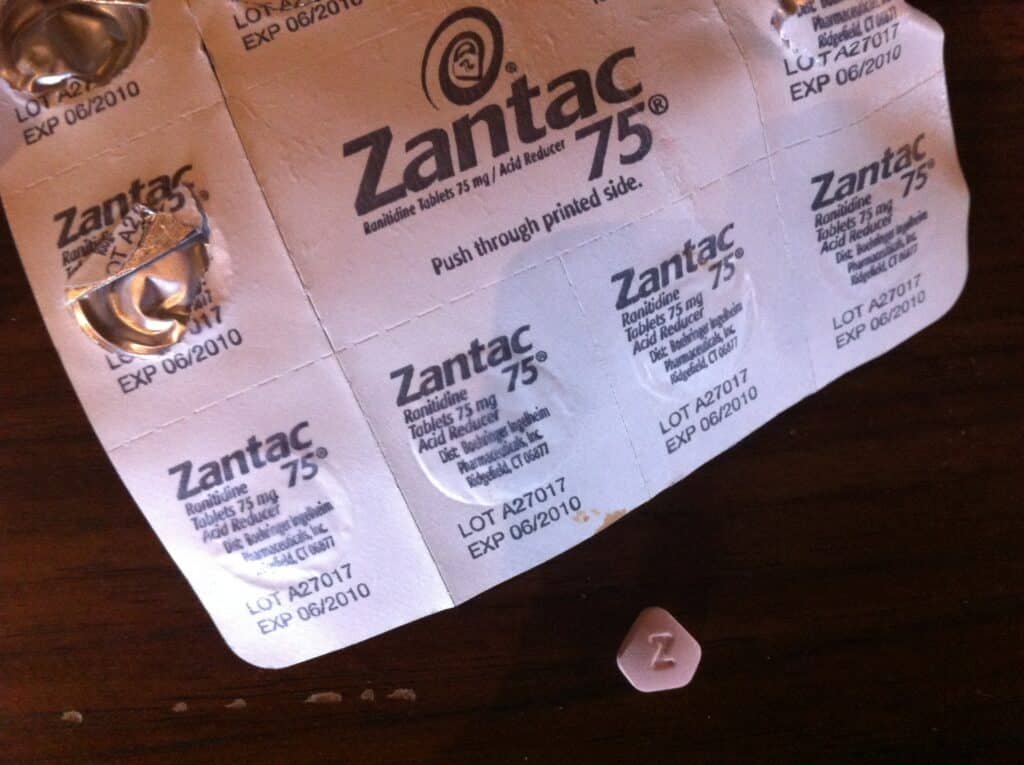
In one study, the researcher found just 18ng of NDMA in the drug after it was manufactured. But if it was stored for 12 days at 158°F (like if the medicine was left in a scorching car), the NDMA dosages rose above 140ng. Granted, it’s only slightly higher than the 96ng limit deemed safe by the FDA, but this increase happened in less than two weeks.
In another study, the researchers found that storing Zantac in conditions exposed to high humidity or high temperatures enhanced the creation of NDMA over time.
These findings suggest that some drugs can leave the manufacturing factory with a safe amount of NDMA only to exceed the acceptable limit by the time they’re consumed.
In yet another study, researchers simulated the stomach environment. They found that when Zantac was exposed to an acidic environment paired with a nitrite source, these chemicals could create over 10,000ng of NDMA. These findings support a clinical study in which ten adults provided urine samples before and after using Zantac. The samples from after contained NDMA doses of over 40,000ng.
Mr. White stresses that more studies need to be done right away to determine which other drugs this is happening. “It is always better to be safe than sorry,” he said, “particularly when dealing with a possible carcinogen.”


