
Imagine a world where polluted water turns into clean fuel and refreshing drinking water, all powered by the sun. Cutting-edge hybrid photothermal-photocatalyst technology has made this exciting reality possible; it is not a scene from a science fiction movie. Researchers at the University of Cambridge have developed this revolutionary invention, marking a significant leap in both the renewable energy and water purification sectors.

Harnessing the Sun for a Cleaner, Brighter Future
At the heart of this innovation is a question: how can we use the abundant solar energy that bathes our planet each day to address the pressing challenges of water scarcity and clean energy? This hybrid technology offers a promising solution by performing dual duties—producing hydrogen fuel and purifying water simultaneously—using only sunlight. This innovative combination of nature-inspired engineering and sustainable technology has the potential to revolutionize our understanding of energy and resources, as reported by.
Join us as we dive deeper into the science behind this technology, explore its current applications, and ponder its social, economic, and environmental implications. Together, we aim to uncover how hybrid photothermal-photocatalyst sheets not only promise a brighter future with sustainability at its core but also pave the way for a world where clean energy and water are accessible to all.

Background on Photothermal-Photocatalyst Technology
The Science Behind the Innovation
At its core, the hybrid photothermal-photocatalyst technology harnesses solar energy much like plants do during photosynthesis. Photocatalysis involves using sunlight to initiate chemical reactions, while photothermal processes convert solar light into heat. These two concepts, when combined into a single efficient system, unlock incredible potential for sustainable practices.
Here’s how it works: The system uses a floating sheet composed of a unique material that absorbs sunlight. The system features a photocatalyst on one side, a unique substance that accelerates chemical reactions without consuming itself. When sunlight strikes this catalyst, it splits water molecules into hydrogen and oxygen. This hydrogen can then be collected and stored as clean fuel. On the other side, the system uses photothermal processes to purify water by evaporating contaminants, which ensures that the resulting water is clean enough for consumption. This means that, simultaneously, the device provides fresh water and renewable energy.
A Leap from Past to Present
The journey to this technology is one filled with trial-and-error, built upon decades of scientific exploration in solar energy utilization and photocatalysis. The reliance on clean water sources, which isn’t feasible for much of the developing world, limited previous attempts to create artificial leaves—devices that mimic the natural process of photosynthesis. However, this new device uniquely functions with polluted or seawater, opening the floodgates to broader applications.
The innovation extends the use of the solar spectrum, making use of parts of the light spectrum that other solar technologies may ignore. This efficiency, which captures both ultraviolet and other light wavelengths, maximizes the use of available sunlight to drive the water-splitting and purification processes. As a result, it represents a truly remarkable leap forward, giving life to devices that are more adaptable and robust against water pollutants.
This exciting leap in technology opens doors to a future where sustainability doesn’t just limit itself to small-scale devices but can expand to industrial levels, potentially redefining resource management across the globe. By addressing both energy and water needs with one solution, hybrid photothermal-photocatalyst sheets are a perfect example of how tackling two problems at once can lead to a greener, more sustainable planet.

Current Innovations and Applications
Hybrid Sheets at Work
The hybrid photothermal-photocatalyst sheets signify a novel frontier in utilizing solar energy. These sheets convert sunlight into two essential resources: clean hydrogen fuel and purified water. Imagine placing a device on a lake or an ocean and using the sun’s power to split water molecules through a process called photocatalysis. This process involves using photocatalysts, which are substances that accelerate chemical reactions under the influence of light. Simultaneously, excess sunlight heats the water, assisting in its purification by evaporating impurities.
The genius of these floating devices lies in their multitasking capability. Through a carefully designed structure that floats atop water, they get the most out of the sunshine received. They integrate a UV-absorbing layer to drive hydrogen production and a photothermal layer to manage effective water vaporization. By repelling water through smart material engineering, these devices prevent impurities from disrupting the photocatalyst layer’s efficiency. This unique setup makes it possible to use solar power for both catalyzing energy generation and purifying water effectively.
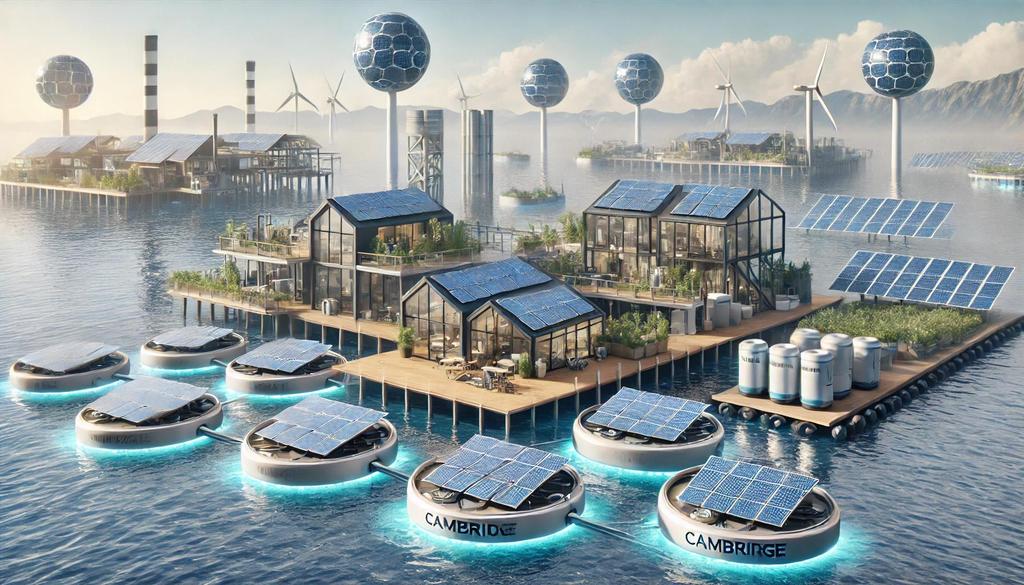
This design holds immense potential for areas with limited access to clean water and energy. It allows scalable solutions wherein entire communities can rely on floating devices for crucial resources. They are particularly convenient for remote or off-grid regions, providing essential services autonomously without a need for complex infrastructure. With real-world tests underway in various locations, such as the highly polluted waters of the River Cam in Cambridge, these devices are showing promising results.
Global Case Studies
Various parts of the world, each with unique environmental challenges, are testing the technology. For instance, the floating devices have delivered impressive results in locations that traditionally struggle with clean water access. Regions grappling with water pollution are witnessing firsthand the transformative power of these hybrid sheets in providing essential resources.
The versatility of this innovation is what sets it apart. It’s not just about theoretical potential; it’s about tangible benefits visible today. Researchers have tested prototypes in places like Southeast Asia and Africa, where access to clean energy and water is a persistent issue. These sheets have demonstrated their capability to operate effectively on modest scales in areas plagued with resource scarcity.
Moreover, countries like China and the European Union are at the forefront, integrating such technologies within broader efforts to transition to greener energy solutions. China, for example, is heavily investing in hydrogen technology as part of its environmental and economic strategy, constructing hydrogen fueling stations that leverage both local technological development and imported expertise.
These real-world applications underscore a growing global collaboration to adopt and benefit from these innovative solutions, addressing both the current needs and the anticipation of future demands in an environmentally friendly way. Each success story adds momentum to the adoption of hybrid photothermal-photocatalyst technology, showcasing its practicality, adaptability, and promise for creating a sustainable world.

Social and Economic Implications
Impact on Water Scarcity
The hybrid photothermal-photocatalyst technology is much more than a scientific triumph; it has profound implications for some of the world’s most pressing humanitarian challenges. Today, about 2.2 billion people lack access to safely managed drinking water services. This innovative solution offers a lifeline, particularly to arid regions and developing countries where water scarcity is a dire problem.
By exploiting the direct conversion of solar energy into clean water, these devices reduce reliance on traditional water sources and energy-intensive purification methods. In regions like sub-Saharan Africa and parts of Asia, where infrastructure is either lacking or unable to meet the needs of growing populations, the implementation of such technology could mean accessible, clean water for millions.
Moreover, this technological leap can alleviate the burdens associated with transporting and purifying water in remote areas. Instead of relying on contaminant-prone local water sources or costly bottled water, communities can directly derive fresh water using these efficient, solar-driven systems. This not only bolsters community health and sanitation but also facilitates greater educational and economic participation by reducing the time and labor traditionally spent on water collection.
Energy Independence and Economic Growth
Harnessing solar energy to generate hydrogen fuel presents an opportunity for countries to redefine their energy landscapes. Hydrogen, when produced sustainably, serves as a critical energy carrier with enormous potential to power industries, transport sectors, and day-to-day energy needs without emitting greenhouse gases during use.
Countries like China and regions within the European Union are already leveraging this potential by integrating hydrogen technologies into their energy strategies. China’s aggressive push toward building hydrogen refueling stations by 2025, with expectations of integrating hydrogen into public transportation, underscores its strategic vision to reduce fossil fuel dependency and improve air quality in urban areas.
On the economic front, investing in this dual-purpose technology could spur job creation across multiple sectors. From research and development to manufacturing and maintenance, the ripple effects through economies could be substantial. These investments are not only environmentally prudent but fiscally advantageous as they pave the way for new industries and innovative market solutions that contribute to gross domestic product growth.
Future Use Cases and Innovations
Vision for a Sustainable Future
Looking ahead, the potential uses of hybrid photothermal-photocatalyst technology extend far beyond what is currently being explored. The synergistic use of solar-driven systems in tandem with other renewable energy sources like wind or geothermal energy could lead to unprecedented levels of efficiency. Imagine self-sustaining, off-grid communities that can independently manage their water and energy needs without impacting existing power grids adversely.
One of the most promising frontiers involves integrating this technology with emerging desalination innovations that operate without electricity. Techniques like thermodiffusive desalination (TDD), which also reduce energy needs significantly, could complement hybrid devices to create robust, eco-friendly water and energy solutions globally. This hybridization promises further reductions in greenhouse emissions while enhancing water security.
Global Collaborations and Policy Shifts
Achieving widespread use of this technology requires comprehensive policy frameworks and international cooperation. Leaders must look beyond borders and embrace collective efforts, much like the global endeavors witnessed with carbon capture initiatives. The establishment of hydrogen hubs, as seen in the U.S. under the Biden administration, presents a model for how cross-sector and cross-boundary cooperation can achieve significant strides in sustainable technology deployment.
Policymakers should focus on creating incentives for private sector involvement, facilitating research and development, reducing bureaucratic hurdles, and promoting environmental awareness. Collaborations among governments, academic institutions, and industries are crucial to overcoming technological and logistical barriers, ensuring these advancements are accessible to all nations, regardless of their economic standing.
In essence, the path forward lies in innovation, integration, and inclusive global dialogue. With concerted effort, hybrid photothermal-photocatalyst technology could indeed revolutionize how we address humanity’s intertwined energy and water challenges, steering us toward a more sustainable and equitable world.

Solar-Powered Revolution: The Future of Clean Energy and Water Solutions
As we’ve journeyed through the world of hybrid photothermal-photocatalyst technology, it’s clear that this innovation embodies the essence of leveraging science and technology to meet humanity’s core needs sustainably. Imagine transforming the abundant power of the sun into twin solutions for two of our most pressing global challenges: the need for clean energy and safe drinking water. This isn’t just a technological leap; it’s a testament to human ingenuity and our capacity to look at problems from new, holistic perspectives.
At its core, this technology addresses water scarcity by turning contaminated water into potable resources and simultaneously producing green hydrogen fuel, a cleaner alternative that doesn’t contribute to air pollution. In doing so, it promises to alleviate the pressure on natural water resources, especially in regions where climate change exacerbates scarcity issues. By providing clean water and energy, it offers a lifeline to communities that currently depend on costly and polluting methods.
As countries around the world strive for energy independence and reduced carbon emissions, the potential of integrating hydrogen fuel created through such advanced technology is enormous. As more nations, like China and those in the EU, invest in hydrogen infrastructure, these hybrid sheets could help meet the growing demand for clean fuel.
Revolutionizing Economies: Impact of Hybrid Solar Technologies in the Circular Economy
Reflecting on the entire discourse of hybrid photothermal-photocatalyst technology, we see an emerging narrative of a sustainable and circular economy. Despite the technology’s infancy, its potential applications surpass current realizations. If aligned with supportive policies and global collaborations, it could transform entire economies by providing clean, reliable water and energy sources.
Moreover, the versatility of this technology in handling a range of water qualities and operability under minimal infrastructure requirements makes it adaptable to a variety of settings. From industrial use to improving household water access, its scope is vast and universally applicable, marking a significant stride toward making sustainable resources available to all—regardless of their geographic or economic circumstances.
Uniting for Sustainability: Collaborative Strategies Drive Global Adoption
The path ahead is one of collaboration and forward-thinking policy. By encouraging initiatives that blend innovation with traditional practices and fostering partnerships that cross both the public and private sectors, the potential reach of this technology could expand exponentially. Policymakers, scientists, industries, and communities need to form transnational partnerships to share knowledge, resources, and technologies. This is a call to action for stakeholders at every level to prioritize sustainable development, using hybrid technologies as a standard-bearer in the quest for global sustainability.
Future-Proofing Human Society: Solar-Driven Innovations Role in Global Sustainability
Looking to the future, the continuous advancement in this field holds the promise of a world where water and clean energy are accessible to all. As more research is conducted and as these technologies are refined and scaled, the day may come when issues of water scarcity and energy dependency are relics of the past. This innovation could pave the way for significant strides toward the United Nations’ Sustainable Development Goals, offering real solutions for climate action, clean water and sanitation, affordable and clean energy, and fostering partnerships for achieving these goals.
The promise of hybrid photothermal-photocatalyst technology is not just in its immediate functional capabilities but in its potential to harmonize technology with nature, crafting a path towards sustainable living. Let us embrace this momentum, ensuring that every breakthrough is a step toward a resilient and sustainable future for generations to come.


