
Pineapples are high in antioxidants, vitamins, and enzymes, making them one of the most nutritious fruits. However, pineapple harvesting produces tons of waste pineapple leaves, which are usually burned or left to rot. As a result, hazardous chemicals and greenhouse gases could be released, causing significant environmental issues. To address this issue, scientists have devised various methods for using pineapple leaf fibers.
In 2020, Associate Professor Duong Hai-Minh and his team developed an ultra-light, highly absorbent, biodegradable hydrogel made from upcycled pineapple leaves. These aerogels can be used to extend the shelf-life of fruits and vegetables and remove hazardous metals from wastewater, among other applications, when coated with certain chemicals.
According to the same team, pineapple leaves could also be used to absorb harmful fats from recently consumed foods in our digestive system. In a new study – led by Hai-Minh and Assoc Prof Phan Toan Thang – scientists from the National University of Singapore began by drying and crushing pineapple leaves collected as an agricultural waste product.
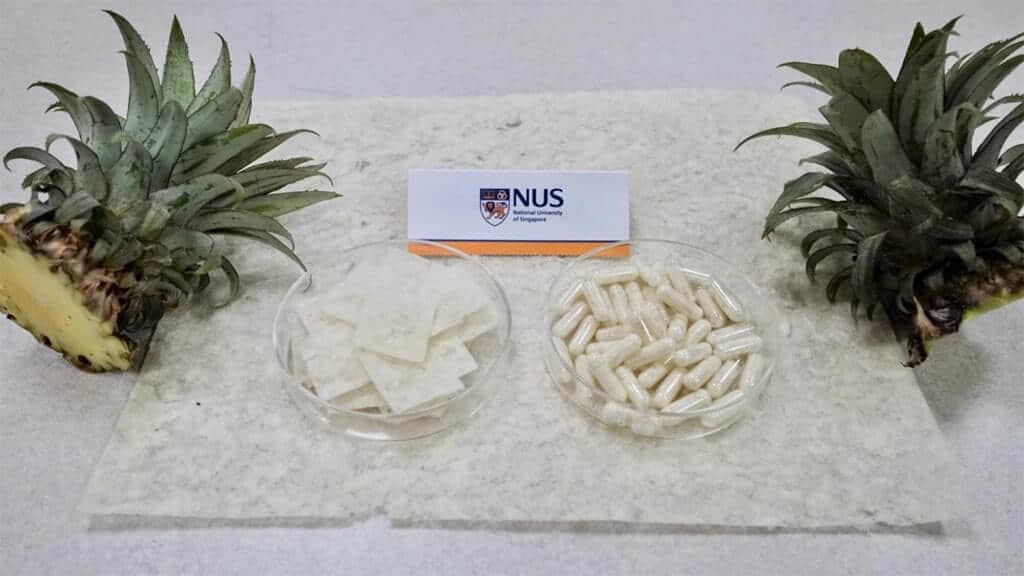
The resulting powder was capable of absorbing 1.6 oz (45.1 grams) of cooked fats when tested in a lab-based system that mimicked the acidic environment of the human digestive tract. Some powder was encapsulated, while others were pressed into thin crackers to make it easier to consume.
Phan Toan Thang explained:
“After ingestion, the capsule or cracker absorbs fatty compounds (such as animal fats) and forms fat-coated fiber lumps. These fat-coated lumps will then be passed out from the digestive system in one to three days, similar to other foods we consume.”
While pineapple leaves are well-suited to the task due to their mechanical qualities, the scientists have suggested that other high-cellulose agricultural waste, like sugarcane pulp, might also be used. However, further research is required to determine how effective the powder is in the human digestive tract. The university is now looking for commercial partners to help develop the technology further.


